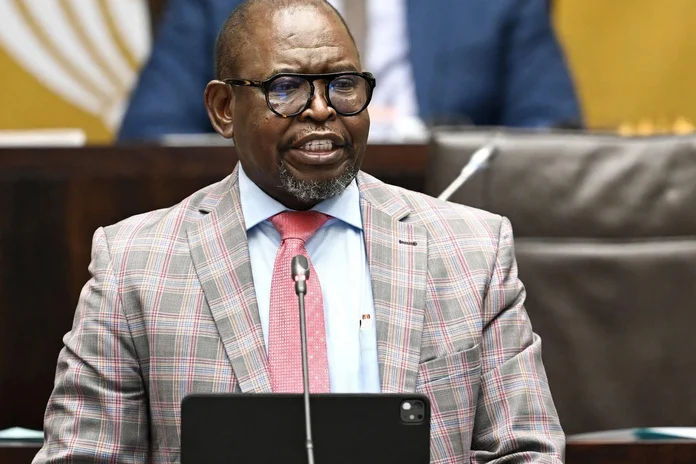
PRETORIA, Gauteng — Finance Minister Enoch Godongwana has tabled the highly anticipated South Africa MTBPS 2026, introducing a R10 billion fuel levy relief allocation aimed at easing severe cost-of-living pressures. The Medium-Term Budget Policy Statement balances this temporary consumer relief with strict fiscal discipline, leveraging a significant tax windfall to fund targeted social interventions while projecting a subdued 1.2% economic growth rate.
Core Budget Announcements and Fiscal Strategy
The centerpiece of the mini-budget is a two-month fuel levy reduction, effective from November 4 until early January 2027. Godongwana emphasized that the R10 billion allocation is designed to provide immediate relief to hard-pressed households and businesses without compromising the long-term sustainability of the national budget.
The relief is made possible by a projected R17 billion tax windfall and R38 billion in targeted government savings. The adjusted budget also prioritizes critical social and security interventions, including a R3.8 billion injection to combat Gender-Based Violence and Femicide (GBVF), increased funding for the South African Revenue Service (SARS), the Border Management Authority (BMA), and the deployment of additional labor inspectors.
SARS Windfall and Treasury Defenses
SARS Commissioner Johnstone Makhulu revealed that the revenue authority achieved a R55 billion tax overrun at the half-year mark. This surplus was primarily driven by a R34 billion boost in corporate income tax, R10 billion from domestic VAT due to higher household consumption, and improved dividend tax collections. Makhulu also announced the deployment of AI agents to streamline debt collection for smaller amounts and the upcoming implementation of track-and-trace technology to combat the illicit tobacco and alcohol economy.
Deputy Finance Minister David Masondo defended the budget’s resilience against global geopolitical shocks, attributing the fiscal space to strong mining profitability and successful structural reforms in the energy sector, including the opening of the Eskom grid to private investment.
Addressing criticism that the November fuel levy cut was timed to coincide with the November 4 local government elections, Minister in the Presidency Khumbudzo Ntshavheni firmly denied any electioneering motives, describing the intervention as a carefully calculated response to the high cost of living.
Political and Civil Society Reactions
The South Africa MTBPS 2026 has drawn a wide spectrum of reactions from political parties, labor federations, and civil society, reflecting the delicate balance between debt stabilization and socio-economic transformation.
Cautious Optimism and Calls for Structural Reform
Several parties welcomed the fiscal anchor and immediate relief measures but urged longer-term structural solutions. ACDP Chief Whip Steven Swart and IFP Chief Whip Nhlanhla Hadebe praised the fiscal responsibility and GBV funding, though Swart advocated for extending the fuel cut beyond two months given the available tax windfall.
BOSA leader Mmusi Maimane celebrated the fuel levy relief as a significant achievement but called for a comprehensive review of fuel pricing. DA finance spokesperson Kingsley Wakelin praised the focus on fiscal stability but argued for structural reforms, specifically overhauling the Road Accident Fund (RAF) to create a sustainable funding model for fuel levy cuts.
Rise Mzansi leader Songezo Zibi rated the budget a “7 out of 10,” commending the debt control and infrastructure investments, but warned that administrative waste and poor contract management remain critical hurdles. Independent tax practitioner Kutumetsi Sesane also commended the National Treasury’s fiscal discipline and transparent track-and-trace reporting.
Criticism Over Short-Termism and Low Growth
Conversely, many stakeholders expressed deep concern over the 1.2% growth projection, arguing it is insufficient to tackle the country’s unemployment crisis. COSATU national spokesperson Matthew Parks criticized the budget for “normalizing the abnormal,” pointing out the failure to expand public employment programs or provide an inflationary adjustment for the SRD grant.
UDM leader Nqabayomzi Kwankwa and FF Plus spokesperson Wouter Wessels echoed concerns that a stabilized balance sheet must translate into tangible improvements for ordinary citizens, with Wessels questioning how increased defense and infrastructure spending will be protected from corruption. ActionSA’s Alan Beesley and the Budget Justice Coalition’s Daniel Peter noted that while the two-month relief and GBV funding are positive crisis responses, they lack long-term structural solutions for job creation and early childhood development.
ATM leader Vuyo Zungula expressed disappointment over the failure to immediately hire 10,000 labor inspectors and immigration officers, calling for permanent solutions to the fuel pricing structure rather than temporary rebates. UAT leader Dr. Wonder Mahlatsi dismissed the budget as a temporary vote-buying tactic, arguing that fiscal discipline without radical social and economic progress does not constitute true transformation.
Concerns Over Parliamentary Process
Highlighting procedural concerns, EFF MP Sinawo Tambo condemned the arbitrary adjustment of the fuel levy without parliamentary approval. Tambo accused the government of utilizing state power to enhance its electoral chances ahead of the November 4 polls, urging Parliament to reclaim oversight over fiscal policy adjustments.