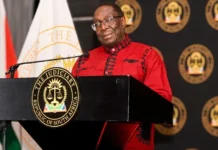
JOHANNESBURG, Gauteng — The South African Federation of Trade Unions (SAFTU) has officially thrown its support behind the Food and Allied Workers Union’s 7% wage demand for employees at Heineken Beverages SA. SAFTU General Secretary Zwelinzima Vavi confirmed the federation’s stance, arguing that the proposed increase is both reasonable and fully justified despite the company’s current counteroffer of a 5% raise.
The wage dispute has reached a critical juncture as workers face mounting economic pressures. Vavi emphasized that a 5% increment merely matches the current standard inflation rate, offering employees no real improvement in their living standards. He highlighted that workers spend approximately 60% of their income on food and transport, categories that have seen drastic price surges. While general food inflation fluctuates between 9% and 14%, electricity tariffs have skyrocketed. Following a recent 8.5% hike—the second consecutive increase after a 12% jump the previous year—electricity prices in the country have surged by over 600% in the last 16 years.
Defending the potential for strike action, Vavi drew a sharp contrast between the current situation at Heineken and the recent retrenchments at Premier Foods in the Western Cape. He noted that while Premier Foods is struggling due to its 90% reliance on troubled canned food exports and has subsequently issued Section 189 retrenchment notices, Heineken remains a highly profitable enterprise. According to Vavi, the multinational brewery relies heavily on its workforce to generate wealth, yet shareholders are monopolizing the profits rather than sharing them with the employees who produce them.
The labor dispute is now heading to a Section 150 meeting facilitated by the Commission for Conciliation, Mediation and Arbitration (CCMA) scheduled for 10:00 a.m. tomorrow. Vavi expressed hope that Heineken would present an improved offer to avert a strike. Beyond the 7% wage increase, the union is demanding that the daily food allowance be raised from 74 to 80 rand, alongside the introduction of a 500 rand housing allowance. Vavi indicated that if the company meets these conditions, organized plants have signaled they will call off the planned industrial action.
The conversation also touched upon broader public confidence in trade unions, specifically addressing internal friction within the National Union of Metalworkers of South Africa (NUMSA). Questions were raised regarding a financial dispute between NUMSA’s leadership and the suspended CEO of its investment arm over the alleged procedural acquisition of a 60% stake.
Acknowledging that the investment matter is heading to court, Vavi defended the relevance of the labor movement, stating that unions still represent three to four million dues-paying members. He pointed to ongoing grassroots battles as proof of their continued necessity, including an eight-week strike by NUMSA members at a manufacturing plant in Gqeberha (Port Elizabeth) fighting for industry-aligned wages. He also highlighted solidarity efforts by federation affiliates, such as SAPU, who are supporting dismissed security guards seeking reinstatement and insourcing through the Johannesburg Mayor’s office.
Addressing the internal investment controversy, Vavi condemned the creeping influence of “business unionism.” He warned that introducing capitalist, self-serving cultures into the labor movement is one of the greatest threats to its survival. Citing a core principle entrenched in SAFTU’s constitution, Vavi argued that elitist battles over financial slices of the cake ultimately destroy trade unions, urging a return to worker-first principles over personal enrichment.