



For weeks, residents of South Africa’s largest metropolitan area have suffered through persistent and unpredictable water cuts, a crisis officials directly attribute to the city’s failing storage systems and a critical lack of investment in crumbling infrastructure.
The ongoing emergency has prompted the national Department of Water and Sanitation to propose a significant structural overhaul: granting municipal utility Johannesburg Water full operational and financial independence from the City of Johannesburg.
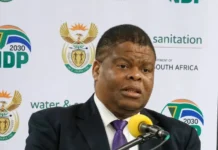
In a detailed interview, the department’s Director-General, Dr. Sean Phillips, explained that the city’s water problems are fundamentally linked to how its water utility is funded. He revealed that Johannesburg Water, while a separate municipal entity, is not financially “ring-fenced,” meaning the revenue it generates from selling water is not exclusively dedicated to maintaining and upgrading the water system.
“Johannesburg Water gets a budget every year from the city. But that budget isn’t directly linked to the revenue collected from the sale of water,” Dr. Phillips stated. “The city sometimes decides to use some of that revenue for other purposes.”
This diversion of funds, coupled with what Dr. Phillips called “devastating” financial difficulties within the city government, has crippled the utility’s ability to function. He confirmed that more than 50 crucial capital projects to upgrade infrastructure have been forced to “stop and go” because the city fails to transfer sufficient funds, leading to contractors abandoning sites over non-payment.
A central issue exacerbating the crisis is the staggeringly high rate of “non-revenue water” – water that is produced but never paid for, primarily due to leaks and billing failures. In Johannesburg, this figure is close to 50%, meaning the utility is effectively running at a massive loss.
“If that problem could be addressed and non-revenue water could be brought under 20%, then that would result in a huge additional revenue for Johannesburg Water,” Dr. Phillips said. A ring-fenced utility with control over its revenue, he argued, would have the incentive to fix meters, improve billing, and, crucially, would be able to borrow money directly from financial markets based on its healthy revenue streams.
“There is lots of money in the pension funds and in the banks which would very much like to invest that money in public services such as water supply because they’re very good safe investment,” he explained. Currently, all borrowing is done by the cash-strapped city, stifling Johannesburg Water’s ability to finance the infrastructure upgrades it desperately needs.
The Director-General was clear that the decision to reform the utility rests solely with the City of Johannesburg’s council, as local government is a separate sphere of authority. He stressed that no new entity needs to be created, but the existing arrangements must change to grant Johannesburg Water full autonomy.
The human impact of the crisis is severe. A news poll conducted during the interview revealed that only 27% of respondents described their water supply as stable and reliable. A troubling 44% found it “unpredictable,” and 17% reported having “no water at all,” a situation residents in areas like Ebony Park have endured since January. Water-related protests have broken out in multiple communities across the city.
Dr. Phillips acknowledged that the institutional problems plaguing Johannesburg are a national issue. Performance assessments show a sharp deterioration in municipal water systems across the country, driven by high non-revenue water and a common failure to ring-fence water revenue.
While long-term solutions, like the completion of the new Polihali Dam, are years away, Dr. Phillips called for an immediate 8% reduction in water demand across the broader region to ease pressure on the struggling system. He also revealed that the department has received cabinet approval to submit a Water Services Amendment Bill to Parliament, aimed at addressing these systemic governance challenges and legally requiring capable service provision and ring-fenced revenue nationwide.
For now, Johannesburg residents remain caught in a cycle of disruption, awaiting decisive action from city leadership to secure a stable water supply.