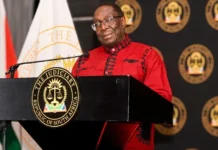
HAMMANSKRAAL, GAUTENG — Residents of Hammanskraal say the ongoing Hammanskraal water crisis reflects years of failed governance, deteriorating infrastructure and alleged corruption, with water tankers and JoJo tanks becoming an entrenched part of daily life rather than a temporary emergency measure.
Communities in the north of Tshwane have experienced prolonged water insecurity, with some residents reporting that they have gone months without a reliable supply from their taps. The situation has also raised broader questions about the management of emergency water services and the delays in delivering a permanent solution.
The crisis comes amid investigations and renewed scrutiny of alleged corruption associated with emergency water delivery. The transcript also refers to investigations involving the Special Investigating Unit and the establishment of a national water-sector anti-corruption forum.
Long-running infrastructure problems
The roots of the Hammanskraal crisis stretch back many years.
According to community leader Katlego Mthombeni, residents have been dealing with the problem since at least 2008. He said the Department of Water and Sanitation identified problems involving the Apies River in 2011.
Mthombeni further said that in 2018 a tender was awarded to expand the water treatment works in the area. However, despite subsequent interventions, residents continued to experience severe water shortages.
The situation became particularly serious in 2023 when a cholera outbreak in Hammanskraal brought national attention to the area’s water problems. According to Mthombeni, the outbreak prompted the involvement of the President and the Minister of Water and Sanitation, with a temporary modular solution subsequently proposed.
The wider infrastructure history has also been linked to deterioration at wastewater facilities, pollution sources and poor raw-water quality affecting the system supplying Hammanskraal. The need to expand the capacity of the Rooiwal Wastewater Treatment Works had been identified by 2024.
Tankers become a permanent feature
Instead of functioning only as emergency relief, water tankers have increasingly become part of everyday life for residents.
Mthombeni said the community had received water through tanker arrangements involving businesses around Tshwane. He also criticised changes announced earlier in the year regarding the city’s reliance on outsourced water tankers.
According to his account, an announcement that the existing system would be cancelled did not necessarily mean that tanker dependence was ending. He said another arrangement was introduced in which the city acquired tankers but effectively leased them.
The result, he argued, is that residents remain without a dependable 24-hour municipal water supply. In some areas, water may return during the night but disappear again by morning.
The transcript also refers to a decision in April to reduce reliance on outsourced tankers and bring more of the service back under municipal control. While this was presented as a way of saving municipal money, residents questioned whether changing the tanker model addressed the fundamental infrastructure failure.
Nine months without reliable running water
Mthombeni said residents in the area had experienced approximately nine months without running water from their household taps.
The consequences extend beyond inconvenience. He said the lack of continuous water also affects sewer systems, which can deteriorate when there is no consistent water supply.
Residents attempting to obtain assistance, he claimed, are often directed between different government institutions. According to Mthombeni, residents can be referred between the City of Tshwane, local structures and the Department of Water and Sanitation without receiving a clear resolution.
He characterised the situation as government institutions effectively passing responsibility from one authority to another, while residents who are expected to pay rates and taxes continue to experience inadequate services.
Constitutional rights questioned
The community leader also raised concerns about what he described as possible violations of constitutional rights.
He specifically referred to Section 27 of the Constitution, which concerns access to healthcare, food, water and social security, as well as Section 32, which provides for access to information.
Mthombeni argued that residents need greater transparency and accountability from government regarding the decisions, contracts and arrangements surrounding the water crisis.
Death of KwaZulu-Natal resident raises wider concerns
The Hammanskraal crisis is also being discussed against the backdrop of the death of Galani Zungu, a KwaZulu-Natal resident who was killed by an eThekwini Municipality water tanker.
The incident has intensified concerns about the growing dependence of communities on tanker-delivered water, particularly where residents have already endured prolonged shortages.
Mthombeni described Zungu’s death as a tragedy that should prompt serious reflection about the consequences of communities being left dependent on emergency water supplies. He argued that the incident should be investigated and that the municipality should be held accountable.
Questions remain over the 2023 cholera outbreak
Mthombeni also called for a serious investigation into the 2023 Hammanskraal cholera outbreak.
While the outbreak was identified as a major health crisis, he raised questions about the circumstances surrounding the water supplied to residents and said there was a need to establish the facts rather than speculate about the cause.
He pointed to the loss of lives and the impact on families, arguing that the matter should be treated as a serious public-interest issue rather than a political contest.
Residents demand a permanent solution
The central concern emerging from Hammanskraal is that emergency measures intended to bridge a temporary infrastructure failure have themselves become a long-term feature of community life.
For residents, the issue is therefore not simply whether water tankers are available. It is whether authorities can restore a stable, safe and consistent municipal water supply while addressing the infrastructure failures that have contributed to the crisis.
The continued use of tankers has consequently become a symbol of the unresolved problem, with residents questioning when emergency interventions will give way to permanent infrastructure.
The Hammanskraal community’s concerns also raise broader questions for government, water boards and municipal authorities about accountability, infrastructure investment, service delivery and the management of public resources.
As Mthombeni stressed, the consequences are ultimately measured not only in service-delivery statistics but in the effect the water crisis has on people’s daily lives—and, in the most tragic circumstances, the loss of life.
Fair-use/fair-dealing note: This article is an original, substantially transformed news report based on the supplied transcript. It does not reproduce the broadcast’s wording or structure, and claims made by individuals in the source have been attributed rather than presented as independently established facts.