JOHANNESBURG, Gauteng — As frustrated residents protest outside Johannesburg Water’s head office over inconsistent service, the Gauteng water crisis has reached a critical tipping point, prompting city leadership to publicly accept responsibility. The ongoing Johannesburg water supply challenges are not the result of environmental scarcity, but rather a man-made crisis driven by severe infrastructure failures, aging networks, and management deficits, according to a comprehensive inquiry by the South African Human Rights Commission (SAHRC).
A Man-Made Crisis and Municipal Accountability
The SAHRC’s recent inquiry examined prolonged water outages, deteriorating infrastructure, and widespread sewage pollution across the province. Among its most startling findings, the commission revealed that approximately 33% of Gauteng’s water supply—equivalent to 1.5 billion litres a day—is lost through leaks.
In response to the report, Johannesburg Mayor Dada Morero stated that the city’s executive and the municipality at large take full accountability for the crisis.
Zama Mbeki, SAHRC Gauteng Manager, emphasized that the province does not suffer from water availability issues. Instead, the crisis is fueled by institutional failures, including a severe lack of critical technical skills, poor financial management, inadequate revenue collection, and fragmented accountability within local municipalities.
To address the immediate fallout, the provincial government has announced a R13 billion intervention aimed at reducing water losses as a matter of urgency. This includes deploying the Deputy Minister to monitor the situation and utilizing Council for Scientific and Industrial Research (CSIR) technology to track and pinpoint leaks. Additionally, a fleet of 60 municipal trucks will be deployed to replace private contractors for daily water services in informal settlements.
The Tankering Dilemma and the Need for Guidelines
Despite these interventions, the over-reliance on water tankers remains a contentious issue. Mbeki highlighted that road-based water distribution has become a permanent, rather than emergency, solution for many communities, leading to massive financial drains. For example, the City of Tshwane spent R777 million on water tankering last financial year, which was reduced to R378 million this year.
The SAHRC is calling for the development of strict guidelines for the safe, reliable, and cost-effective operation of road-based water distribution networks. The commission insists that tankering must be strictly limited to emergency situations, noting that permanent reliance makes it impossible to measure actual water consumption and disproportionately affects the elderly and persons with disabilities.
Regulatory Reform and the Skills Deficit
Industry experts echo the commission’s frustrations, pointing to a systemic lack of skilled personnel as a primary bottleneck. Ayesha Laher, Director at AHL Water, noted that the water sector has been sounding the alarm for years about the lack of skilled engineers, technicians, and process controllers, as well as poor financial controls at the municipal level.
Laher cautioned against the idea of communities simply taking over their own water networks without the requisite expertise. “Water is a technical skill,” Laher explained, warning that untrained individuals operating water treatment plants could lead to catastrophic public health failures. While water boards and bulk suppliers maintain high standards, the handover to municipal reticulation networks is where aging infrastructure and poor maintenance cause massive losses.
Looking ahead, Laher expressed hope that proposed amendments to the Water Services Act and the National Water Act will provide a much-needed lifeline. These reforms would grant the Department of Water and Sanitation greater authority to monitor municipal compliance and, crucially, allow the Minister to intervene by appointing licensed private or capable water service providers if municipalities fail to meet regulatory standards.
Strict Timelines and Enforcement
To ensure the crisis is addressed, the SAHRC has established strict timelines for municipal compliance. Mbeki confirmed that specific municipalities have been given a three-month window to engage with the National Treasury regarding their financial challenges. Furthermore, a six-month deadline has been set for the South African Police Service (SAPS) to develop a framework for investigating and prosecuting the criminal damage of critical water infrastructure.
The commission noted that many city managers initially refused to cooperate with the inquiry, forcing the SAHRC to subpoena them to testify. Mbeki confirmed that the commission will continue to use its subpoena powers to monitor the implementation of its recommendations.
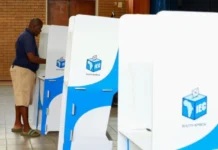
With municipal elections approaching, Laher urged citizens to take the matter into their own hands at the ballot box. She advised voters to scrutinize the track records of their councilors, demand a clear understanding of their water management plans, and ultimately hold them accountable for the most critical resource of all.