JOHANNESBURG — Gauteng Education MEC Lebogang Maile has announced that the provincial department will begin using breathalysers at schools, escalating a broader crackdown on gang activity, drug use, and violence in classrooms. The decisive move follows a series of unannounced police search operations across multiple high schools, signaling a zero-tolerance approach to school safety despite anticipated criticism from human rights organizations.
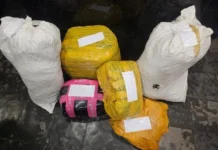
The intensified security measures come after authorities confiscated over 109 prohibited items during recent raids at institutions including East Bank and Alexandra High schools. The seized contraband ranged from folding knives and glass shards to live ammunition and illegal substances (noted as DHA in the briefing). While the provincial government insists these sweeps are vital to curb rising criminality, the crackdowns have sparked an intense public debate over the criminalization of pupils and the broader breakdown of school discipline.
Addressing concerns that the department is treating a deeply rooted societal problem strictly as a police matter, Maile clarified that many of the offenders are over-aged. He noted that some learners are 18 and older, meaning they are legally adults committing crimes in an environment where they no longer belong. For younger learners, Maile emphasized that a different disciplinary process will apply, rejecting a “one size fits all” approach. However, he maintained that school disciplinary committees will not hesitate to suspend or expel offenders, and every case will be dealt with on its own merit.
The legality of the operations has also been questioned, but Maile pointed to Section 8A of the Schools Act, which outlines specific rules for random search and seizure processes in educational institutions. He stressed that schools are government property, meaning the department does not require external permission to secure its facilities. Because the Department of Education lacks law enforcement authority, it has formally invited the South African Police Service (SAPS) to assist, emphasizing that the protection of all citizens, including learners and educators, falls under SAPS’s mandate.
When confronted with concerns that a criminal record for possessing a pocket knife or drugs could destroy a young person’s future prospects, Maile argued that the strong, visible message of these unannounced raids is necessary to make students think twice. He further revealed that the department is prepared to escalate its methods, including the introduction of breathalysers, to address incidents of students arriving at school intoxicated or drinking on campus.
“We can’t fold our arms because human rights bodies will criticize us,” Maile stated. “We are not violating anyone’s right. In fact, what we are doing is securing and ensuring that every learner’s right is exercised in a peaceful, conducive environment. If we don’t do anything as government, we are complicit with those who are making life miserable and denying learners the right to learn.”
Maile also highlighted the severe toll that classroom violence takes on educators. He noted that teachers are increasingly being traumatized and attacked, leading to absenteeism and institutionalization for support. This places an unsustainable financial strain on the department, which is forced to pay for substitute teachers while already grappling with massive budgetary demands.
Outlining the department’s financial realities, Maile detailed that the provincial treasury allocates a R71 billion budget to the Gauteng Department of Education. Of this, R54 billion is consumed by the salaries of approximately 100,000 employees. Additional critical expenditures include R1.7 billion for scholar transport, R1.3 billion for school nutrition, between R2 billion and R3 billion for learner-teacher support materials, and R2 billion for water and electricity.
Despite these massive expenditures, Maile warned that the funding remains insufficient. The province still needs to build approximately 200 new schools at an estimated cost of R35 billion, all while continuing to provide daily meals to 1.7 million learners.
To combat these challenges, the department is actively seeking operational efficiencies through a new strategic process aimed at maximizing results. Alongside restoring order, Maile affirmed that the department is rolling out targeted strategies to improve teaching and learning outcomes, particularly in critical subjects like mathematics, science, and accounting. The department is currently monitoring internal midyear assessments to gauge and bolster matric performance before the end of the academic year, ensuring that the push for safety does not overshadow the primary mandate of education.