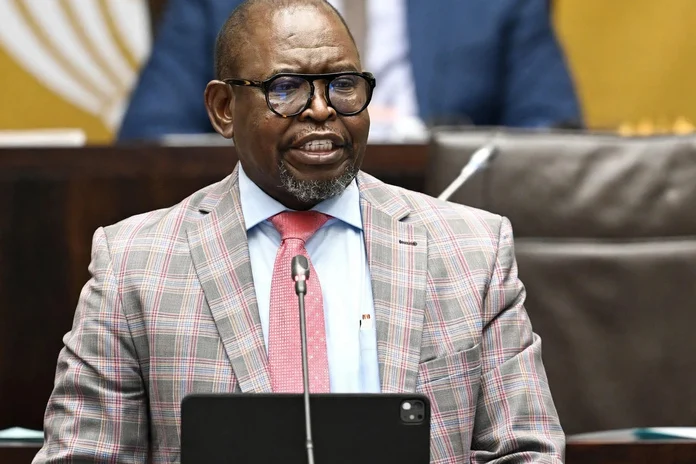
JOHANNESBURG, Gauteng — Finance Minister Enoch Godongwana is set to deliver the Medium-Term Budget Policy Statement (MTBPS) this Wednesday, facing mounting pressure to address South Africa’s escalating cost of living crisis and persistently high fuel prices. While major tax overhauls are not anticipated, analysts and economic experts are urging the National Treasury to consider targeted fiscal interventions to cushion households and stimulate employment.
The upcoming MTBPS will outline the Treasury’s policy approach to government finances over the next three years, with a focus on revenue and expenditure performance for the current financial year. Despite major economic stress driven by higher inflation and rising interest rates, the Treasury has reported healthy, higher-than-expected tax revenues over the past six months. These windfalls, drawn from personal income tax, value-added tax, and company tax, have been bolstered partly by buoyant commodity prices.
A central point of contention is the management of fuel costs. Economist Miyelani Mkhabela argues that the government’s previous decision to recall the fuel levy relief was a mistake made without adequate research, directly contributing to skyrocketing inflation. Mkhabela advocates for the immediate reinstatement of general fuel levy relief as a short-term measure, noting that the fiscus can absorb this cost. As evidence, Mkhabela points to recent budget increases in medical tax credits—which exceed R30 billion and predominantly benefit middle- to high-income households—demonstrating that the Treasury has fiscal room to maneuver. For the medium term, Mkhabela recommends building strategic fuel reserves to absorb international oil price shocks, and long-term, accelerating the transition to renewable energy resources.
Liso Mdutyana, a researcher at the Institute for Economic Justice, highlights that inflation has consistently exceeded the 3% target band for the last six months, recently surpassing 5%. Mdutyana emphasizes that if a primary surplus is realized, it should be deployed to fund tens of thousands of approved but unfunded public service positions, particularly in critical departments like Home Affairs and the police force. This strategy, Mdutyana notes, would rebuild state capacity and directly lower youth unemployment, offering more equitable, broad-based relief than tax incentives that favor wealthier demographics.
Investors will be closely watching the statement for efforts to reduce government borrowing and foster policy certainty. Economists expect Godongwana to continue the mantra of fiscal consolidation, potentially introducing a legislated “fiscal anchor.” This mechanism would legally commit the Treasury to running a primary surplus to stabilize national debt until stronger, reform-driven economic growth naturally expands the revenue base, reducing reliance on temporary commodity windfalls.
However, the push for strict fiscal consolidation faces significant pushback. At its recent 15th National Congress, the Trade Union Federation criticized the government’s continued austerity measures as a “political choice” rather than an economic necessity. The federation argued that budget cuts, wage restraints, and weak public investment have directly weakened the state’s ability to combat unemployment, poverty, and inequality. Concurrently, civil society groups are advocating for a progressive wealth tax to shift the financial burden away from the working class, urging the Treasury to remain open to innovative tax policy reforms rather than declaring the current system at its limits.
With local government elections looming in two weeks, analysts acknowledge that while unconventional tax announcements remain unlikely, the political climate could influence the budget’s tone. Ultimately, stakeholders agree that balancing immediate consumer relief with long-term debt stabilization will be the defining challenge of Finance Minister Enoch Godongwana’s upcoming address.