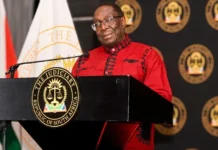
JOHANNESBURG — Eskom Chairperson Mteto Nyati has publicly condemned ongoing political and business interference in the state-owned utility, criticizing what he describes as glaring double standards among leaders when it comes to ethics and governance. In a recent social media disclosure, Nyati revealed that unnamed political and business figures have directly approached him to intervene in operational and procurement matters, undermining established institutional processes.
Nyati emphasized that his leadership philosophy is rooted in core values rather than rigid, micromanaging rules. He argued that values such as integrity, honesty, diversity, and excellence provide a broad outline that fosters flexibility, innovation, and accountability. This approach, he noted, allows employees to contribute meaningfully to the company’s strategy without being stifled by black-and-white mandates, creating an environment where staff are excited and recognized for their contributions.
Addressing Eskom’s current status as a turnaround success story—notably the absence of load shedding—Nyati attributed the utility’s past failures to a deficit in both character and competence at the leadership level. He cited previous flawed decisions, such as the premature retirement of old coal-fired power stations that could have been salvaged through proper mechanical maintenance, and the historical block on Eskom’s participation in renewable energy. Under current leadership, the focus has shifted to rigorous maintenance, the recent launch of Eskom Green, and a critical, albeit painful, decision to cut 112 billion rand in costs over the next four years to ensure affordable electricity for South Africans.
Expanding on the theme of institutional leadership, Nyati discussed the struggles of the Investigative Directorate against Corruption (IDC). He noted that its challenges stem from organizational culture and values rather than a lack of technical skill. While acknowledging the technical competence of figures like Advocate Johnson, Jackie Selebi and Brett Kebble, and referencing observations by Justice Madlanga, Nyati warned that technical prowess as a prosecutor or lawyer does not automatically translate to effective organizational leadership.
The conversation also highlighted the dangers of “inner circles” and factionalism within public institutions. Nyati stressed the importance of inclusive environments, warning that cliques isolate dissenting voices and breed arrogance. This aligns with recent concerns raised by the justice minister and the National Prosecuting Authority (NPA) head regarding ethnic factionalism, a point also underscored by Prosecutor Ramsamy during recent media briefings. Nyati stressed that leaders must embrace everyone within an organization to maintain proper checks and balances.
Finally, addressing recent public fears sparked by presidential campaign trail comments, Nyati firmly denied any privatization of the national transmission company. He clarified that the 2018 cabinet decision to unbundle Eskom into four entities—generation, distribution, transmission, and the newly added Eskom Green—ensures that all components will remain 100 percent state-owned. While some entities may eventually operate as separate bodies outside the main Eskom structure, there will be no privatization of South Africa’s national transmission assets.