PRETORIA, Gauteng — The Economic Freedom Fighters (EFF) has been granted partial access to court records and transcripts concerning an alleged State Security Agency (SSA) operation to infiltrate the political party. The legal development stems from a R12 million fraud trial involving former intelligence operatives, bringing renewed scrutiny to claims of state-sponsored espionage against the opposition.
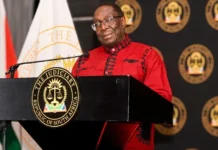
EFF Deputy President Godrich Gardee, who served as the party’s Secretary General until December 2019, stated that the revelations of the infiltration are not surprising. Reflecting on the 2015 to 2016 period, Gardee noted that the party experienced an unprovoked exodus of members who subsequently insulted the organization. He suggested that some of these individuals are likely still on the payroll of the secret service.
Despite the court granting the party partial access to the records, Gardee declined to confirm whether the EFF has physically received the documents. He described the files as highly sensitive, asserting that only the President and Commander-in-Chief, Julius Malema, is equipped to handle the matter. Gardee drew a historical parallel to former President Nelson Mandela, who was reportedly handed a list of apartheid-era spies upon taking office, noting that the current EFF leadership expects Malema to provide similar direction.
The R12 Million Fraud Trial and the Accused
The partial access to the records emerges from the ongoing criminal trial of Patrick Matoto, a former senior SSA member, and Tulani Romo, the former general manager of the CDSO—a unit described as notorious during Arthur Fraser’s tenure as director-general.
The two accused are facing charges related to money theft and forgery involving a R12 million budget allegedly allocated for the EFF infiltration operation. The defense has argued that the operation was entirely legitimate, maintaining that the SSA did indeed have sources and moles within the EFF. However, the espionage operation serves as background context to the primary financial charges, and the accused have not yet been convicted.
Romo is currently launching an application under section 177(4) of the Criminal Procedure Act, arguing that the state has failed to establish a case against him and seeking to have the charges dismissed before he presents a defense.
Allegations Against David Mahlobo
Court testimony has placed former State Security Minister David Mahlobo—currently the Deputy Minister of Water and Sanitation—at the center of the infiltration allegations. Witnesses, identified in court as Mr. B, Mr. C, and Mr. D, testified that Mahlobo was integral to the operation.
According to plea agreements and witness testimonies, operatives were introduced to Matoto at Mahlobo’s ministerial residence. The court heard that payments were made on Mahlobo’s instruction, including a R160,000 payment to an unnamed official working in his office, and a R400,000 payment to an arguably senior EFF figure in Ulundi.
Project Mayibuye and the Zondo Commission Findings
The alleged infiltration operation, referred to as Project Mayibuye, was conceptualized in late 2014 and operationalized in January and February 2015. This timeline coincided with former President Jacob Zuma’s State of the Nation Address, an event marked by the removal of EFF members in white shirts from the parliamentary precinct and the use of signal jammers to block cellular and internet access. Documents related to these jammers and the EFF infiltration were reportedly discovered during a broader internal SSA investigation.
This broader investigation, known as Project VZA, was launched in 2018 toward the end of the Zuma administration to probe corruption, fraud, and mismanagement within the agency. The subsequent Zondo Commission found that approximately R1 billion had been looted from the SSA. The Commission recommended disciplinary and criminal charges, specifically highlighting Project Mayibuye’s mandate to infiltrate opposition parties, judges, journalists, and students involved in the #FeesMustFall movement.
Next Steps for the EFF and Institutional Oversight
The EFF is currently sourcing its own transcripts at its own cost to build a comprehensive case. Originally, the trial was closed to the public and media, though various media outlets and civil society organizations successfully fought for partial access. However, whenever specific details regarding the EFF moles were discussed, the gallery was asked to leave the courtroom.
Gardee emphasized that the EFF will not engage in a “witch hunt” among its members. Instead, the party leadership, under Malema, will scrutinize the documents to determine exactly what happened, who was involved, and when.
Beyond internal reviews, the EFF is calling for sweeping institutional investigations. Gardee urged the South African Revenue Service (SARS) to investigate the tax implications of the illicit funds distributed to operatives. Furthermore, the party intends to approach the Inspector General of Intelligence (IGI), the Public Protector, the Auditor General (AG), and the Joint Standing Committee on Intelligence (JSCI).
Gardee also indicated that the EFF may raise the matter with the Speaker of the National Assembly for a national debate, stressing that taxpayer money should not be used by the secret service to spy on legitimately elected political parties. The party is also considering launching legal action against the state for the alleged espionage.