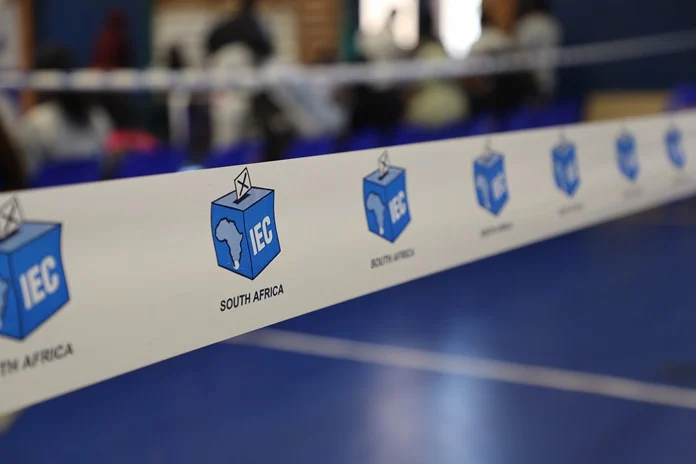
PRETORIA, Gauteng — The 2026 Local Government Elections have officially entered their active phase as special voting commences across South Africa, setting the stage for a highly contested municipal poll. With the main voting day scheduled for Wednesday, November 4, the Independent Electoral Commission (IEC) is managing an unprecedented surge in early ballot casting, logistical complexities, and the modern challenge of digital misinformation.
Unprecedented Demand and Voter Sentiment
The IEC has approved 2,655,067 special vote applications, more than doubling the figures seen in the 2021 local government elections. By the end of the first day, approximately 780,000 special votes had been successfully administered.
Political analyst Dr. Shahim Makano, speaking from the National Results Operations Centre in Midrand, noted that the surge indicates a growing realization among citizens of the power of their vote. “Elections are the one time you get to hold those who have been put in power accountable,” Makano observed, emphasizing that voters are using this cycle to evaluate service delivery over the past five years.
The elections feature a highly fragmented political landscape, with 540 political parties, 621 independent candidates, and roughly 136,000 ward candidates vying for support out of a registered voter pool of 29 million.
**Voices from the Ground: Service Delivery and Democratic Rights**
At the Waterkloof Marina Retirement Estate in Pretoria, elderly and mobility-impaired residents turned out in high numbers to cast their special ballots. Advocate John Price, a 96-year-old legal expert and former member of the Progressive Party, reflected on the country’s constitutional journey but expressed deep frustration with the current state of municipal service delivery in the capital.
Price criticized the cultural approach to governance and the temptation for corruption, calling for the reinstitution of the Scorpions to hold politicians accountable “with terror, not just nice words.” His wife, 91-year-old Jennifer Price, echoed these sentiments, expressing shock at the basic service failures, such as residents having to rely on water tankers, and urged politicians to honor their promises and treat their roles as actual work.
In Durban, 72-year-old Dennis cast his ballot at the George Campbell School of Technology, hoping for improved infrastructure following the devastating 2022 floods. “I do believe the new party I voted for will bring changes,” Dennis said, citing ongoing issues with water, sewage, and rates in the eThekwini municipality.
Meanwhile, in the Seshego area of Polokwane, Limpopo, 47-year-old Shirley Kekana utilized a home visit to cast her vote. Visually impaired since childhood, Kekana praised the privacy of the home-visit process and used her platform to advocate for better support for people with disabilities, challenging the government’s assumptions about their capabilities and the high costs of assistive devices. A Limpopo Provincial Electoral Officer oversaw the deployment of braille voting templates in the area.
Logistical Hiccups and Security Concerns
Despite the high enthusiasm, Day 1 was not without logistical challenges. In the Western Cape, the IEC reported that 217 voting stations experienced delayed openings due to the late arrival of ballot papers. By lunchtime, that number had been reduced to 24. The province recorded 298,000 approved special vote applications, including 72,000 home visits managed by 1,850 mobile IEC teams.
In KwaZulu-Natal, which boasts 5,028 voting stations, incidents of ballot boxes being stolen were reported. However, the IEC clarified that these were non-sensitive items and that no actual ballot papers or stamps were compromised.
Terry Tselane from the Institute of Election Management Services in Africa (IEMSA) explained the sheer complexity of the operation, noting that the IEC is effectively managing over 4,500 distinct elections across nearly 24,000 voting stations. Tselane highlighted that the primary area of vulnerability remains the distribution of ballot papers in specific municipalities affected by recent Constitutional Court judgments regarding party list submissions.
The Communal Voting Spirit
While demand was high, actual turnout at some physical stations was lower than expected. At one polling station in Heidelberg, only 60 of the 500 registered special voters showed up.
Political analysts Yolokazi Mfuto and Hlumelo Xaba attributed this to several factors, including adverse weather conditions and a strong cultural preference for communal voting. “Democracy is a collective process,” Mfuto explained, noting that many voters, particularly in urban and township areas, prefer to exercise their democratic right alongside their communities on the main election day.
Combating AI and Misinformation
Beyond logistical hurdles, the 2026 elections are testing South Africa’s resilience against digital interference. Avi Moodley, Principal AI Specialist at the CSIR, warned about the rising threat of AI-generated misinformation, particularly on encrypted platforms like WhatsApp.
Moodley explained that bad actors are exploiting information voids by using emotive, AI-generated content to influence populations. To combat this, the CSIR is developing an “inform fake news advisor” to trace misinformation sources and audio-search technology to scan video and audio files for false narratives in under 10 seconds. Moodley urged the public to rely on fact-checking partners like Africa Check and Real411, emphasizing the responsibility of younger, tech-savvy generations to protect older demographics from falling victim to digital disinformation.
As Day 1 of special voting concludes, the IEC and political liaison committees remain on high alert. With coalition governments likely to define the post-election landscape, the focus now shifts to resolving remaining logistical vulnerabilities and ensuring a peaceful, transparent main voting day on Wednesday.