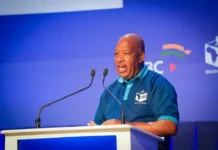
Zane Dangor, Director-General of the Department of International Relations and Cooperation (Dirco), has issued a strong condemnation against the targeting and abuse of migrants as anti-immigrant tensions intensify across South Africa. Dangor emphasized that no individual should be attacked for being a foreign national and stressed that citizens cannot take immigration enforcement into their own hands.
The remarks come amid growing criticism over the celebration of Africa Day while hostility toward migrants rises in several communities. Dangor joined a public discussion following International Relations Minister Ronald Lamola’s delivery of the department’s 7 billion rand budget vote in Parliament, where Lamola emphasized the importance of international solidarity and decried unilateralism, economic coercion, and wars of aggression.
“In my engagements with colleagues on the continent and diplomats, there’s an expectation that South Africa should lead and has been leading on various norms, not just in Africa but globally,” Dangor stated. He referenced South Africa’s role two decades ago in hosting a Durban conference that placed racism, xenophobia, and related intolerances on the global agenda. South Africa currently serves as the pinholder for an annual resolution on these issues in Geneva.
Dangor acknowledged that what is currently unfolding on South African streets is “particularly jarring” to neighboring countries and those who expect the nation to uphold human rights for all. He reiterated that if there is a need to address illegal migration, it must be handled by the Border Management Authority and other government institutions responsible for immigration, operating under the law and guided by the Constitution.
“What we should not be seeing is people targeted for being migrants,” Dangor said, noting that it is often unclear how individuals distinguish between documented and undocumented persons. He cited incidents in Durban at the DCONIA center, where the majority of those who sought refuge were, in fact, documented.
Reflecting on past challenges, Dangor recalled community dialogues that took place in 2008 following xenophobic violence, urging that similar conversations be revived. “We need to put our best foot forward. We need to get the agencies responsible to deal with illegal migration to do that, but we need to ensure that we manifest the Constitution, treat all those who are in our country with respect, and ensure those who are here illegally are dealt with in terms of due process,” he said.
Dangor warned against returning to practices reminiscent of the apartheid era, such as demanding “dome passes,” which he described as unlawful and a crime against humanity. “We don’t want to have that kind of monitoring in our streets,” he added.
The timing of these remarks coincides with significant historical milestones for South Africa. May 25 marked the anniversary of United Nations Security Council Resolution 919, which terminated the arms embargo and remaining sanctions against South Africa, symbolizing the end of the country’s isolation following the 1994 democratic elections and its formal admission to the international community.
When asked whether current street-level tensions risk leading South Africa toward renewed isolation, Dangor noted that the Dean of the African Diplomatic Corps had postponed Africa Day celebrations due to safety concerns. However, the diplomatic corps simultaneously implored respect for South Africa’s historical position on regional integration and African socioeconomic issues.
“South Africa moved out of being a pariah because of apartheid ending, sanctions dropping, democratization advancing, and the adoption of a Constitution that sought to undo the ills of the past—including racism, sexism, and discrimination based on sexual orientation or national status,” Dangor explained. He acknowledged that while progress has been made, society has not done as well as it should on poverty and inequality.
Dangor also contextualized South Africa’s challenges within a broader African experience, noting that similar flare-ups have occurred in West Africa, East Africa, and other regions. “History books show us that once you deal with what is seen as the obvious outsider, and if you haven’t dealt with the ills that led to the scapegoating, they start turning on each other—and that’s where you see long-term conflict and societal problems,” he said.
While affirming that South Africa is “far from that” point, Dangor emphasized the need for constructive dialogue and for the state to assert its authority strictly within the ambit of the Constitution. “We’ve always been seen as a norm entrepreneur in the global community,” he concluded. “That norm entrepreneurship emerges from the history of struggle, the legacy of icons like Nelson Mandela, and our Constitution. If manifested and implemented fully, it will allow us to deal with the ills that concern people—but also deal with them fairly and in a constitutional manner.”