Agricultural Minister John Steenhuisen has emphasized the need for increased black participation in South Africa’s agriculture sector, revealing that only 10% of the country’s farmers are black nearly three decades into democracy.
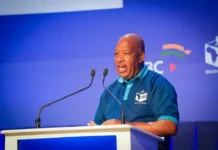
Speaking at the 2025 Black Business Council (BBC) Summit in Kempton Park, Steenhuisen highlighted the sector’s critical role in economic growth while acknowledging the slow pace of transformation. The summit, attended by black professionals, policymakers, and industry leaders, focused on strategies to foster inclusive economic participation.
Addressing Inequality in Agriculture
Steenhuisen pointed to research indicating that black farmers constitute just 10% of large-scale commercial agriculture, with disparities across different commodity groups. “We need to address this imbalance and create opportunities for more South Africans,” he said, dismissing the notion that transformation is a “zero-sum game.”
He outlined government efforts to support emerging black farmers through the Agriculture and Agro-Processing Master Plan, which includes initiatives like blended finance schemes, market access support, and mentorship programs in partnership with industry bodies such as Grain SA and Agri SA.
Economic Growth and Challenges
Despite agriculture contributing to marginal GDP growth, Steenhuisen admitted that South Africa’s broader economic performance remains weak, with growth stagnating at 0.3%. He stressed the urgency of economic reforms, particularly in infrastructure and investment, to stimulate job creation.
“The government of national unity must prioritize cutting red tape and improving sectoral performance,” he said, calling for a unified approach to boost the economy.
Avian Flu and Foot-and-Mouth Disease Concerns
The minister also addressed pressing biosecurity challenges, including avian flu and foot-and-mouth disease (FMD). He announced a mass poultry vaccination campaign and revealed that R72 million had been allocated to procure FMD vaccines from Botswana.
New animal movement regulations will soon be gazetted to curb disease spread, with stricter enforcement at auctions and roadblocks. “Biosecurity is everyone’s responsibility,” Steenhuisen warned, noting that disease outbreaks have cost the country valuable export opportunities.
Looking Ahead
Steenhuisen expressed optimism about increasing black farmer participation to 20% within the next decade but acknowledged significant hurdles. “We must bridge the inequality gap by ensuring equal access to education, healthcare, and economic opportunities,” he said.
As the BBC Summit continues, stakeholders are expected to deliberate further on policy interventions to accelerate transformation in agriculture and other key sectors.