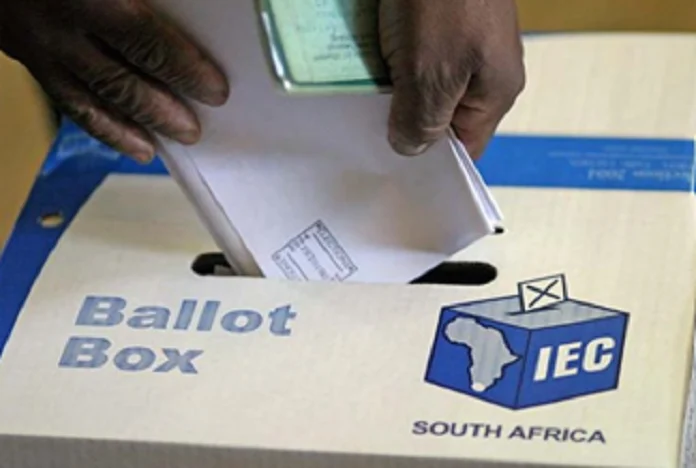
SOUTH AFRICA — The 2026 South African local government elections have officially commenced with the opening of special voting stations, setting the stage for a critical test of the country’s decentralized governance. With 29.2 million registered voters eligible to cast their ballots ahead of the main voting day on Wednesday, November 4, the electoral process is underway amid intense scrutiny over campaign strategies, candidate visibility, and the pressing need for legislative reform in municipal management.
The Electoral Numbers and Infrastructure
The Independent Electoral Commission (IEC) has mobilized a massive logistical infrastructure to manage the 2026 South African local government elections across the country. A total of 25,696 voting stations have been established to accommodate the electorate.
According to the latest registration statistics, 16.1 million women (55.3%) and 13 million men (44.7%) are registered to vote, meaning there are 3.1 million more women than men on the voters’ roll. However, youth and first-time voter engagement remains a challenge; this demographic makes up only 2% of the 29.2 million registered voters, comprising approximately 300,000 males and 300,000 females.
Voters will be deciding the fate of 10,526 council seats across 257 municipalities, which include eight key metropolitan areas. Over 137,000 candidates are vying for these positions, indicating keenly contested races at the ward and proportional representation (PR) levels.
Campaign Dynamics and the Gauteng Focus
Gauteng, the country’s richest province and home to three major metros, emerged as the primary battleground. Political analysts note that the top four political parties strategically concluded their campaigns in the province due to its high concentration of voters.
Campaign methodologies have highlighted a generational and strategic divide. Democratic Alliance (DA) leader Helen Zille has heavily leveraged social media platforms—including Facebook, Instagram, TikTok, and X (formerly Twitter)—to target tech-savvy and younger demographics. In contrast, the African National Congress (ANC) has largely relied on traditional door-to-door canvassing and stadium rallies. Meanwhile, a recent uMkhonto weSizwe (MK) Party rally featuring Jacob Zuma, who recently returned from a hospitalization, was notably under-attended, raising questions about current mobilization metrics.
The Visibility Deficit: National Figures vs. Local Issues
Despite the local nature of the elections, national political figures have dominated the campaign trail. Dr Ronesh Dhawraj,a news research editor and political analyst, observed that prominent leaders such as Cyril Ramaphosa, Helen Zille, Jacob Zuma, and Julius Malema have overshadowed local ward councillors. Consequently, many voters remain entirely unaware of who their actual ward candidates are.
Dr. Dhawraj, drew a parallel to the United States midterm elections, where national figures like Donald Trump often become the primary faces of local and regional campaigns. Furthermore, campaigns have frequently relied on populist, national rhetoric—such as debates over SASSA social grants, which fall outside local government competencies—rather than addressing critical municipal service delivery issues like water shortages, electricity infrastructure, and potholes.
Highlighting the politicization of service delivery, Dr. Dhawraj, noted a specific municipality that had experienced severe water outages since the April 2022 floods, only to see a restored water supply in the final 10 days leading up to the election—a move widely interpreted as an electoral ploy.
Systemic Challenges and Accountability
The South African Local Government Association (SALGA) has previously raised concerns regarding the quality of candidates nominated by political parties. Because local government legislation and the Integrated Development Plan (IDP)—the five-year blueprint for municipal budgets and infrastructure—are highly complex, new councillors often require half of their term just to become fully operational, severely delaying service delivery.
Dr. Thapelo Tselapedi, a political analyst, pointed out the structural drawbacks of the current party-list system. While ward councillors are constitutionally mandated to represent their communities regardless of political affiliation, the system heavily incentivizes party loyalty. This creates a “pseudo-constituency” system that marginalizes independent candidates and makes it exceptionally difficult to hold underperforming councillors accountable, as local officials frequently defer to national party leadership when confronted with community grievances.
Legislative Reforms on the Horizon
To address these compounding challenges, Dr. Dhawraj, highlighted two critical pieces of legislation currently in the pipeline: the Coalitions Bill and the revised White Paper on Local Government. The original White Paper was published in 1998, and analysts argue that the recent push to revise it acknowledges that the current municipal system requires urgent, structural intervention to better regulate coalitions and restore accountability to the grassroots level.
As special voting concludes and the nation moves toward the main election day, the focus now shifts to how these systemic issues will influence voter behavior and the eventual composition of the country’s municipal councils.