
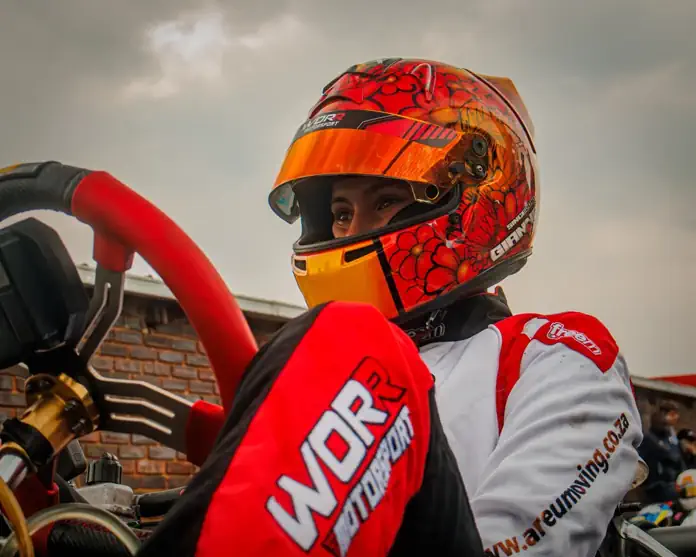
This Youth Day, Gianna Pascoal says South Africa keeps treating its youth as a promise for later – while millions are already proving themselves now
June 2026: Every Youth Day, South Africa tells its young people that they are the future. For 16-year-old racing driver Gianna Pascoal, that line has started to sound more like a soft excuse for keeping them waiting – as if their value only begins when adults decide they are finally old enough to matter.
Pascoal competes in MSA4/F4 South Africa through the WORR Motorsport race team and was selected for More Than Equal, the first international driver development programme created exclusively for female racing drivers. She already lines up against drivers far older than her, and the future everyone keeps promising her is the one she is currently living.
Most South Africans never get to experience that.
Young people make up almost half of the country’s working-age population – 21 million of them, according to Statistics South Africa – and nearly half are not working, studying or in any kind of training.
There is a reason that argument belongs on this day. Youth Day exists because of 16 June 1976, when thousands of Soweto protestors, including schoolchildren, walked out against a system built to give them less. Police met the crowd with live ammunition, and hundreds never came home.
“The kids who marched that day didn’t postpone their importance until they were older. They were my age, and some were even younger, but they stood up, made themselves heard, and fought for a real chance at succeeding in life. Young people today are facing a very different crisis, but one that still affects how far we can go and how much of our potential this country is prepared to take seriously.”
Statistics South Africa figures show that nearly half of working-age youth are unemployed or outside the labour force entirely. This is a category that includes full-time students, stay-at-home parents, people unable to work, and discouraged work-seekers who have given up looking for work. For Pascoal, these numbers carry different realities, but they point to the same pressure: young people are living through the years in which confidence is built, talent is tested, and opportunity either reaches them or passes them by, and not enough is being done to develop their potential.
“We talk about unemployment like a number for economists to worry about, instead of talking about people struggling to get by, let alone get ahead. Leaders say ‘we have to develop the youth’, but a week later nothing has changed – no programmes have been created, no young people have been mentored, and no more youth have been brought into junior roles where they can actually grow.”
Pascoal is honest about how she got here.
“I’m not going to pretend I did this on my own. Someone opened a door for me. There are kids out there with more talent than me who never get given that break. It’s not fair.”
For her, that is why Youth Day cannot end with speeches. The principle, she says, is simple: reach children early, make the first step clear, and stop letting cost or distance decide who gets a fair chance. In motorsport, that looks like programmes in schools, beginner options families can pay off over time, mentorship and sim racing as a more accessible way in. The same logic, she argues, fits almost any field a young person aspires to enter.
“In motorsport, I see kids who’ll never get near a track. But it’s the same everywhere. There are thousands out there who could be brilliant engineers, doctors or coders, and they’ll never find out because nobody ever puts it in front of them.”
Youth Day was built by those who refused to wait their turn. Pascoal believes the truest way to honour them is to stop asking the next generation to do the same.
“Your talent is not decided by your age, where you come from, or what your parents earn,” she concludes. “What matters is what you’re willing to do with what you’ve been given, and whether you grab every opportunity before it passes. And if those opportunities are not given, then we have to create them ourselves and work together to make them real.”