


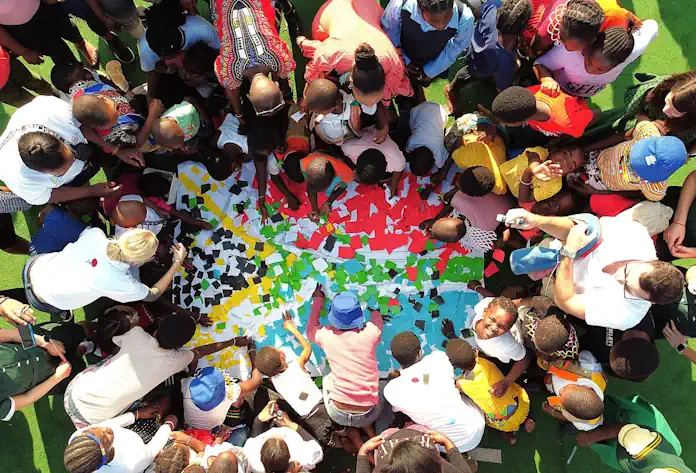
As the world observes World Inclusion Day on 10 October and Global Dignity Day on 15 October, the spotlight turns to the urgent need for societies to prioritise dignity and inclusion. These days are reminders that inequality, exclusion and indignity are not abstract issues; they are lived realities that carry heavy economic, social and psychological costs.
Former President Nelson Mandela once said, “A nation should not be judged by how it treats its highest citizens, but its lowest ones.” These words ring loudly in today’s fractured world, where inequality is deepening, societies are polarising and the very concepts of dignity and inclusion are fading from our collective vocabulary. Without them, both individuals and nations pay a steep price.
Inequality Costs Everyone
Globally, inequality is reaching alarming levels. South Africa currently has the world’s highest income and wealth inequality, with just 3,500 individuals owning the same wealth as half the population of South Africa.
The World Bank warns that inequality acts as a brake on development, and research by Professors Richard Wilkinson and Kate Pickett shows that highly unequal societies experience worse health outcomes, including mental health, higher rates of violence, weaker education systems and lower levels of trust.
“Exclusion is not simply the problem of the marginalised,” says Mandy Pearson, CEO of the ReStory Foundation. “It corrodes the social fabric for everyone. Societies with high inequality experience higher crime, lower trust, and weaker democracies. The economic cost is severe too, leading to wasted potential, lost innovation and diminished human capital. When the marginalised remain voiceless, we all suffer.”
The Pain of Being “Less Than”
The experience of poverty is too often reduced to numbers such as income, consumption or unemployment. Pearson emphasises that poverty is also about invisibility, inferiority and powerlessness. It is a poverty of being.
Actress Viola Davis captured this truth when reflecting on her own life: “When you’re poor you’re invisible. Nobody sees the poor. You’re no one’s demographic. Poverty seeps into your spirit, because you are not enough. If you speak up, you’ll be judged.”
The pain of poverty lies not only in the inability to afford bread, but in the belief that one’s life holds less worth. This psychological burden can prove more crushing than material deprivation, and well-intentioned charity or policy that pities or demeans can deepen this very poverty of being. Research on stress by Professor Robert Sapolsky and other research experts confirms the psychological toll, showing how feeling “less than” undermines productivity, resilience and socio-economic outcomes. Earlier this year, at the Stellenbosch Winter School, Pearson shared this perspective: the deepest cost of exclusion is existential, as people carry the constant weight of being “less than.”
When Inclusion Fails
South Africa has strong policies for redress and inclusion. Although our constitution enshrines dignity as a fundamental right and policies such as Broad-Based Black Economic Empowerment (B-BBEE) aim to open long-denied doors, implementation can fall short.
When inclusion policies are treated as box-ticking exercises or carried out in ways that strip people of agency, they can fail to build genuine inclusion and instead deepen humiliation, disempowerment, and alienation.
“Inclusion without dignity is not inclusion,” stresses Pearson. “It becomes another form of marginalisation.”
A Better Way: eye2eye© Two-Way Giving
The ReStory Foundation has developed a distinctive model called the eye2eye© approach, which recognises the equal worth of every individual. It fosters mutual dignity and empowerment through two-way giving, and celebrates the deep value of non-material contribution.
This approach rejects forms of charity that demean recipients, instead ensuring that everyone has the opportunity to contribute as equals. “Children from advantaged schools help our children with mathematics or chess, while our children teach them indigenous games and dances. During the festive season, children create gifts for their sponsors, reinforcing the joy of giving and receiving on both sides,” explains Pearson.
This approach is central to ReStory’s HOPE Building Model©, which emphasises Honouring, Outcomes, Potential and Empowerment. It empowers individuals to move from voicelessness to agency, enabling them to become courageous agents of change rather than objects of charity. The impact is profound, with children voluntarily helping one another, caregivers spreading learnings and bringing healing, and communities taking collective responsibility for problems such as litter, safety, and other local issues. “When people discover that their voice matters, they lift themselves, and those around them. When dignity and inclusion take root, societies flourish,” adds Pearson.
The Choice Before Us
As the world reflects on dignity and inclusion this October, we are reminded that dignity is not a luxury, nor inclusion optional. They are the foundation of a just and thriving society, and South Africa now stands at a crossroads. A choice must be made to either continue with approaches and practices that leave people feeling “less than,” or build systems and relationships that affirm worth and unleash agency. Every person can help build another’s dignity.
“The choice is both moral and practical. Without dignity and inclusion, inequality deepens, economies stagnate and societies fracture. With them, healing and transformation are possible, not only for the marginalised, but for us all,” concludes Pearson.