


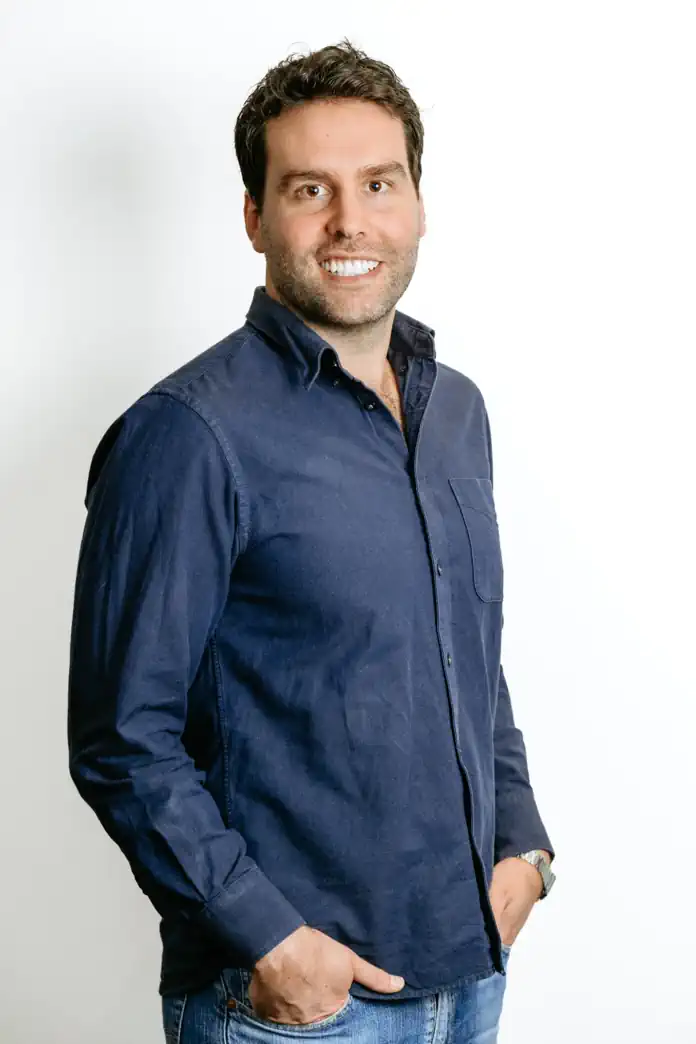
Tuberculosis (TB) is not a medical mystery, writes AI Diagnostics CEO, Braden van Breda. It’s a detection failure. And with technology like AI at our disposal, he believes the MedTech industry has the power to step up and fix it.
Johannesburg, 4 June 2026: TB remains the deadliest infectious disease in the world, but it’s not killing people indiscriminately, it’s killing people in poor, developing countries.
Data from the World Health Organization makes this very clear. In 2024, most TB cases were concentrated in developing regions, especially South-East Asia, the Western Pacific, and Africa. In South Africa, an estimated 54 000 people died of TB in 2024. That’s a soccer stadium full of people wiped out by TB in a single year. Meanwhile, the Americas accounted for just 3.3% of global cases and Europe 1.9%.
The danger is that we get complacent about these numbers because we’re so used to hearing them. It’s not normal that people’s loved ones are dying from TB by the tens of thousands in some parts of the world, while in others, the incidence is low enough to be almost negligible.
Detection is the crisis
We already know what causes TB. We know how it spreads, how to diagnose it, and how to treat it. South Africa is losing this fight because the tools we currently have don’t catch cases early enough.
Since TB is easiest to treat (and least likely to spread) when it’s found early, the result compounds. Too many people are only diagnosed once they become seriously ill. By then, they’ve already infected others, and the cost and effort of accessing care often becomes a barrier in itself.
The science is there; the failure now lies in access to quality screening. The question we need to ask ourselves is whether we’re serious about bringing healthcare to people instead of forcing people to chase healthcare.
Start designing TB screening around the communities that need it most
Too much of our TB diagnostic infrastructure remains concentrated in too few facilities, and that depends on expensive equipment, medical specialists, and referral pathways.
For many people, especially in rural areas and poorer communities, getting to a hospital means losing a day’s wages, while having to pay for transport they can’t afford. The result is that people wait or don’t go at all. In 2024, only about 184 000 of the estimated 249 000 South Africans who fell ill with TB were diagnosed and started on treatment. That leaves around 65 000 people who were missed altogether.
This is why community-level screening matters so much. We can’t build specialist diagnostic centres next to every rural clinic. Even if we could, we don’t have enough specialists to run them. The answer is to put simpler, portable, and locally workable screening tools into the hands of frontline healthcare workers, especially nurses in primary care settings.
South Africa can’t wait around to be rescued
If the bottleneck is access, then innovation has to begin where access fails. That means building around the healthcare system we have, not the one we wish we had. How do we equip the nurse at the overcrowded community clinic? If we’re serious about combating TB, that’s the question we have to answer.
It’s also why South Africa can’t keep assuming that imported solutions from European or American healthcare systems will automatically fit our realities. We need tools designed for our burden of disease, clinic environments, and constraints. The countries carrying the heaviest burden should also be shaping the next generation of practical, scalable solutions.
The local MedTech sector needs to decide whether it’s serious about that responsibility. It’s one thing to produce impressive technology for conferences and investor decks, but can it be used in a crowded community clinic by a healthcare worker at the end of an 18-hour shift? If the answer is no, it’s not solving the real problem.
When a curable disease is killing tens of thousands of people, we can’t afford to sit around and wait to solve the problem. Thanks to advances in technology, the tools to close the screening gap are no longer beyond our reach. Failing to use them is inexcusable.
About Braden van Breda:
Braden is the CEO of AI Diagnostics. He brings nearly 11 years of experience in medical device development to the company. Earlier in his career, he created devices for minimally invasive cardiovascular surgeries. He holds 6 international patents for medical devices, and has contributed to the development of 6 medical devices.
Press Contact:
Mantis Communications
Kerry Simpson
Tel: 079 438 3252
Email: [email protected]