



Yog is the tool for evolution prescribed by vedic rishis. In essence it means union with self and this union is effectuated by one’s Guru. Various practices have been given over times depending on the state of humankind to achieve this. One such form of yog is Hatha yog, an abbreviation of Ham-Tham Yog where Ham refers to left breath and Tham to the right breath. Svar Yog as an extension of Hatha yog pertains to breath and manipurak chakra.
When you start any yog sadhna, you are asked to first observe your breath. This is because breath is in fact the doorway between the physical and the etheric. The beauty of the human body is that it is possible to travel to any dimension from here. And breath becomes the tool for this.
A human body has 72000 nadis, all connected directly or indirectly with the manipurak. Ida (Chandranadi), Pingala (Suryanadi) and Sushumna are the primary nadis (also called Ganga, Yamuna and Saraswati). These three nadis emanate near mool chakra and move up. The point from which they separate is called mukt triveni. Ida ascends from left, pingala from right and sushumna from center of spine. They converge at bhumadhya, corresponding to the center of eyebrows. The point at which they converge is called yukt triveni.
The breath which moves from left is called ida or chandra svar and the one from right is called pingala or surya svar. When both become balanced its called sushumna svar. In a healthy person the svar changes every hour, that is, 24 times in a day. Each svar has its relevance and sphere of influence and accordingly our ancients prescribed specific svars for specific tasks.
When ida svar is active, it is conducive to partake liquids, perform tasks which require less labour, urination, easy journey, listening to /singing devotional songs, peaceful tasks. When pingala svar is active intensive labour tasks can be performed, it is ideal state of exercise, for defecation, for intake of food, for bathing and for sleeping (therefore one is advised to sleep on left side of body).
Sushumna svar tasks include yog sadhna, dhyan, mantra jaap and other spiritual practices.
Sanatan Kriya is a potent tool to balance the various layers of the body. It details specific pranayams for activation of the three swars.
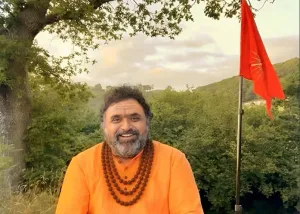
Ashwini Guruji is the guiding light of Dhyan Ashram . To know more about science of swar and sanatan kriya, visit www.dhyanfoundation.com