For decades, non-prescription medicine has been understood through three familiar letters: OTC, which means over-the-counter. The term describes medicines consumers can access without first obtaining a prescription,1 but it does not fully describe what increasingly happens between a patient with an ailment and leaving a pharmacy with a treatment.
In South Africa, that journey frequently involves a healthcare professional assessing the patient, asking questions, considering treatment options and making a recommendation. Pharmacist-initiated therapy is already included within pharmacists’ professional scope of practice,2 reflecting a role that extends well beyond dispensing medicines. For patients, pharmacists and the pharmaceutical industry, the distinction is important.
OTC is not disappearing
It would be incorrect to suggest that South Africa is formally replacing OTC with pharmacist-initiated therapy as a regulatory category. SAHPRA continues to use OTC terminology, and medicine scheduling remains governed by the Medicines and Related Substances Act and applicable Schedules.1
What is changing is the context in which many non-prescription medicines are selected and used. “OTC describes the regulatory status of a medicine, but it doesn’t necessarily describe the healthcare interaction around it,” says Michael Gullan, CEO of Pharmacy Institute, an accredited education provider reaching more than 13,200 pharmacy professionals in South Africa. “A patient may not need a prescription, but that doesn’t mean they’re making the treatment decision alone.” A patient who walks into a pharmacy with a cough, pain, allergy symptoms or digestive complaint may have several treatment options available without a prescription. Choosing between them can require much more judgement than simply matching symptoms to product.
For pharmacists, the recommendation is increasingly clinical
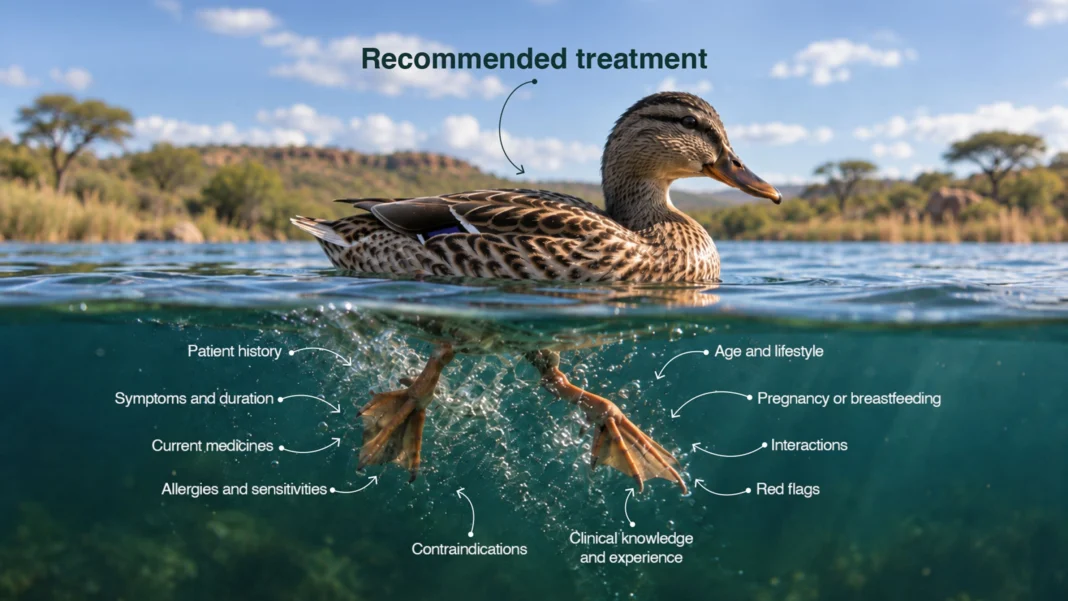
A pharmacist-initiated approach places greater emphasis on assessment before prescribing. The pharmacy professional may need to consider the patient’s age, symptoms, duration of illness, existing medical conditions, other medications, allergies, pregnancy status and possible contraindications.4 They must also recognise when symptoms fall outside the boundaries of self-care and require referral. This means the pharmacy professional increasingly functions as a clinical decision point rather than simply the final stage of a retail transaction.
“Patients often see the recommendation, but not everything behind it,” says Gullan. “The pharmacist may have considered several treatment options, ruled out contraindications, identified a possible interaction and decided whether the patient can appropriately self-treat, all within a short conversation.” This places a growing premium on current clinical knowledge. As treatment choices expand and pharmacists take on broader primary healthcare responsibilities, ongoing professional education becomes increasingly important to safe, evidence-informed decision-making.
For consumers, access comes with expertise
For consumers, this evolution could make the pharmacy an even more valuable entry point into healthcare. The accessibility of non-prescription medicine has traditionally been one of its greatest strengths. Pharmacist involvement adds professional assessment and advice.4
Two people asking for treatment for apparently similar symptoms may not require the same medicine. One may be suitable for self-care, while another may have an underlying condition, contraindication or red flag requiring a doctor’s evaluation. The pharmacist can make that distinction. “Pharmacist-initiated care should not be understood as creating another barrier between the patient and treatment,” says Gullan. “Its value is almost the opposite. It combines accessibility with professional judgement, helping patients navigate treatment choices safely and appropriately.”
For manufacturers, the decision journey looks different
The implications for the pharmaceutical industry are significant. The traditional OTC marketing model has placed considerable emphasis on the consumer: build awareness of a condition, establish brand recognition, create demand and encourage the consumer to seek treatment.
That remains important, but consumer awareness may not – and should not – determine the treatment purchase. A successful campaign may prompt someone to recognise their symptoms and walk into a pharmacy seeking treatment. While the consumer campaign generates demand, the pharmacy professional ultimately recommends the most appropriate treatment for the individual.
For pharmaceutical brands, this creates a gap between category demand and brand recommendation. “You can successfully educate consumers about a health need and drive them into pharmacy, but the final treatment decision may be influenced by the healthcare professional,” says Gullan. “That means the industry needs to understand the entire patient journey, not only the consumer-facing part of it.”
Pharmacy professionals are not another advertising audience
If pharmacy professionals have greater influence over treatment selection, the answer cannot simply be to direct more conventional advertising towards them. Medicines are not ordinary consumer goods, and their appropriate use affects health. Pharmacy professionals need to understand symptoms and ailments, different patient presentations, and match treatment to appropriate patient care.
“The objective should never be to teach a pharmacist what to recommend regardless of the patient,” says Gullan. “Professional education should provide the latest medical information on front-line ailments and treatment options to help them make appropriate treatment recommendations for the patient in front of them.” For manufacturers, this raises the bar. Product knowledge needs to sit within clinical and category knowledge to be genuinely useful in pharmacy.
Rethinking the marketing funnel
The move to pharmacist-initiated care doesn’t make consumer marketing less important. It makes the treatment journey more complex. Consumer communication can create awareness, improve health literacy and motivate people to seek treatment,5 while professional education supports the healthcare professional who assesses the need and makes a recommendation. For pharmaceutical marketing teams, particularly as 2027 strategies and budgets are developed, this raises an important question: does investment reflect the full journey from consumer awareness to appropriate medicine selection? “Reach, impressions, brand awareness and consumer engagement will remain important measures. But in categories where pharmacy professionals play an important recommendation role, professional knowledge and confidence deserve a place in that equation too,” says Gullan.
The pharmacist changes the transaction
OTC remains an important regulatory term, but it describes how a medicine is accessed, not the healthcare interaction that can happen before it is chosen.6 Pharmacist-initiated therapy forms part of pharmacists’ scope of practice,2 making clinical and product knowledge increasingly important to treatment recommendations. For manufacturers, this means consumer demand is only part of the journey. Brands also need to earn the confidence of the healthcare professional helping patients make treatment decisions. “This isn’t about an acronym,” concludes Gullan. “It’s recognising the crucial clinical judgement that goes into each recommendation, the impact it has on patients and contribution to South Africa’s healthcare system.”