



Eleven conversations to move beyond rhetoric to action-based agenda
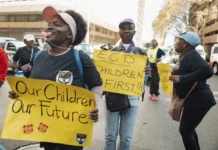
Equity in education can no longer remain a virtue to be celebrated in mission statements, it is an urgent and fundamental obligation. For too long, South Africa has treated it as a noble but distant ideal, and the result is a system where talent and effort are too often overshadowed by postcode, language, gender, income, and ability.
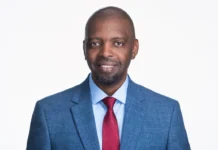
“Who thrives and who is left behind remains deeply predictable, and that predictability is a failure of imagination as much as of policy,” says Dr Bronwyn Batchelor of The Academic Centre of Excellence at The Independent Institute of Education (The IIE) and Advtech.
Dr Batchelor is the convenor of The IIE’s Third International Conference on Teaching and Learning hosted by Emeris, set to take place from 23 to 27 November 2026 at the Emeris Sandton Campus. The landmark conference will bring together local and global researchers, practitioners, policy makers, and institutional leaders under a single theme: Equity in Education, not as rhetoric, but as an action-based agenda.
“South Africa is not a neutral backdrop for this conversation. It is one of the world’s most unequal societies, home to both world-class universities and communities where basic digital connectivity remains a luxury,” says Dr Batchelor.
“Hosting this conference here, at a pivotal moment for post-pandemic recovery and amid growing calls for curriculum transformation, is itself a statement. The IIE and Emeris are insisting that the global scholarship of education must be conducted from and for contexts like this one.”
Eleven conversations that matter right now
The conference will explore the most urgent topics facing education today, with a strong focus on equity, access, and inclusion. Key discussions will examine AI in education, emerging models of education, and student funding, access, and social mobility.
Additional sessions will address inclusive and transformative practices, including inclusive education and learning diversity, equity in assessment and evaluation, spatial and institutional equity, and curriculum transformation through social justice, decoloniality, culturally sustaining pedagogies.
Finally, the programme will cover wellbeing and educator support, exploring the intersections of mental health, student wellness, and academic success, alongside professional development for equity.
“The real work of equity begins when we move beyond the assumption that uniform provision is enough and confront a more demanding question: how do our policies, cultures, pedagogies, and systems actively support or hinder every student’s capacity to achieve meaningful outcomes? This is the territory that higher education must now occupy with urgency and rigour,” says Dr Batchelor.
“This is why The IIE’s Third International Conference on Teaching and Learning hosted by Emeris arrives at a pivotal moment. What unites the eleven conversations is a refusal to treat equity as a peripheral concern, to recognise that seemingly technical decisions – in assessment, technology, curriculum, or space design – carry profound ethical weight. They determine whether our institutions are merely open in name or open in practice.
“We look forward to creating this space for genuine exchange: for South African academics to place their insights in global dialogue, and for international participants to have their assumptions productively challenged by realities that cannot be theorised away.”
See the full list of themes below. Interested parties are invited to contact [email protected] .
| 1. AI in Education: Equity, Ethics & Access | Responsible use of AI and educational technologies to improve equity, access, and inclusion; democratisation of AI tools; AI-proof assessments. |
| 2. Emerging Models of Education | Hybrid, blended, flipped, and HyFlex learning; online and distance education; innovative delivery models that widen access. |
| 3. Mental Health & Wellbeing | Intersections of student wellness, mental health, and academic performance; institutional support and the role of educators. |
| 4. Transformative & Transgressive Learning | T-Learning, decoloniality, cultural and curriculum relevance, and centring marginalised voices in academia. |
| 5. Equity in Assessment & Evaluation | Fair measurement of learning; reducing biases; alternative and authentic assessments; inclusive assessment design. |
| 6. Digital Equity & the Future of Learning | Bridging the digital divide; access, connectivity, and skills; ethical implications of educational technologies for underserved communities. |
| 7. Inclusive Education & Learning Diversity | Teaching approaches for students with diverse learning needs; neurodiversity; language and multilingualism; disability inclusion. |
| 8. Transformation, Social Justice & Curriculum | Curriculum transformation; culturally sustaining pedagogies; equity across public and private higher education sectors. |
| 9. Spatial & Institutional Equity | Designing inclusive physical, digital, and hybrid learning environments; institutional culture, belonging, and accountability. |
| 10. Student Funding, Access & Social Mobility | Financial barriers, funding models, student retention, employability, and social mobility as equitable outcomes. |
| 11. Professional Development for Equity | Training programmes for educators; continual professional development; building equity literacy; supporting emerging researchers. |