An immersive exhibition honouring !Xun and Khwe memory
Yzerfontein, South Africa: What happens when a collection of linocuts, created by artists from communities displaced by war, is reimagined through animation, projection and sound? Audiences can experience this at We Are What Remains, an immersive digital art exhibition opening at !Khwa ttu San Culture & Education Centre in Yzerfontein, on the West Coast of South Africa, on 31 October 2026 – October 2027.
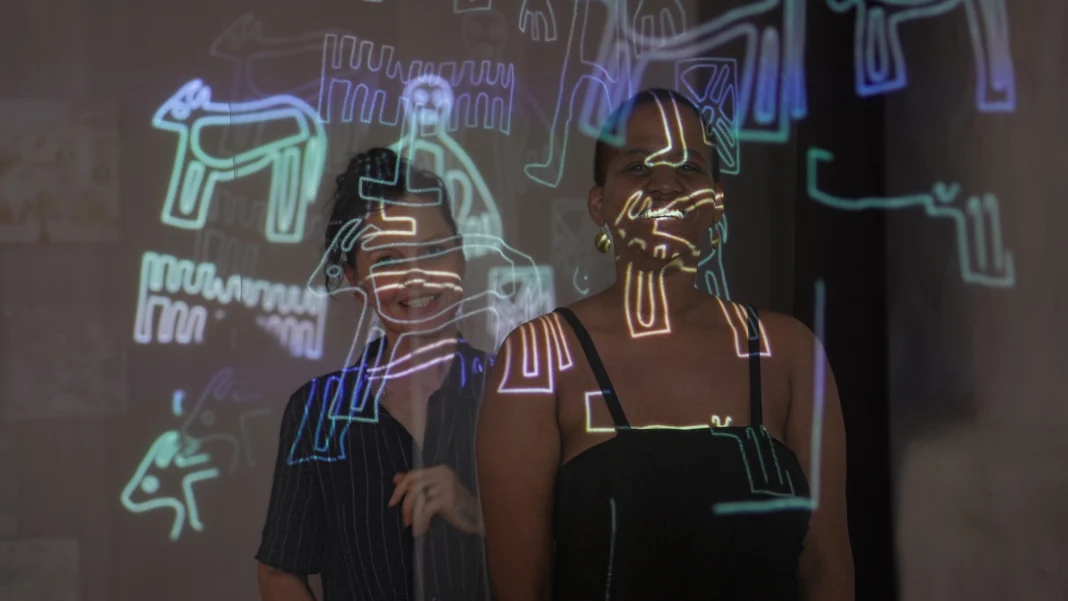
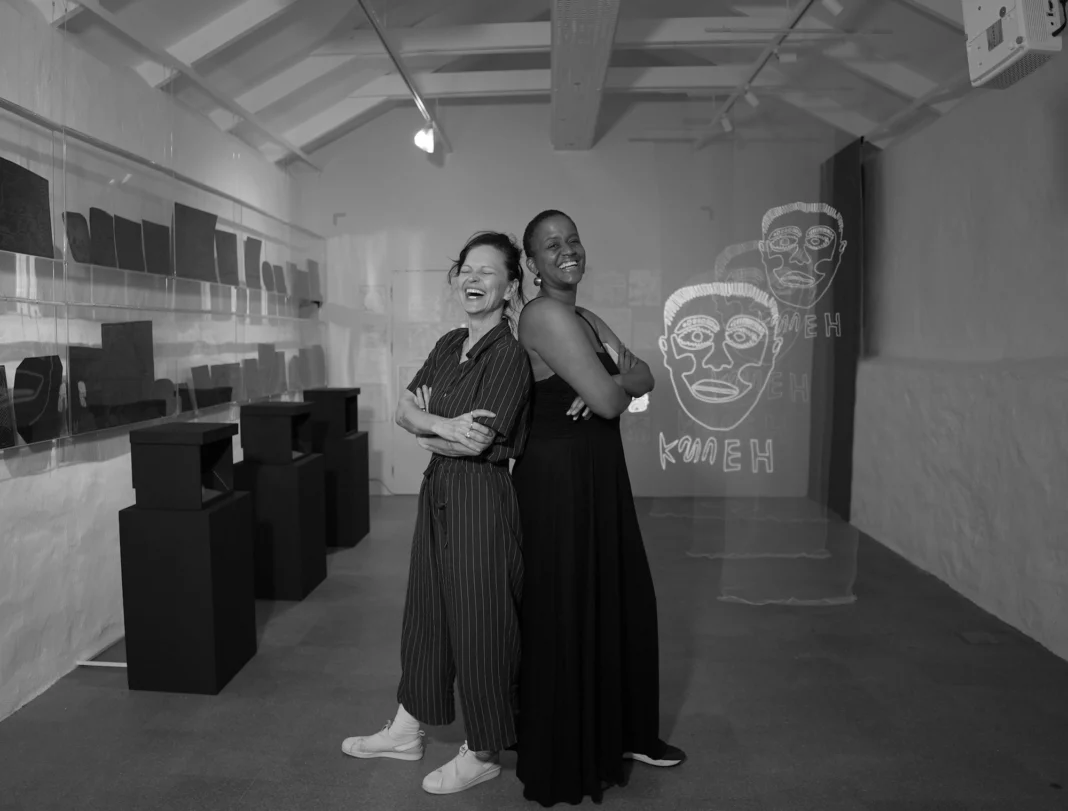
Visitors will be able to explore an immersive installation combining projected imagery, animation, spatial audio and sculptural elements. They will encounter linocut figures brought into motion through light, animations unfolding across surfaces, and optical illusions that create the impression of images suspended in space. Together, these elements offer new ways to engage with the artworks and the histories, memories and San cosmologies they reflect. We Are What Remains honours not only what has been lost, but also what has survived.
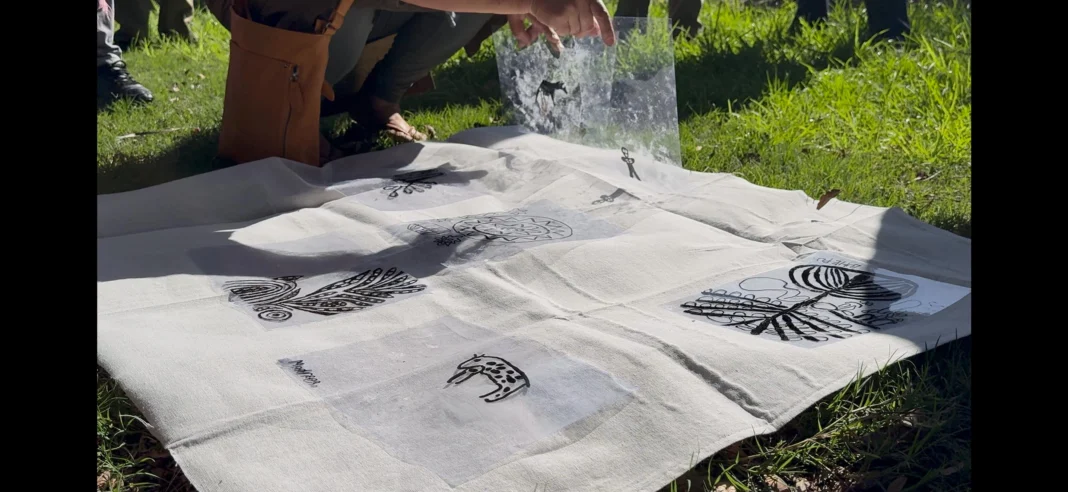
At the heart of the exhibition is a collection of linocuts, prints made by carving designs into linoleum and transferring them onto paper, created by !Xun and Khwe artists during the 1990s and 2000s. The artworks emerged from a little-known chapter in southern African history. Following Namibia’s independence in 1990, !Xun and Khwe communities, including former members of the South African Defence Force’s 31 Battalion and their families, were relocated to Schmidtsdrift in South Africa. Originally from northern Namibia and southern Angola, the two distinct communities were brought together through displacement. The exhibition offers an opportunity to revisit this history through the artists’ own perspectives, giving renewed visibility to their experiences, memories and cultural knowledge.
In 1993, an arts project initiated by Catharina Scheepers provided a space for !Xun and Khwe men and women living in Schmidtsdrift to create linocut prints. Working in makeshift spaces, the artists produced images reflecting experiences of war, displacement, community and longing for home, with each developing an individual style. Today, !Khwa ttu holds 600 original linocuts from the project, preserving an important visual record of the communities’ histories and cultural knowledge.
“The significance of the linocuts lies in their ability to preserve and transmit cultural memory, inherited knowledge, oral tradition, identity, and resilience,” says Magdalena Lukas, Museum Curator at !Khwa ttu. “They are living archives of San worldviews, sustained through artistic practice rather than written record. For the !Xun and Khwe artists, the linocuts are a vital means of safeguarding endangered cultural knowledge and asserting continuity in the face of profound historical disruption.”
For the original artists, the linocuts also represent a connection between generations and a way of passing on cultural knowledge. “We learned from our parents, and they learned from their parents, and we want our children to learn from us. Our forefathers created art and we are guided by our ancestors to create this art,” says Luhepu Kaheke, one of the original San linocut artists.
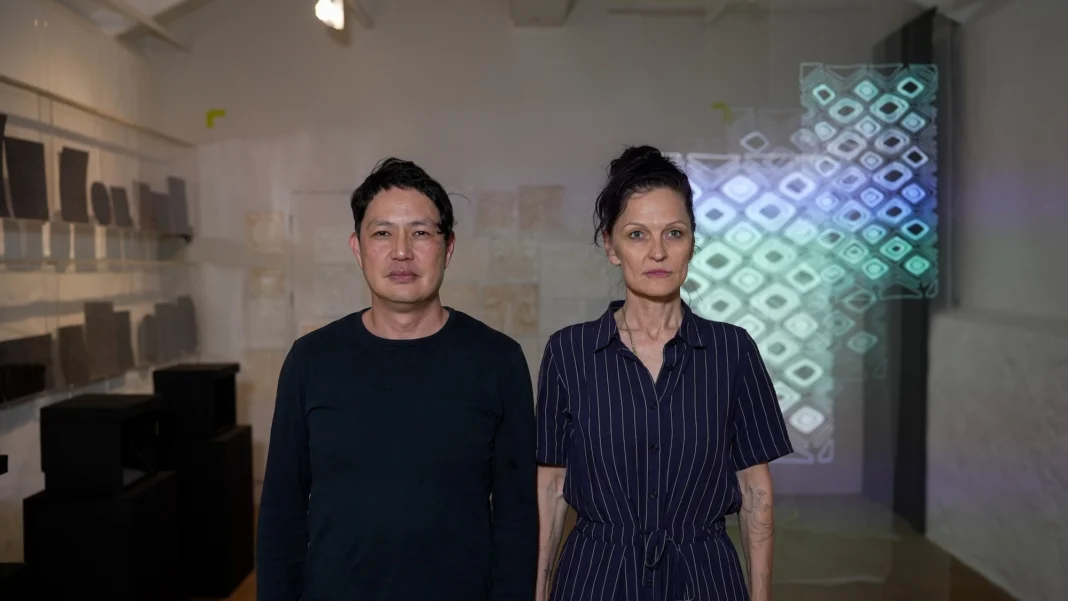
Developed by Open Draft, a South African creative company specialising in cultural curation and immersive design, in collaboration with !Khwa ttu and seven of the original artists, We Are What Remains combines the original linocuts with immersive technologies. The creative process has centred on the artists’ experiences and individual forms of expression, exploring how their works can be interpreted in a new medium while remaining rooted in the original artworks.
“Light, sound and movement bring the artworks to life through immersion and projection mapping,” explains Inka Kendzia, Co-Director and Creative Technologist at Open Draft. “We wanted the artists’ own voices to come through,” adds Faye Kabali-Kagwa, Producer and Co-Director at Open Draft. “All the artists have shared experiences, but the creative expression is unique and particular to each artist.”
We Are What Remains is the third of six exhibitions developed through Futures_Past: Amplifying Memory with Immersive Technologies, an initiative of the Embassy of France in South Africa, Lesotho and Malawi and the French Institute of South Africa (IFAS), in partnership with Electric South and funded by the French Ministry for Europe and Foreign Affairs. The programme brings together creative teams and archives across the three countries to co-create immersive works that offer new ways for audiences to engage with historical collections.
“At !Khwa ttu, the linocuts are not simply objects to be preserved. They are living testimony,” says Sofia Saa, Regional Head of New Media, Film and Television at IFAS. “By working alongside the artists and the community, this project shows how immersive tools can help audiences step into history with care and respect, and feel why these stories still matter today.”
Event details
We Are What Remains – Immersive exhibition
Exhibition dates: 31 October 2026 – October 2027
Venue: !Khwa ttu San Culture & Education Centre, R27, Yzerfontein, Western Cape, South Africa
Entry to the museum: R130