


Created by educator John James, Journey was designed to push pupils beyond the familiar and into an environment where teamwork, resilience and responsibility truly matter. “When young people are trusted with real responsibility in nature, they discover strength they didn’t know they had,” says James. “Journey was built to help them grow – physically, emotionally and socially.”
Inside the Journey experience
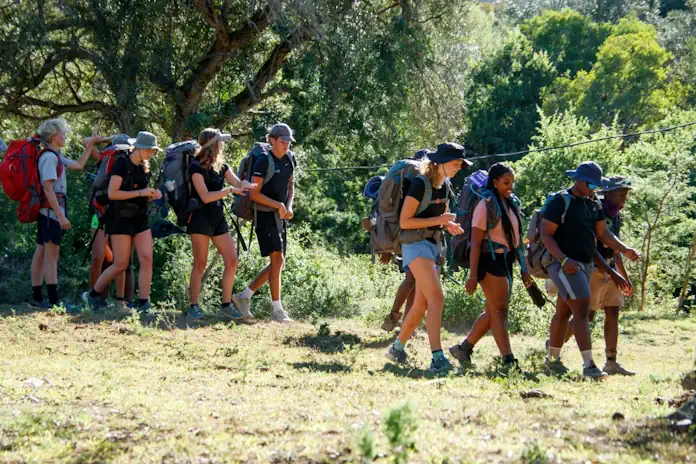
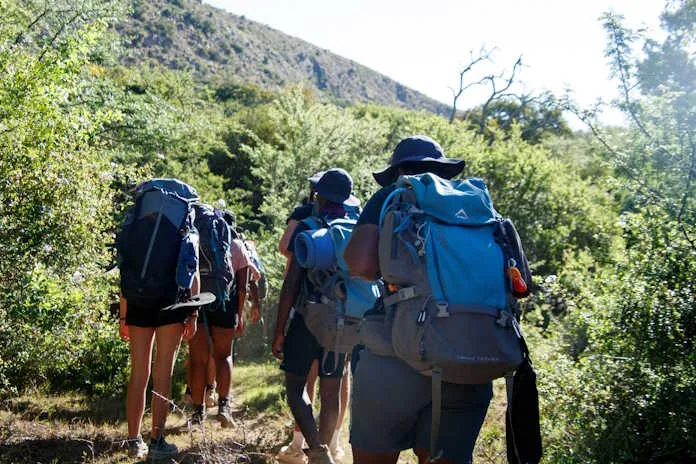
Across three weeks, pupils walk, cycle, paddle and navigate through the rugged landscapes surrounding the Fish River in mixed groups guided by trained staff.
What to expect:
- Physical challenge and outdoor skills
- Leadership rotations and teamwork
- Service work supporting local schools with painting and upgrades
- Intentional phases designed to build confidence, empathy and independence
Current programme lead Ryan Dewey notes, “Every part of Journey has a purpose. By the end, pupils have a clearer sense of who they are and how they work with others. It’s remarkable to watch their confidence grow.”
For many pupils, the challenge becomes a defining memory of their school years. A particularly powerful moment during Journey is Solo – a quiet pause in nature where pupils step briefly away from the group to reflect on how far they have come.
“I think to describe Journey briefly is to say that it was so amazing, including both the ‘bad’ and the good. No matter how much I try to explain it, you truly have to experience it yourself to fully understand,” says Anathi Mayekiso, a Grade 11 pupil. “It wasn’t easy – walking for hours with a heavy backpack isn’t my favourite thing but it’s about mindset. Some of the toughest parts were the downhills from Angel, the hike before Solo, and cycling on day two. I nearly cried before Solo because I was so done. But through it all, you learn to endure and keep going. I think the most fun parts were when you get to your campsite and have the rest of the day to chill with your group, getting to know each other, playing games during the day and around the campfire, or just having normal chats with someone you’ve never spoken to before, as well as the deep conversations I would have with my friends (shoutout group 5). For me, Journey was one long ‘I can’t believe I did that’ moment. Even now, I can’t believe I completed 21 days. I would go back again if I could.”
Parents often note the remarkable sense of camaraderie that develops over the course of the programme. As one parent stated, “I just wanted to share that the leading team were absolutely wonderful in how they managed and motivated the group, which, from what I have heard, comprised a substantially diverse mix of personalities and inquisitive teens; however, they all gelled and formed a cohesive team under the guidance of the most incredible adults.”
Another parent reflected on the early days of the trip; “You can see by the smiles on their faces that they are having a ball and are settling into this whole experience and bonding well.”
A rare and valuable co-ed experience
Although DSG and St Andrew’s College are single-sex schools, Journey offers a unique co-educational experience from Grade 10. Groups are split equally between girls and boys from both schools – an intentional design that reflects the realities of the world pupils will enter after school.
“Out there, labels disappear,” says James. “Pupils simply become teammates. The co-ed dynamic builds healthier communication, mutual respect and collaboration, all skills they’ll need in real life.”
Research supports these observations. South African studies into outdoor adventure education by Dr Judith Blaine and Dr Jennifer Akhurst have shown that extended outdoor programmes contribute to measurable improvements in adolescent wellbeing. Their research highlights gains in areas such as self-esteem, resilience, social cohesion and emotional development, reinforcing the powerful role that structured outdoor learning can play in adolescent flourishing.
Fueled by community spirit
Journey is made possible through the commitment of staff who volunteer to lead groups, coordinate logistics and manage food drops, as well as the long-standing support of local farmers and landowners who open their terrain to pupils each year.
“It’s a programme powered by many hands and a lot of heart,” says Dewey. “That generosity is part of what makes Journey so special.”
Parents often echo this sentiment. As one reflected after the programme; “Journey is an unbelievable experience for these kids, which St Andrew’s and DSG get so right – most schools do offer some form of Journey, but nothing quite compares to the JJFRJ. What a privilege it is for these kids to experience this.”
More than an adventure
In a fast-paced, screen-dominated world, Journey offers something increasingly rare: time outdoors, meaningful challenge and the space for adolescents to discover who they are becoming.
“If a young person returns more grounded, more confident and more self-aware,” says James, “then Journey has done exactly what it was created to do.”