



22 May 2025, We often think of gleaming skyscrapers and lucrative mines as the commanding heights of the economy. But the hundreds of thousands of township taverns, rural spaza shops, and informal salons serving tens of millions of South Africans are just as important in driving the economy as the decisions made in corporate boardrooms.
These small, informal businesses are the heartbeat of the economy, providing a vital lifeline for rural, peri urban and township communities. From the bustling streets of Gauteng to the villages of rural Eastern Cape and KwaZulu Natal, corner shops are hubs of activity, connectivity and commerce.
They deliver essentials everyday like electricity, airtime, data, and digital services to people in underserved communities who might otherwise go without. They ensure that communities can purchase necessities without having to travel long distances at great expense.
And these informal stores provide employment for millions, particularly for marginalised groups like women and youth, who may not find formal jobs. By keeping money circulating in communities, they play an invaluable role in the development of underserved areas where economic opportunities are rare.
Micro traders, massive impact
The numbers in the informal sector are staggering. According to the International Labour Organization, over 85% of employment in Africa is informal, driven by necessity, ingenuity, and resilience. In South Africa, this translates into income for 2.5 million workers (excluding agriculture) and roughly 17% of total employment.
Trade Intelligence, meanwhile, values the informal grocery sector, including spaza shops and mobile traders, at R184 billion. According to Trade Intelligence, some 11.1 million South Africans do their grocery shopping at these stores, citing convenience and low prices.
Scratch beneath the statistics and you’ll find numerous stories about how informal traders provide a thread of connection for their communities. These traders operate where banks don’t go, where infrastructure is thin, and where traditional retail chains find it unprofitable to operate.
They are often the only touchpoint for a family to buy electricity so the children can study, for a job seeker to top airtime so that they can look for work, or for a student to buy data for online learning. But informal traders are not points of commerce. They’re community hubs where people meet, creating a sense of social coherence.
Challenging environment
That said, despite their grit and resilience, informal traders operate in a challenging environment. Cash crime, limited access to finance, rising prices and regulatory barriers are some of the obstacles that micro traders encounter every day. They also face growing competition from formal retail chains.
It’s thus vital that South African policymakers and big business work with informal traders to help them strengthen and grow their business. From improving access to credit to strengthening supply chains in every corner of the economy, there are numerous opportunities to nurture the vibrant informal trade ecosystem.
Fintech innovation is an important lever for enabling township and rural entrepreneurs to provide better services to their communities. By bridging the gap from modern financial systems and supply chains to the informal market, we can help extend financial inclusion to every corner of the economy.
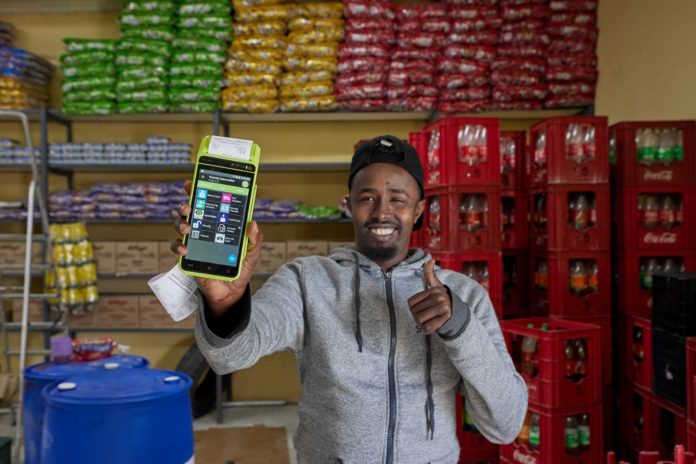
Fintech platforms bring a new digital layer to the informal sector, transforming the economics for the better. With a single terminal from a provider like Kazang, a merchant can sell prepaid airtime and electricity, accept bill payments, access capital, make cashless payments to suppliers, and accept digital and card payments from customers.
This doesn’t just create convenience. It makes transactions faster and safer. Stock and cash flow become easier to manage. Traders gain the ability to earn commissions on value-add services and attract footfall by becoming one-stop shops. All of this puts more margin and more power in the micro merchant’s hands.
The impact on the community that the informal trader serves is just as profound, A R10 airtime purchase isn’t just a sale. It is a gateway to job applications, schoolwork, side hustles, and family connections. Data creates access to information. Electricity nourishes families and minds. Airtime can unlock new opportunities to create better futures.
For that reason, one of the keys to growing the larger economy lies in empowering the merchants who already serve their communities with trust, proximity, and persistence. Each one of them is a node in a grassroots economic network. Energising townships and revitalising the economy starts right here at the corner store.
ABOUT KAZANG
Kazang is a leading provider of cash and digital solutions to merchants in Southern Africa’s informal economies. Our fintech solutions include a diverse range of value-added services (VAS), card acquiring, secure cash vaults and supplier payments platforms. Operating with a network of approximately 90,000 active devices, we process approximately 2.2 million transactions daily in markets such as South Africa, Namibia, Botswana, and Zambia.
We are dedicated to helping small and medium merchants grow and succeed, through increasing their sales, making their businesses more efficient and reducing their risks with its holistic portfolio of products and services. Kazang is a member of Lesaka Technologies.
ABOUT LESAKA TECHNOLOGIES, INC
The Connect Group and Kazang was acquired by Lesaka Technologies, Inc. in April 2022. Lesaka Technologies, (Lesaka™) is a South African Fintech company that utilizes its proprietary banking and payment technologies to deliver superior financial services solutions to merchants (B2B) and consumers (B2C) in Southern Africa. Lesaka’s mission is to drive true financial inclusion for both merchant and consumer markets through offering affordable financial services to previously underserved sectors of the economy. Lesaka offers cash management solutions, growth capital, card acquiring, bill payment technologies and value-added services to retail merchants as well as banking, lending, and insurance solutions to consumers across Southern Africa.
Lesaka has a primary listing on NASDAQ (NasdaqGS: LSAK) and a secondary listing on the Johannesburg Stock Exchange (JSE: LSK). Visit www.lesakatech.com for additional information about Lesaka Technologies (Lesaka ™). $LSK / $LSAK