

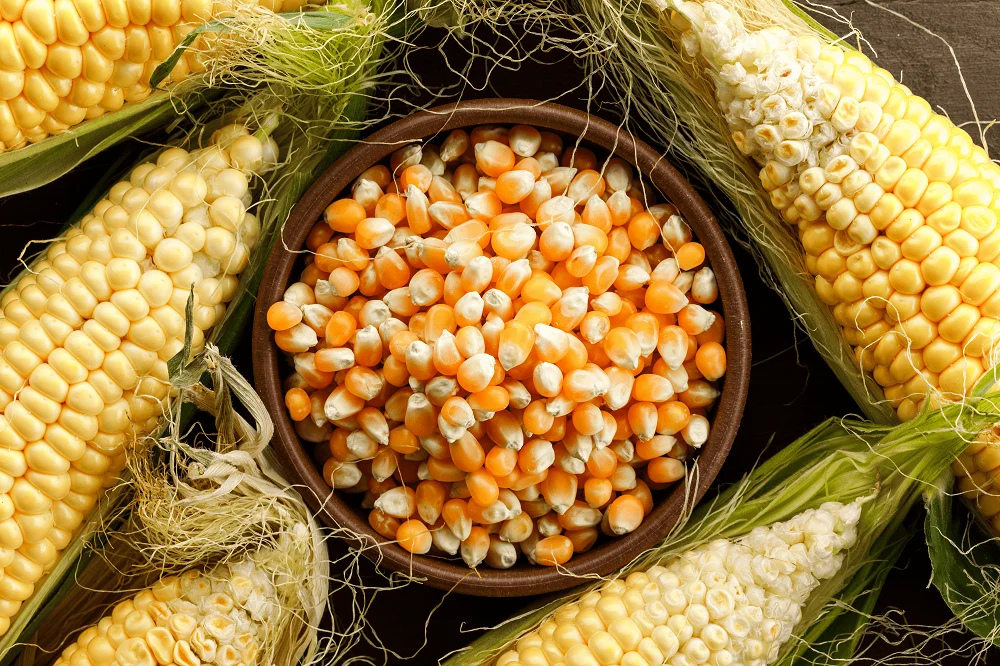
As the world marks Maize Day on 27 November, attention turns to the farmers, businesses and agricultural partnerships behind one of South Africa’s most important staple crops, and the interconnected value chain that brings maize from the field to the family table, feeding millions of households.
White maize is deeply embedded in South African food culture, featuring in everyday meals such as pap, uphuthu and samp. While it is a familiar presence in households across the country, the journey that brings it there involves far more than simply planting and harvesting a crop.
For Ryan New, Managing Director of The Original Grain Company, Maize Day provides an opportunity to recognise the importance of the agricultural value chain and the many different role players who contribute to food production and security.
“We often think about food security in terms of whether food is available to consumers, but the process starts much earlier. It begins with farmers having access to the resources, finance, knowledge and support they need to produce a crop. From there, that crop needs to be harvested, transported, processed and connected to a reliable market. Every stage matters,” says New.
From planting to production
For farmers, particularly emerging and communal farmers, one of the biggest challenges is securing the resources needed to establish a crop before any income can be generated.
Seeds, fertiliser, labour, fuel, equipment and other essential inputs all require upfront investment. Farmers also need appropriate agricultural expertise, operational support and reliable buyers who can provide a viable route to market once the crop has been harvested.
Without these elements, potentially productive agricultural land can remain underutilised, while farmers may struggle to participate meaningfully in the agricultural economy.
New believes that supporting agricultural production requires an approach that considers the entire farming cycle, rather than focusing on individual interventions. “Providing finance to plant a crop is an important starting point, but it cannot be viewed in isolation. Farmers need the right inputs, guidance and operational support throughout the growing season, as well as confidence that there will be a market for their produce when harvest time arrives,” he explains.
This integrated approach underpins the structure of The Original Grain’s three interconnected entities, each with a distinct but complementary role.
The Original Grain Fund provides planting-season finance through its Advanced Agricultural Product Purchasing (AAPP) programme, helping farmers access the resources required to establish and manage their crops. The programme also incorporates a structured offtake arrangement through The Original Grain Company, with harvested produce purchased at market-related, SAFEX-linked prices, providing farmers with a defined route to market.
The Original Grain NPC focuses on community partnerships, practical agricultural training and development, helping communities build the skills, structures and productive capacity needed to participate in agriculture and develop sustainable livelihoods.
The Original Grain Company focuses on the commercial side of the agricultural value chain, including the sourcing, trading and logistics of agricultural commodities such as white maize, yellow maize and soybeans. Through its trading and supply-chain activities, it connects agricultural producers with buyers and markets across Africa, moving commodities by road and sea.
Together, these entities connect agricultural finance and community development with the commercial infrastructure required to move produce from farmers to markets.
Every link plays a part
The journey from the field to the family table does not end when a crop is harvested. Transporters and logistics providers connect farming regions with storage facilities, processing plants and commercial buyers, while millers and processors transform raw maize into products that can be distributed to retailers, businesses and consumers.
Efficient handling, storage, transportation and processing are all essential to maintaining the flow of agricultural commodities through the supply chain. Farmers need buyers, processors need a reliable supply of raw materials, and consumers depend on these different activities working together.
“Food production is a collective effort. The farmer who plants the maize, the people involved in harvesting it, the transporters moving it, the millers processing it and the businesses supplying the market are all part of the same value chain. Each plays an important role in getting food from the field to the table,” says New.
Beyond food production, these activities also support employment, skills development, business opportunities and economic participation across rural and urban communities.
Creating opportunities through agricultural partnerships
Strengthening agriculture requires collaboration between farmers, agricultural businesses, financial institutions, corporates, development organisations and other stakeholders.
For companies, donors and philanthropists, supporting agricultural development offers an opportunity to contribute to practical, longer-term outcomes. Investment in productive land, agricultural skills, farming infrastructure and community participation can help establish the foundations for ongoing food production and sustainable livelihoods.
Through The Original Grain NPC, external partners can support structured, community-based agricultural initiatives that combine practical development with measurable social and economic outcomes.
Megan Wadge, Programme and Operations Director of The Original Grain NPC, says that developing the capacity of communities is central to creating sustainable agricultural initiatives. “Supporting agricultural development means helping communities build practical skills, participate in production and create more sustainable livelihood opportunities. It is about investing in the conditions that enable communities to become more self-sufficient and create lasting economic opportunities,” says Wadge.
New adds that the private sector has an important role to play in helping unlock agricultural potential, particularly in communities where land is available but the resources and support needed to farm productively are limited. “By bringing together funding, agricultural expertise and commercial market access, we can create opportunities that contribute to food production while supporting skills development, livelihoods and local economic participation,” he says.
The Original Grain NPC is a registered non-profit company, and Section 18A certificates will be available for all eligible contributions.
Growing Africa’s food future
As Maize Day recognises the importance of one of South Africa’s most widely consumed staple crops, it also provides an opportunity to consider the extensive network of people and businesses behind its production.
For New, strengthening food security means recognising that every stage of the agricultural value chain matters, from the resources farmers need to produce a crop to the infrastructure and market relationships that ensure it reaches consumers.
“If we are serious about growing Africa’s food future, we need to invest in the entire agricultural value chain, from seed to supply. When we strengthen the systems that support farmers, agricultural businesses and communities, we are also strengthening the connections that bring food from the field to the family table,” he concludes.
www.theoriginalgraincompany.co.za