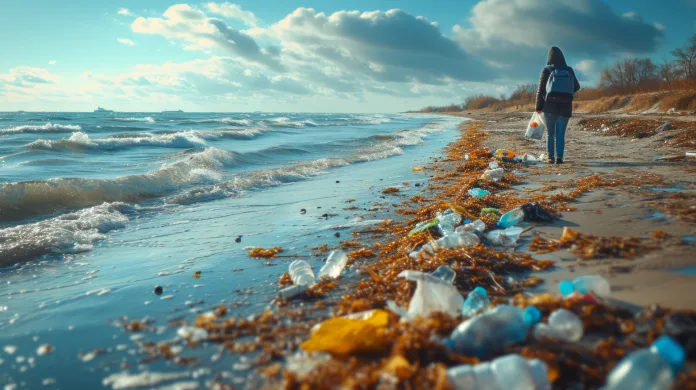
On Thursday, 5 June, World Environment Day will focus on ending plastic pollution with the hashtag #BeatPlasticPollution. Plastic pollution is part of what is known as the triple planetary crisis, alongside climate change and the loss of nature, land and biodiversity.
Why is plastic bad?
Plastic pollution is an issue that goes beyond the merely visible and physical; it is ubiquitous and global. It is simply everywhere. We see plastic bags stuck in the fence next to the road and straws drifting in the water. These are indeed very visible examples of the problem, but we have to start seeing the world and its global environmental systems as forever moving around us and through us. Plastic breaks down into small pieces, known as microplastics, and then into even smaller pieces, known as nanoplastics.
Even if we do not see plastic, it should not be out of sight, out of mind. Micro- and nanoplastics enter and disrupt our water, soil, and food systems. They disrupt food webs, degrades habitats due to their chemical characteristics, cause oxidative stress in plants and animals, reduce animal growth and plant germination, impact endocrine activity, and transfer pathogens which spread disease. As humans, we love bragging about our position at the top of the food chain—yet we absorb the cumulative impacts of micro- and nanoplastics through our food, air and water.
Although the research around plastics and human health is relatively new, studies have found that micro- and nanoplastics can cross both the blood-brain and blood-placental barriers. They are also found in human lungs, liver, gastrointestinal tract, kidneys, heart and testes. These plastics bio-accumulate in the human brain, and nanoplastics are so small that they are being detected in cells.
The early research shows risks to reproductive health, a possible increase in dementia, Parkinson’s disease, Alzheimer’s disease, cardiovascular problems, respiratory disorders and inflammatory bowel disease caused by the increase of micro- and nanoplastics in our bodies.
Hidden plastics
When you see the word ‘plastic’, what comes to mind? Perhaps straws, bottles, and plastic bags? There are, however, products we see and use every day that also contain plastic and add to plastic pollution when they are used, cleaned or discarded. Many of the items we use on and in our bodies almost daily are not even recognised as plastic.
Plastic can be found in a surprising range of products, including “wrinkle-free” clothes made of polyester, acrylic or nylon; tea bags; nail polish; glitter make-up; chewing gum; some toothpaste; bottles and tubes used in cleaning products; sponges; disposable wipes; some sunscreen; tampons and menstrual pads; some glass bottles; paper cups; cardboard drink cartons; aluminium cans; stationary items; paint; bandages; tires; store receipts; pillows; and non-stick pans.
Many of these products we use are designed to replace plastic with alternatives, thus it is important to read and understand the labels of alternatives—such as notebooks with apple skin covers. All products that contain some form of plastic have alternatives, but it does take environmental awareness, effort and sometimes cost to find them and get used to, for example, toothpaste tablets and shampoo bars.
Southern Africa is home to many small community-led organisations and businesses that manufacture and sell these alternatives. The vegan perspective—avoiding leather, feathers, and other animal products—adds another layer of complexity that needs consideration.
Small changes
However, we should not get stuck in doomsday malaise. Each of us could make small changes, which would positively reverberate throughout global systems. But we must also be mindful that some attempts to use alternatives—such as organic cotton tote bags, paper straws and other replacements—could potentially create other environmental disasters, given the water and transport needed for the cotton tote bag and the glue in the paper straws. Tossing everything into the landfill will perpetuate the problem, and we should be mindful of the cost and time required to reduce our dependence on plastic.
We could keep using and reusing our existing plastic products responsibly and sustainably, while slowly replacing them with safer and more eco-friendly alternatives. The following five tips could help you understand your plastic use and its alternatives:
- Time-convenience-plastic audit: Take stock of your time ‘saving’ linked to plastic. Quite often, our decisions around convenience and our plastic use are driven by our perception that we don’t have enough time. Where could you shave off some time—like swapping scrolling through social media for packing your own lunch—to make a less convenient, but more plastic-conscious choice?
- Grabbable eye-level placements: Place your reusable plastic alternatives—like shopping bags, food-grade metal tins as food containers, food-grade metal straws and your reusable coffee cup—somewhere visible and easy to, such as next to your keys or phone, so that you do not forget them.
- A study in labels: Learn more about the content of your beauty products, clothes, shoes, stationery and other everyday products to know which contain plastic that could turn into life-threatening micro- and nanoplastics in the future.
- De-influence yourself: A big social media trend is “de-influencing” oneself from the constant need to buy the next big cosmetic, the latest cute tote bag, more clothes, or yet another branded cup with a straw in every colour.
- Slowly build up alternatives, but beware the aesthetic consumerism trap: One can so easily fall into the trap of tossing all plastic and replacing them with the clean, seemingly monotonous beige and brown of the zero–waste aesthetic. This in itself immediately adds a tremendous amount of plastic to the environment, and the cost and decision fatigue of instant replacement could be too daunting. As a product becomes ragged or used up, do some reading, decide on local and sustainable alternatives, and invest in pieces that could last, be that a beautiful wooden comb, or a well-crafted grass basket for shopping, or pre-loved clothes. Then, responsibly recycle what you have used up.
Ending plastic pollution will require a concerted effort from all of us. This World Environment Day, let’s commit to reducing our dependence on plastic and embracing sustainable alternatives.
Dr Lize Barclay is a senior lecturer in futures studies and systems thinking at Stellenbosch Business School