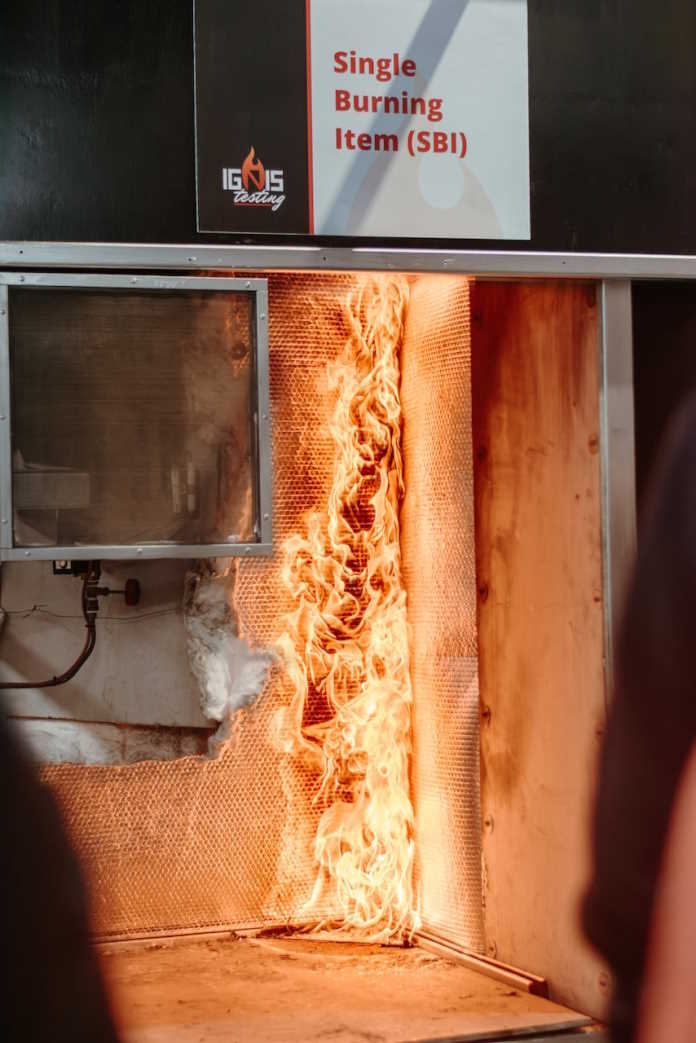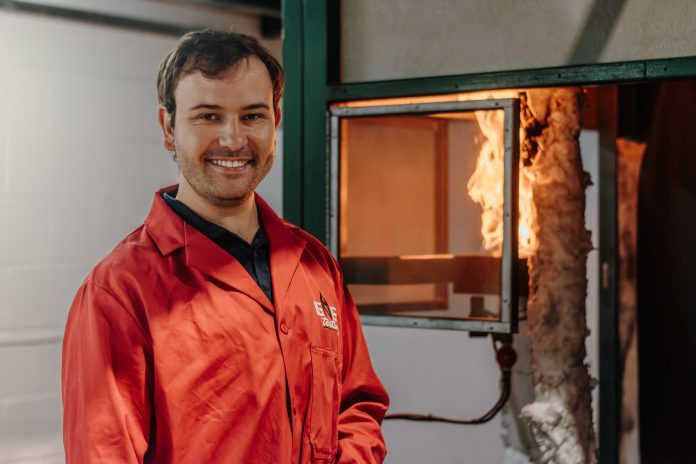
Cape Town, South Africa — A recent study on the flammability of recycled plastic pellets by researchers Courtney Devine, Natalia Florez-Quiroz, and Prof. Richard Walls from Stellenbosch University’s Fire Engineering Research Unit (FireSUN), co-authored by Carlo Kuhn from Ignis Fire Testing, has been published in the journal Fire and Materials. This research highlights the significant contributions of South African fire engineers to advancing fire safety and sustainability practices.
Exploring the Fire Behaviour of Recycled Plastics
The study “Fire Parameters of Recycled Plastic Pellets” focuses on evaluating the flammability characteristics of recycled plastic pellets commonly used in manufacturing and sustainable practices. The research provides valuable insights into how recycled plastics behave under fire conditions by measuring critical material properties such as ignition time, heat release rates, flame spread, and smoke production.
The findings highlight that recycled plastic pellets exhibit diverse fire behaviour depending on their composition, processing methods, and the presence of additives. Key results include the identification of specific parameters, such as peak heat release rates and total heat output, which are critical for assessing fire risks. The study emphasises the need for stringent fire safety protocols when using recycled plastics, especially in industries like construction and manufacturing, where these materials are becoming increasingly prevalent.
With a growing global emphasis on recycling and renewable resources, this study sets a benchmark for balancing sustainability with fire safety.
“This collaboration bridges academia and industry to address real-world challenges,” said Carlo Kuhn. “As the demand for recycled materials rises, understanding their fire behaviour is essential to ensure safety standards are met without compromising sustainability goals.”
A Collaboration Driving Innovation
Ignis Fire Testing’s partnership with FireSUN exemplifies how industry and academia can work together to advance global knowledge. The study is part of Ignis’ broader commitment to fostering research and development, often collaborating with FireSUN on projects that train postgraduate students, co-author scholarly articles, and solve critical industry challenges.
“Our facilities and expertise enable us to support innovative research projects like this one,” said Dirk Streicher, CEO of Ignis Fire Testing. “By contributing to studies like these, we’re not only addressing current safety concerns but also shaping the future of fire safety in a more sustainable world.”
Kuhn adds, “Ignis aims to stay at the forefront of research and development, not only to help train and improve future fire engineers but also to be part of research into the developing fire scene.”
Strengthening South Africa’s Role in Fire Safety Research
“Research like this demonstrates South Africa’s capability to lead on a global stage,” says Prof. Richard Walls, head of FireSUN. “It’s exciting to see local expertise pushing boundaries and making a meaningful impact on fire safety and sustainability worldwide.”
For the full research article, see Fire and Materials.
Visit Ignis Fire Testing or Stellenbosch University’s Fire Engineering Department to learn more about their work.