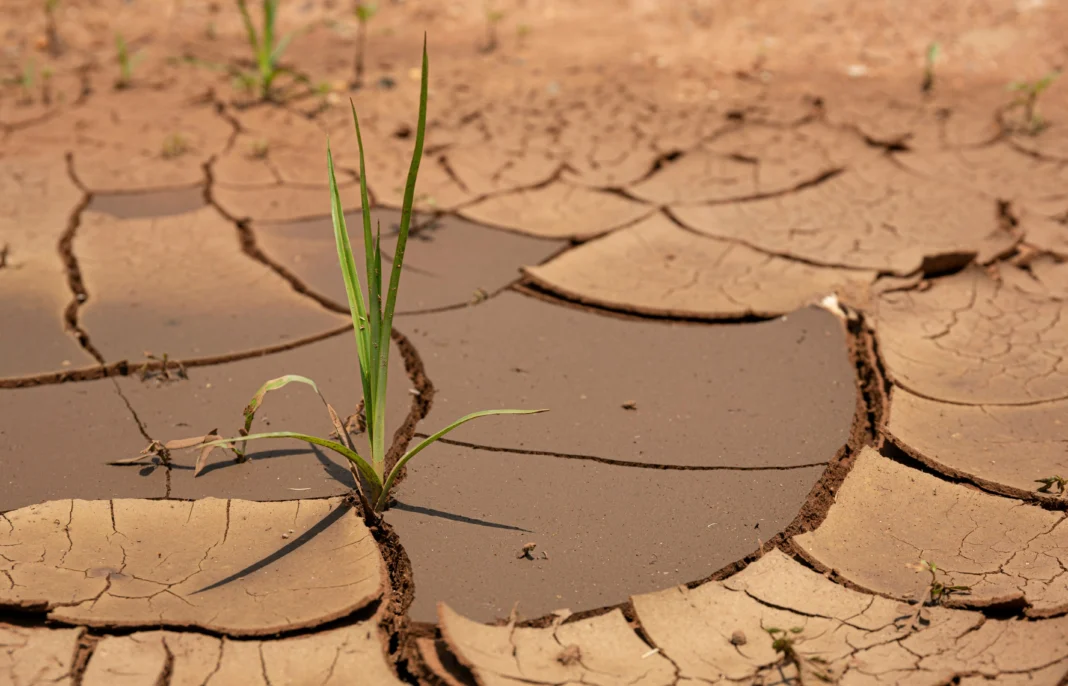
South African industry pays to bring water onto site, uses it once and often pays again to treat and then discharge what’s left of it.
“In a water-scarce country, that should trouble us,” says Burt Rodrigues, CEO of Biodx..
El Niño has brought the issue back into focus. The World Meteorological Organization’s latest update says the event is continuing to strengthen and is expected to peak around December. It may alter rainfall patterns and increase the risk of drought in some regions, but global climate signals are not a substitute for national and local forecasts.
Rodrigues says the point is not to claim that South Africa is definitely heading into drought. It is to recognise how exposed the country remains when water planning assumes that rain will arrive when expected.
“The first year of poor rainfall can be deceptive. Water users may still be drawing on reserves accumulated during the previous season, which softens the immediate effect. The real strain emerges when a second poor year follows. Stored water has been drawn down, inflows remain weak and demand continues,” says Rodrigues.
“By then, businesses that did not use the first year to change how they manage water are already reacting to a shortage.”
These concerns are echoed in recently published commentary by Professor Ademola O Jegede and Dr Patrick P Maweto where they argued that El Niño does not need to guarantee drought before decision-makers begin preparing for the risk. The same applies to industry.
Uncertainty about the next rainfall season should not delay practical steps to recover and reuse more water before reserves are depleted. South Africa has traditionally responded to rising demand by looking for another source. Another dam. Another borehole. A transfer scheme or desalination plant.
“Those options may all have a place. But a substantial source already exists inside many mines, factories and processing plants,” says Rodrigues. “It is the water that has already been drawn from its source, transported, treated and used.”
At many sites, water still follows a simple path. It enters the plant, passes through a process, is treated and then discharged. The question is how much of it could be recovered, treated to the standard required for its next use and put back to work.
“For a water-intensive business, this is an operational issue. A supply interruption can stop production. Restrictions can prevent expansion. Recovering process water reduces dependence on external freshwater supplies and gives a plant more control over a resource it cannot operate without,” Rodrigues says.
“It can also reduce discharge and extract more value from every litre brought onto the site.”
Rodrigues’s view that industry can reduce its dependence on freshwater through the right treatment technologies is echoed by Dr Lester Goldman, CEO of the Water Institute of Southern Africa. In a recent report, Goldman said: “Particularly the industrial sector offering the right technologies can significantly reduce water consumption in the country and thus can help ease the situation.” The opportunity is therefore not to circulate water blindly, but to apply the right treatment so that it can be safely and economically used again.
Reuse, however, is not as simple as sending the same water around a closed system indefinitely.
Water changes as it moves through an industrial process. Biological contamination, salts, minerals, chemicals and other dissolved materials can accumulate. If those loads are not measured and removed, their concentration rises with each cycle. Treatment becomes more difficult, equipment may be affected and the water can eventually become unsuitable for the process.
Rodrigues points to one South African precious-metal refinery where water is retained within a closed reticulation system rather than discharged. That reduces its demand for external water and limits its environmental impact.
“It also reveals the difficulty. When contaminants are not progressively removed, their concentration increases through repeated cycles and places growing pressure on the treatment process. A closed loop still needs active treatment.
“That treatment should be determined by what the water will be used for next. Not every industrial process requires potable-quality water,” says Rodrigues.
Cooling, washing, dust suppression and some production processes may be able to use properly treated process water. The required standard will differ from water intended for drinking, but it must still protect people, equipment and production.
“A business beginning this work should start by understanding its own system. Measure how much water enters the site, where it goes, what leaves and in what condition. Identify a recoverable stream and test it. Then determine where that water could safely replace freshwater and what treatment will be needed.
“Start with one practical application. Learn from it. Expand from there.
“The time to do this is before supply restrictions begin affecting operations. Once production is under threat, the business is no longer planning, It is reacting to an emergency, usually under pressure and at greater cost.
“Water that can be economically recovered and safely reused may be a resource leaving the site too soon. The next litre South African industry needs may already be inside the factory gate,” concludes Rodrigues.
About Biodx
Biodx is on a journey to reduce society’s dependence on synthetic chemicals. Harnessing the power of biotechnology, we’re breaking boundaries, crossing new frontiers, and helping to evolve the future of disinfection. All towards enabling a better world.
With technical support from the CSIR (Council for Scientific and Industrial Research) as well as financial support from TIA (Technology Innovation Agency) and IDC (Industrial Development Corporation), we’ve spent the last 15 years researching and developing cutting edge antimicrobial and antiviral technologies, proven in field trials to be between 8% and 52% more effective than conventional disinfecting chemicals.
Using a natural citrus extract stabilised with an organic biodegradable compound, which contains no chlorine, ethanol or aldehydes. Non-corrosive and earth-friendly, the formulation, rapidly kills 99.999% of many bacteria species and is also effective against viruses.
Substantiated by NRCS and SABS SANS (636, 1853) certified, Biodx offers a revolutionary active ingredient for formulators of sanitisers and disinfectants supplying contract cleaning, healthcare/medical, pharmaceutical, food and beverage, retail, manufacturing and agricultural industries.
Biodx has applied for EU BPR registration and subsequently had products submitted for testing and verification to stringent EU NEN standards in the Netherlands. Biodx products conform to the above standards.