




SAN JUAN ISLAND, Wash. (AP) — Scientists from the University of Washington recently deployed a little over 1 mile of fiber-optic cable in the Salish Sea to test whether internet cables can monitor endangered orcas. The technology is called Distributed Acoustic Sensing. It transforms cables into continuous underwater microphones that can pinpoint whale locations and track their movements. If successful, the world’s 870,000 miles of existing undersea cables could become a vast ocean monitoring network. It could provide real-time data on how marine mammals respond to vessel noise, food scarcity and climate change. The breakthrough would be particularly valuable as new marine protected areas are established under the High Seas Treaty in January.
By Annika Hammerschlag, Associated Press
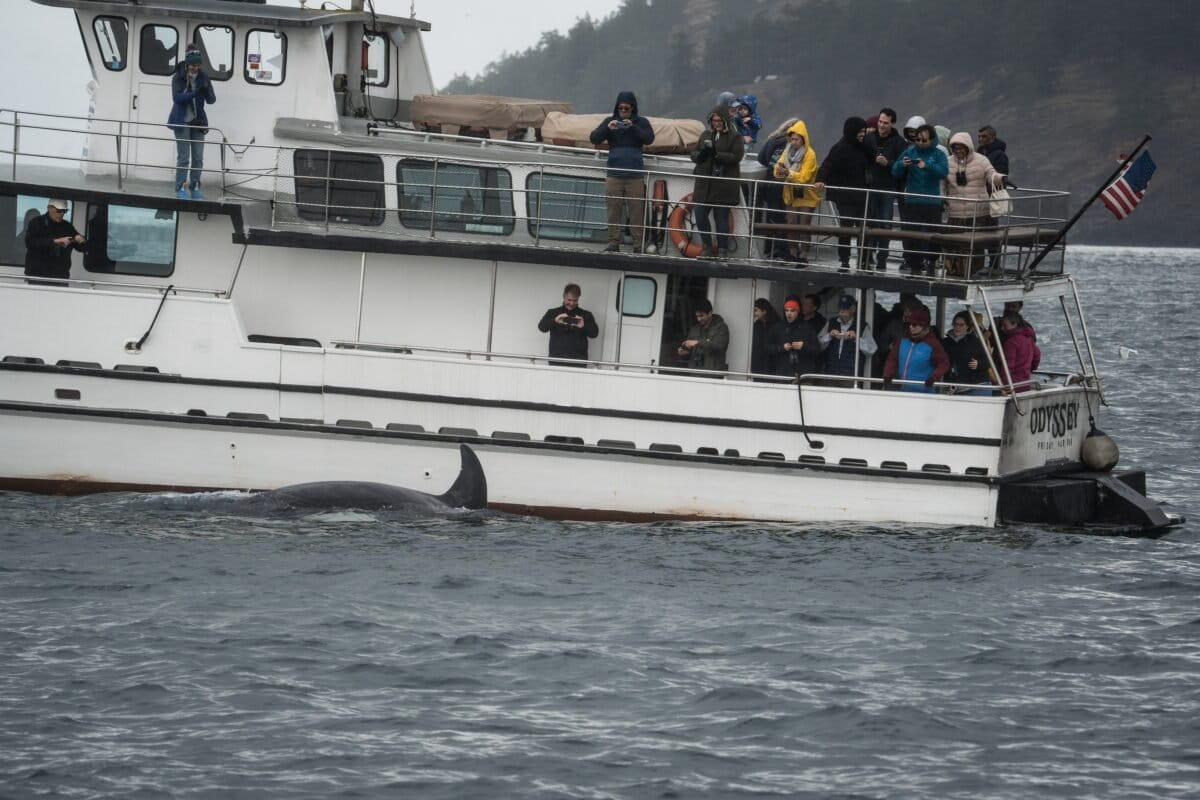
Banner image: An orca swims past a whale watching boat in the San Juan Islands, Wash., Saturday, Oct. 11, 2025. (AP Photo/Annika Hammerschlag)
This story first appeared on Mongabay
This article is licensed under a Creative Commons Attribution-NoDerivatives 4.0 International License.
You may republish this article, so long as you credit the authors and Mongabay, and do not change the text. Please include a link back to the original article.