




- A series of studies found that electromagnetic fields from offshore-wind farm cables can trigger various effects in bottom-dwelling sharks and rays depending on species and life stage.
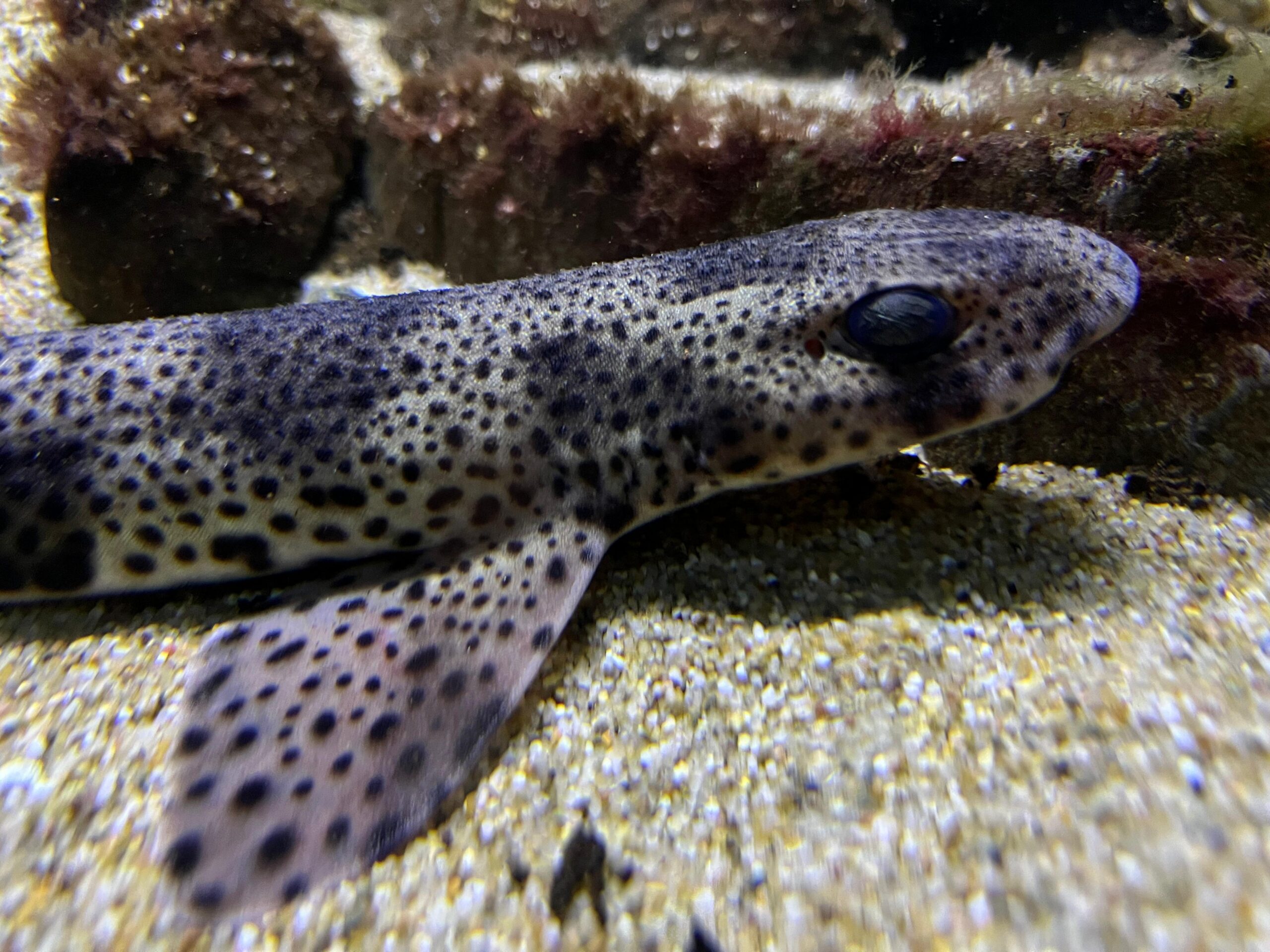
- Experiments on small-spotted catsharks and thornback rays showed behavioral and developmental responses.
- The researchers concluded that electromagnetic fields may increase predation risk during early development by altering natural behaviors linked to predator avoidance.
- eDNA surveys detected multiple shark and ray species inside offshore wind farms, suggesting they may serve as potential refuge areas, though major knowledge gaps remain.
As offshore wind farms expand rapidly in the global renewable energy transition, scientists are studying how these large marine infrastructure projects affect ecosystems beneath the waves. Research from Wageningen University & Research in the Netherlands suggests that offshore wind may bring both risks and benefits for sharks and rays, known collectively as Elasmobranchii, which are highly sensitive to electromagnetic fields (EMFs).
A six-year project called “Elasmopower” examined how EMFs from subsea power cables in offshore wind farms affect bottom-dwelling sharks and rays. These species depend on natural electric and magnetic fields for key behaviors such as navigation, prey detection, habitat use and long-distance movement, particularly in low-visibility environments. The studies conducted as part of the Elasmopower project have been published in four papers, with three additional papers currently undergoing peer review.
Sharks and rays have specialized electroreceptors called ampullae of Lorenzini. The jelly-filled sensory canals around the head and snout can detect even extremely weak EMFs from prey and predators, water movement, and the Earth’s geomagnetic field, Erwin Winter, a scientist at Wageningen, told Mongabay. This system is central to hunting and orientation, making Elasmobranchii especially relevant for studying EMF exposure from offshore energy infrastructure, Winter added.
During a presentation on a summary of the Elasmopower research at the Sharks International 2026 conference in Colombo, Sri Lanka, in May, Winter noted that high-voltage subsea cables transmitting electricity from offshore wind farms produce EMFs within the detectable range of these animals, raising questions about possible sensory interference as offshore infrastructure expands.
To investigate this, researchers combined long-term field measurements with laboratory experiments. They exposed two European species — the small-spotted catshark (Scyliorhinus canicula) and the thornback ray (Raja clavata), sourced from aquariums — to EMF levels similar to those near operational cables. Responses were tested across embryos, juveniles and adults to capture life-stage differences.
Overall, responses varied by species and developmental stage, with some groups appearing more sensitive than others, Annemiek Hermans, the lead researcher and a Ph.D. candidate at Wageningen, told Mongabay.
Hermans said the findings may have relevance for other bottom-dwelling marine organisms, such as flatfish (Pleuronectiformes), that inhabit areas around subsea cables and could be exposed to similar environmental changes.
How do EMFs affect sharks and rays?
A major focus was how the electromagnetic fields might impact early development of sharks and rays. Many Elasmobranchii lay eggs in tough, protective egg cases known as “mermaid’s purses” attached to the seabed or structures like seaweed and rocks. Inside, embryos develop while exposed to environmental cues. These cues include the EMFs of predators, which can trigger a “freezing response” in the embryo that reduces movement and lowers predation risk, Hermans said.
But in experiments, thornback ray embryos exposed to EMFs similar to those produced by the cables instead became more active during development. Researchers suggest this could increase their visibility to predators in natural settings. However, they observed no differences in hatching success, growth or development time, indicating no clear long-term physiological harm under the experimental conditions.

Researchers also studied how alternating current (AC) and direct current (DC) systems affect Elasmobranchii. AC cables are typically used within wind farms and for transmitting electricity over shorter distances, while high-voltage direct current (HVDC) systems are used for long-distance transmission due to greater efficiency. Both produce EMFs, but with different characteristics that may influence animal responses.
In experiments, adult small-spotted catsharks showed no strong attraction or avoidance behavior when exposed to the AC electrical fields. But subtle changes occurred under DC-electrical fields, including reduced activity and 25% faster movement transitions when compared to AC and control trials, suggesting more nuanced behavioral effects. If sharks reduce their activity again and again, each time they encounter a cable, it could decrease the time they are able to spend on other ecologically important activities such as foraging or finding a mate, Hermans said.
To complement the experiments, researchers also conducted environmental DNA (eDNA) surveys around Dutch offshore wind farms in the North Sea. eDNA refers to genetic material shed by organisms into water through skin cells, mucus, scales, waste or eggs. Analysis detected the DNA of five shark and ray species across four sites.

The surveys revealed the thornback ray was most common, alongside the basking shark (Cetorhinus maximus), starry smooth-hound (Mustelus asterias) and blonde ray (Raja brachyura). Other research also supports the possibility that offshore wind farms may function as de facto refuges, since bottom trawling and other destructive fishing practices are often restricted within these zones.
Such restrictions may unintentionally create protected areas where seabed ecosystems can regenerate. However, scientists caution long-term ecological outcomes remain uncertain, particularly when combined with other pressures, such as noise, habitat alteration, vessel traffic, and climate change.
Can more be done to mitigate the impacts of EMFs?
Key knowledge gaps remain around how EMFs influence predator-prey interactions, migration and reproduction, and how multiple stressors interact in offshore environments. Potential mitigation measures include burying power cables deeper in the sea floor, bundling cables to reduce the size of the EMF, and rerouting infrastructure away from sensitive habitats, Winter said.
Wageningen scientists also emphasize that offshore wind development and marine conservation are not necessarily in conflict, but early ecological understanding is essential for sustainability.
“As offshore renewable energy expands globally, studying these impacts can help ensure that the transition to clean energy does not unintentionally disrupt sensitive marine species and ecosystems,” Hermans said.

Andrew Gill of the Australian Institute of Marine Science, who served as head of the steering group for the Elasmopower project, noted that all subsea power cables — not only those from wind farms — generate EMFs, including interconnectors and grid links.
Gill added that studying EMFs in marine systems is inherently complex due to interacting environmental variables, challenging field conditions, and regulatory constraints, making long-term research both difficult and essential.
Banner image: A thornback ray used in experiments to measure the impacts of electromagnetic field sensitivity rests in the Wageningen University & Research laboratory. Image courtesy of Annemiek Hermans.
Offshore wind’s clean energy potential remains largely untapped, say experts
At world’s largest shark conference, scientists warn of a grim outlook across the board
Citations:
Hermans, A., Maas, D. L., De Barros Neta, L. M., Spanings, T., Winter, H. V., Murk, A. J., & Foekema, E. M. (2025). An egg case study: Chronic exposure to AC electromagnetic fields results in hyperactivity in thornback ray (Raja clavata L.) embryos. Marine Environmental Research, 209, 107151. doi:10.1016/j.marenvres.2025.107151
Hermans, A., Maris, T., Hubert, J., Rochas, C., Scott, K., Murk, A. J., & Winter, H. V. (2025). From subsea power cable to small-spotted catshark Scyliorhinus canicula: Behavioural effects of electromagnetic fields in tank experiments. Marine Environmental Research, 208, 107127. doi:10.1016/j.marenvres.2025.107127
Hermans, A., Sumner-Hempel, A., van den Brink, X., van Berkel, D., Olie, R. A., Winter, H. V., … Nijland, R. (2025). Elasmobranchs in offshore wind farms. Ocean & Coastal Management, 266, 107671. doi:10.1016/j.ocecoaman.2025.107671
Fitkov-Norris, B., Witt, M. J., & Simmons, B. I. (2025). Offshore wind farms act as de facto marine reserves. Science of The Total Environment, 994, 179973. doi:10.1016/j.scitotenv.2025.179973
Wilson, J. C., Elliott, M., Cutts, N. D., Mander, L., Mendão, V., Perez-Dominguez, R., & Phelps, A. (2010). Coastal and offshore wind energy generation: Is it environmentally benign? Energies, 3(7), 1383-1422. doi:10.3390/en3071383
Feedback: Use this form to send a message to the editor of this post. If you want to post a public comment, you can do that at the bottom of the page.
Credits

This story first appeared on Mongabay
This article is licensed under a Creative Commons Attribution-NoDerivatives 4.0 International License.
You may republish this article, so long as you credit the authors and Mongabay, and do not change the text. Please include a link back to the original article.