Community-led initiatives in Africa, Asia and Latin America join the Global Landscapes Forum’s GLFx chapter network to tackle land degradation, the climate crisis and biodiversity loss, while advancing sustainable livelihoods
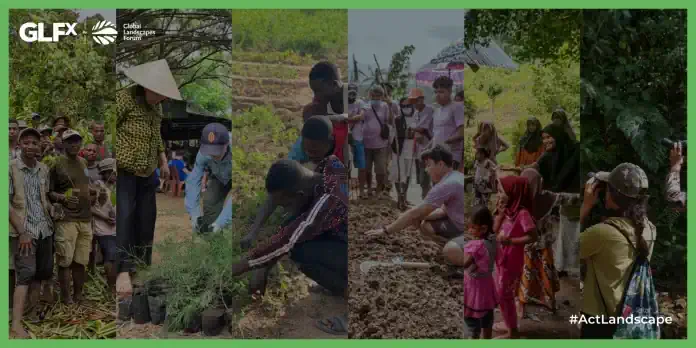
Bonn, Germany (January 2025) – Thirteen community-driven initiatives restoring ecosystems have joined the GLFx network of chapters of the Global Landscapes Forum (GLF) in 2025. Led primarily by youth and women, these organizations are advancing projects in Brazil, Bolivia, Chad, Colombia, Ecuador, India, Indonesia, Madagascar, Nigeria, the Philippines, Tanzania and Vietnam.
GLFx is a global network of locally rooted organizations restoring landscapes and advocating for policy change in favor of nature and people. This network connects chapters with strategic partners worldwide. Additionally, GLFx offers access to learning, visibility and funding opportunities to enable communities to further bolster their landscape management, governance and restoration activities.
The new GLFx chapters focus on community-led ecosystem restoration, enhancing food systems and climate resilience. Their initiatives include agroecology, regenerative farming, biodiversity conservation, ecotourism, biocultural approaches, tree planting, waste and water management and knowledge-sharing programs. They also address land tenure policy, governance and gender equity.
In its fifth year, the GLFx network has expanded from 38 to 51 grassroots chapters across the Global South. These new chapters aim to impact over 7,000 families, farmers, women and youth while forging inclusive landscape management in the Andes and Himalayan mountains, the Cerrado and Caatinga biomes in Brazil, coastal areas and islands of Southeast Asia, wetlands in West Africa, and other lake shores, tropical forests and drylands across the world.
“Being part of the GLFx network strengthens our commitment to transforming ecosystems and local communities. It provides a roadmap and global platform to amplify our efforts while collaborating with visionary landscape leaders. Together, we will accelerate the green economy and create a lasting legacy for future generations while safeguarding our land,” said Balbina Andrew, leader at GLFx Mwanza.
The new African GLFx chapters
- GLFx Farankaraina, headed by the women-led Fandroakando NGO, operates in northern Madagascar, in the Farankaraina Forest, which is managed by local communities and home of mammals, reptiles and birds, including the iconic lemurs, chameleons and fossas. The chapter seeks a higher protection category of the Farankaraina Forest and works to improve community livelihoods, restore their forest and conserve biodiversity. They also champion environmental education, research and eco-tourism.
- GLFx Mwanza is managed by the women-led organization Nourish Africa in Mwanza, a lake port city in Tanzania. The chapter advances climate mitigation and gender equality through environmental education, youth-led ecosystem restoration, sustainable agriculture and strengthening value chains. They aim to plant five million trees in the region to reverse land degradation.
- GLFx Moyen-Chari is run by the youth-led Consortium pour la Promotion des Initiatives et de Développement in Sarh, a riverside city and the third largest urban center in Chad. The chapter focuses on climate resilient action and combating land desertification. They do this by managing drylands and waters in the Chari basin, advancing land tenure policy initiatives, monitoring ecology, implementing agroforestry and advocating for women inclusion in eco-entrepreneurship programs and other income-generation activities.
- GLFx Calabar is managed by the youth-led Biodiversity Rescue Club (BRC) in the wetlands of Calabar, a port city sitting on a hill and one of the oldest trading centers in Nigeria. The chapter’s community-led mangrove restoration and environmental education efforts benefit local livelihoods, biodiversity and carbon sequestration in Esierebom, a community facing deforestation, pollution and habitat loss.
“We are confident that we can improve local community livelihood and restore the Calabar coastal ecosystem in Nigeria, helping it thrive with mangroves and biodiversity for generations to come. Together, we will continue to work towards a sustainable planet, leaving it better than we found it,” said Anna Obi Akpe, a leader at GLFx Calabar.
“GLFx is the first international network the Fandroakando has joined. This represents an increased openness to the outside world, allowing the team to strengthen its knowledge, share its experiences and showcase its achievements,” said Razafindrakoto Noromampiandra, a leader at GLFx Farankaraina.
“Being selected as a GLFx chapter is a meaningful recognition of our commitment to sustainable development. It enhances our credibility and offers a unique opportunity to collaborate globally while showcasing our local efforts in landscape restoration and supporting communities in Chad,” said Ganda Bini Djabou, from GLFx Moyen-Chari.