



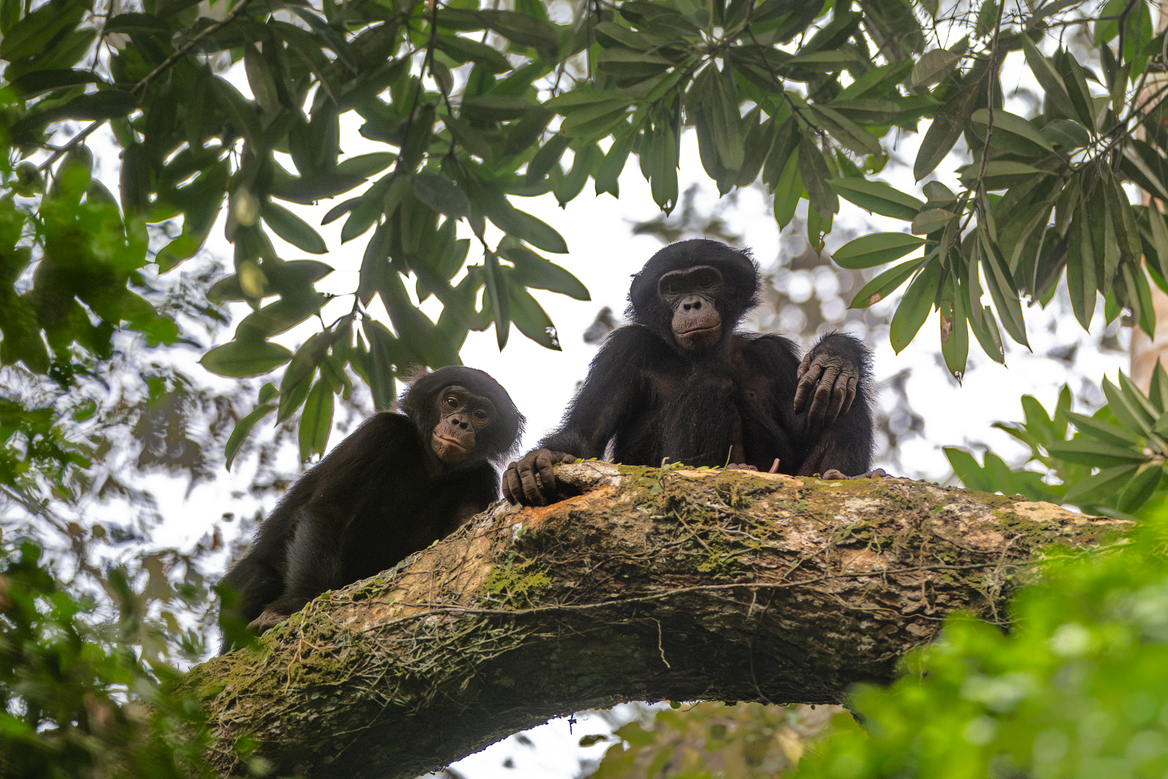
- In the heart of Salonga National Park, one of Africa’s largest protected areas, researchers are trying to earn the trust of wild bonobos, one of the continent’s most endangered great apes.
- Conservationists say that habituation is a critical tool for protecting the species, allowing scientists to monitor their health, behavior and populations while strengthening long-term conservation efforts.
- As the Democratic Republic of Congo confronts a renewed Ebola outbreak in its eastern region, park officials acknowledge the ever-present risk of zoonotic disease transmission. However, when conducted under strict biosecurity protocols, bonobo habituation offers significant conservation, scientific and ecotourism benefits that outweigh the risks.
SALONGA NATIONAL PARK, Democratic Republic of Congo — Just before sunrise, while much of the rainforest remains cloaked in darkness, a team of researchers and trackers leaves the Inkomu research camp. Their destination is the previous night’s nesting site of a group of bonobos deep within the Salonga forest, located in the center of the DRC.
Their mission is to persuade the bonobos (Pan paniscus) to accept human presence as a natural part of their environment. By earning the animals’ trust, researchers hope to create opportunities to better understand their behavior, ecology and health. This painstaking process, bonobo habituation, involves spending time near the apes day after day until they gradually become accustomed to people.
It is a slow and demanding undertaking that can take years, requiring patience, consistency and thousands of hours in the forest. Long before dawn, often around 3 a.m., trackers — some of them former poachers whose knowledge of the forest has become an asset for conservation — begin making their way toward the previous night’s nesting site. They must arrive before the bonobos wake. Then begins an all-day pursuit through one of the most remote rainforests on Earth, following the apes from dawn until they build fresh nests for the night.
“The whole idea of habituation is that you meet the group every day in a very friendly, non-interactive way so they accept you as part of the forest,” says Felix Bofeko, an assistant researcher working with a bonobo habituation program in Salonga National Park. “You slowly get closer and closer until they accept your presence,” Bofeko tells Mongabay during a visit to the park in March.
The work underway in Salonga National Park is part of an ambitious effort to habituate bonobos, humanity’s closest living relatives alongside chimpanzees. Park management hopes the project will generate new research opportunities and strengthen conservation efforts while also supporting local livelihoods and, eventually, creating one of the few places in the world where visitors can observe wild bonobos. It’s Africa’s largest tropical rainforest reserve and a World Heritage Site.
In 2024, researchers estimated their numbers to be 12,000-18,000, not including infants, numbers that were published in the International Journal of Primatology. In the last IUCN assessment, conducted in 2016, they were classified as endangered and declining.
Winning trust in the rainforest
Bonobos exist nowhere else except in the Democratic Republic of Congo. Much of what scientists know about them comes from a handful of research sites scattered across the country.
In Salonga, researchers selected a group of approximately 60 bonobos in late 2023 and began the painstaking process of following them daily through the forest.
At first, the animals fled at the sight of people. “When we started in late 2023, the bonobos would run away if they saw us,” Bofeko says. “Now, we can stay with them for two or three hours at a time.”
The progress has been slow but encouraging. Researchers say the bonobos now tolerate limited human presence and occasionally allow observers to watch them feed, rest and play. The goal is to eventually reach a point where small groups of visitors can observe them without causing stress.
“If there are only two people, the bonobos stay relaxed,” Bofeko says. “We hope in one year they will tolerate three or four people.”
Why habituation matters
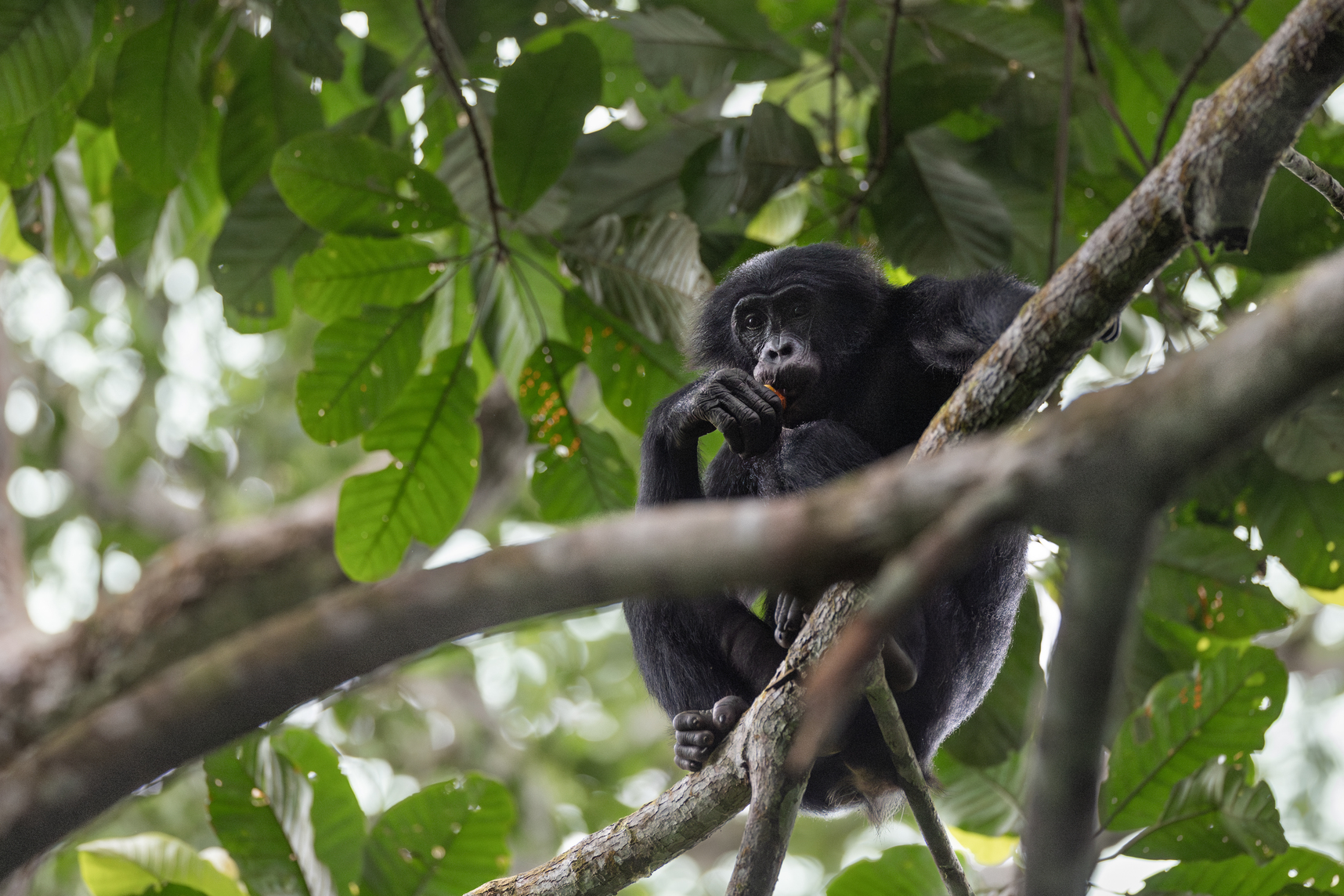
Habituation allows scientists to observe the apes’ behavior, monitor health, study social dynamics and better understand how they interact with their environment.
Francesca Grillo, a researcher working with the Bonobo Diversity Project (BonDiv), says Salonga is one of a network of sites established across Congo to collect standardized information on bonobo populations.
“We don’t just do habituation. We collect data on behavior, diversity, culture and diet,” she says.
Researchers collect fecal and urine samples that are analyzed for genetics, pathogens and diet. Camera traps, acoustic monitoring systems and other technologies are also being deployed to study wildlife across the park.
Conservation scientists often describe habituation as one of the most important tools available for protecting great apes because animals that are known, monitored and valued tend to receive greater protection than those that remain unseen.
In the shadow of Ebola and other zoonotic diseases
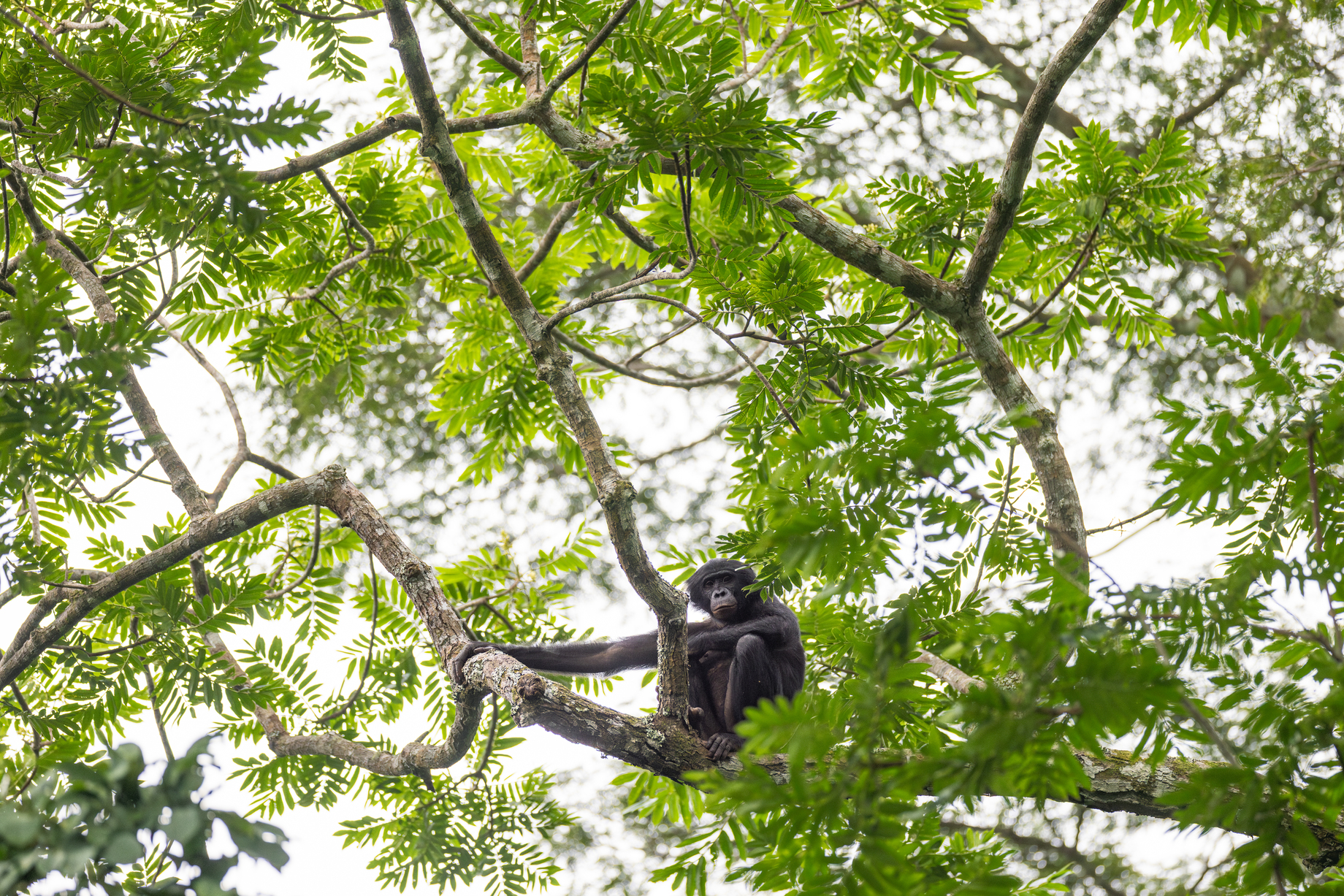
The emergence of a new Ebola outbreak in eastern DRC has revived a familiar concern among conservationists and scientists: the risk of zoonotic diseases that can easily move between humans and great apes. So far, there have been no reports of the disease spreading beyond Ituri province in northeastern DRC. Yet the outbreak has drawn renewed attention to the health risks associated with great ape conservation programs, including the bonobo habituation effort underway in Salonga National Park, which is hundreds of kilometers from the current epicenter.
“Every zoonotic disease outbreak is a serious concern for us given that we work in proximity with wildlife,” says the park’s co-director, Terence Fuh. “More especially for the bonobo habituation program, the risk of bidirectional disease transmission is higher.”
In response, Salonga park authorities have reinforced existing health protocols. Staff members undergo regular health screenings, are required to report symptoms of illness, follow strict hygiene measures and wear surgical masks while tracking bonobos. Teams must also maintain a minimum distance of 7-10 meters (23-33 feet) from the animals. The team is also planning additional training with experts from Germany’s Helmholtz Institute for One Health who specialize in zoonotic disease.
However, the concerns extend well beyond Ebola. Fuh tells Mongabay that flu and respiratory diseases may pose an even greater day-to-day threat to great apes.
“Early in my primatology career, while managing a gorilla habituation program in the Central African Republic, I witnessed firsthand a human common cold jump to a habituated gorilla group, sparking a widespread respiratory outbreak,” he says.
Previous Ebola outbreaks have devastated populations of gorillas and chimpanzees elsewhere in Central Africa, underscoring the need for constant vigilance. Ebola can progress to a deadly hemorrhagic fever: In two devastating outbreaks from 2002-04, the virus killed an estimated 5,000 western lowland gorillas (Gorilla gorilla gorilla) in the Republic of Congo, with a mortality rate of up to 95%.
Although scientific evidence regarding Ebola susceptibility in bonobos remains limited, researchers say they may share similar vulnerabilities with their great ape relatives.

Building a tourism future
The habituation effort is also intended to help transform how local communities view the park. For decades, many residents primarily associated Salonga with restrictions on hunting and access to forest resources. For decades, experts have noted that the most successful conservation efforts provide economic benefits to the local people who live with wildlife.
Now, researchers and park managers hope bonobos can become the foundation of a sustainable tourism economy.
“This camp where we are now [Inkomu) will be the only place in Salonga where, in a year or 18 months, tourists will be able to see habituated bonobos,” says park co-director Luis Arranz. “We want to make this a special destination.”
Already, more than 10 local residents have been hired, including former hunters whose forest knowledge makes them exceptional trackers. “If they were good at hunting, they are excellent at protection and tracking,” Arranz says.
The project’s backers hope tourism can create conservation incentives similar to those seen in gorilla tourism programs elsewhere in Africa.
In the meantime, habituation remains one of conservation’s great balancing acts. The current park officials argue that the conservation benefits outweigh other risks. “When conducted under strict, science-based protocols, it remains a critical conservation tool,” Fuh argues.
Banner image: Bonobos in Salonga National Park, the largest tropical rainforest national park in Africa. Researchers are working to habituate wild bonobos to human presence in an effort to support conservation and scientific research. Photo by Alice Péretié / Chengeta Wildlife.
Citation:
Bessone, M., Kühl, H. S., Herbinger, I., Hohmann, G., N’Goran, K. P., Asanzi, P., … Fruth, B. (2024). Bonobo (Pan paniscus) density and distribution in Central Africa’s largest rainforest reserve: Long-term survey data show pitfalls in methodological approaches and call for vigilance. International Journal of Primatology, 46(2), 436-474. doi:10.1007/s10764-024-00468-w
Evidence linking bats to Ebola inconclusive, scientist says. ‘Solution is not fear’
Bonobo numbers in DRC park stable, but signs of decline appear
FEEDBACK: Use this form to send a message to the author or editor of this post. If you’d like to post a public comment, you can do so at the bottom of the page.
Credits

This story first appeared on Mongabay
This article is licensed under a Creative Commons Attribution-NoDerivatives 4.0 International License.
You may republish this article, so long as you credit the authors and Mongabay, and do not change the text. Please include a link back to the original article.