







- The southern cassowary, a rare and elusive rainforest bird that lives along Queensland’s northern coast, once faced extinction. Now, its numbers are stable, but scientists still lack an up-to-date estimate of how many remain.
- Shrinking habitat was a key factor in the bird’s decline, but designation of the northeast coast “Wet Tropics” as a World Heritage Site protected both the ecosystem and the cassowaries that live there.
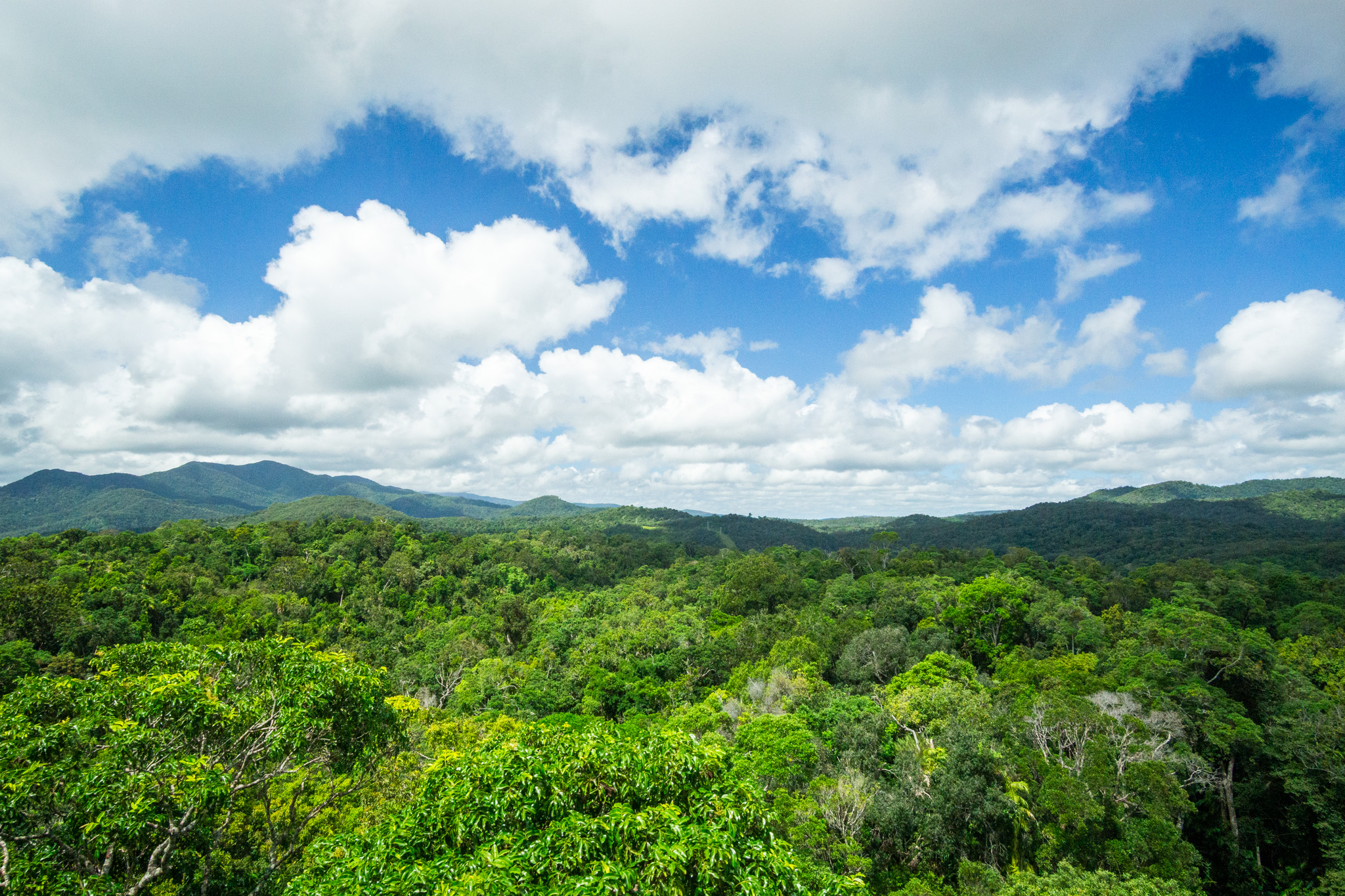
- As an important seed disperser, this bird helps sustain this rainforest’s plants and trees, but its slow breeding and need for large, connected habitats make it vulnerable.
- Growing threats from road collisions and intensifying cyclones, heat waves and other climate impacts are putting renewed pressure on this bird and increasing urgency for better monitoring and conservation.
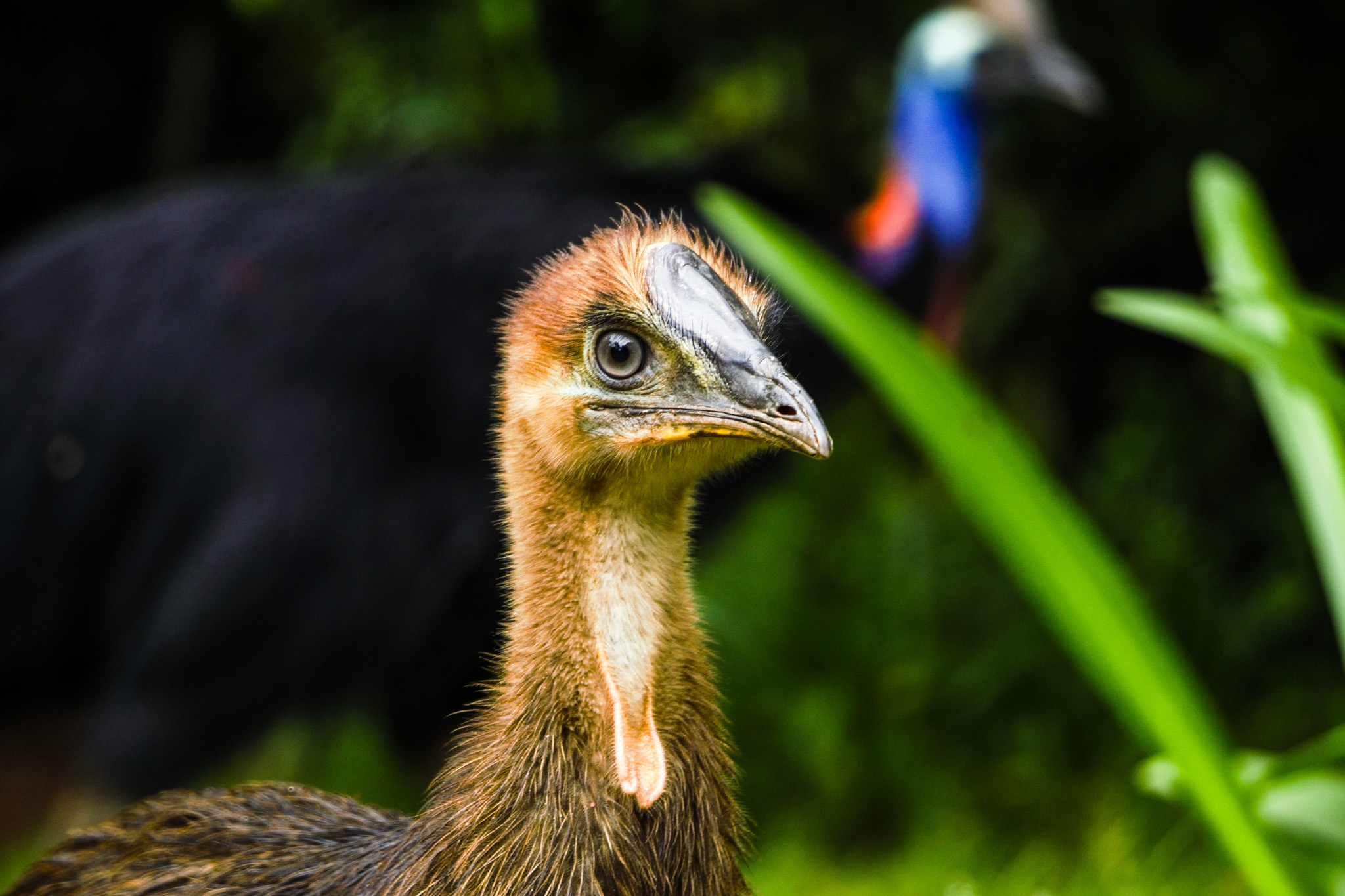
With a striking blue neck, jet black plumage and bright red drooping wattles, the southern cassowary cuts an imposing figure in the dense tropical rainforests of Far North Queensland, Australia.
Standing up to 2 meters (6.5 feet) tall and armed with razor-sharp claws, it is often labeled as the world’s most dangerous bird. In reality, it’s a shy, gentle and solitary animal rarely seen by people.
While it’s listed as endangered under Australia’s Environment Protection and Biodiversity Conservation Act 1999, southern cassowary (Casuarius casuarius) populations have always been difficult to track.
“They occupy very rugged and remote terrain. So, to be able to find scats, get sightings through camera traps or collect DNA is very challenging,” said Wren McLean, a cassowary researcher and member of the Cassowary Recovery Team.
Estimates have changed dramatically since the turn of the 21st century, growing from fewer than 1,500 birds in the early 2000s to around 4,400 in the most recent national survey, which was conducted between 2012 and 2014.
Led by Australia’s national science agency, CSIRO, that survey recommended that population monitoring become a “central component” of the species’ management and should be carried out more frequently.
More than a decade later, that hasn’t happened.
The Cassowary Recovery Team has produced a new conservation plan for the species, set to be released this year by the federal government.
“We are recommending frequent resurveying to track the population trajectory of cassowaries,” McLean said.
That 2012-14 survey introduced innovative techniques, including DNA sampling, to identify cassowaries from scat samples. This remains one of the few reliable ways to estimate population size at scale.
But it’s expensive and challenging to deploy across the roughly 9,000 square kilometers (nearly 3,500 square miles) of Queensland’s World Heritage rainforests that cassowaries call home.
With increasing road strike deaths and more frequent extreme weather events, quantifying the species is key to its conservation.
“It is critical to know how many cassowaries there are with worsening effects from climate change, McLean explained, which amplifies other threats.
Back from the brink
Before European settlement, which began in the late 1700s, cassowaries ranged uninterrupted along Australia’s northeast coast, from Queensland to Cape York. Early colonial accounts describe this large, flightless bird as “plentiful” in all the “deep gullies and at the bases of high hills.”
By the 1980s, concerns were growing about the impacts of hunting, dog attacks, habitat loss and development: Around one-fifth of rainforest cover had been cleared.
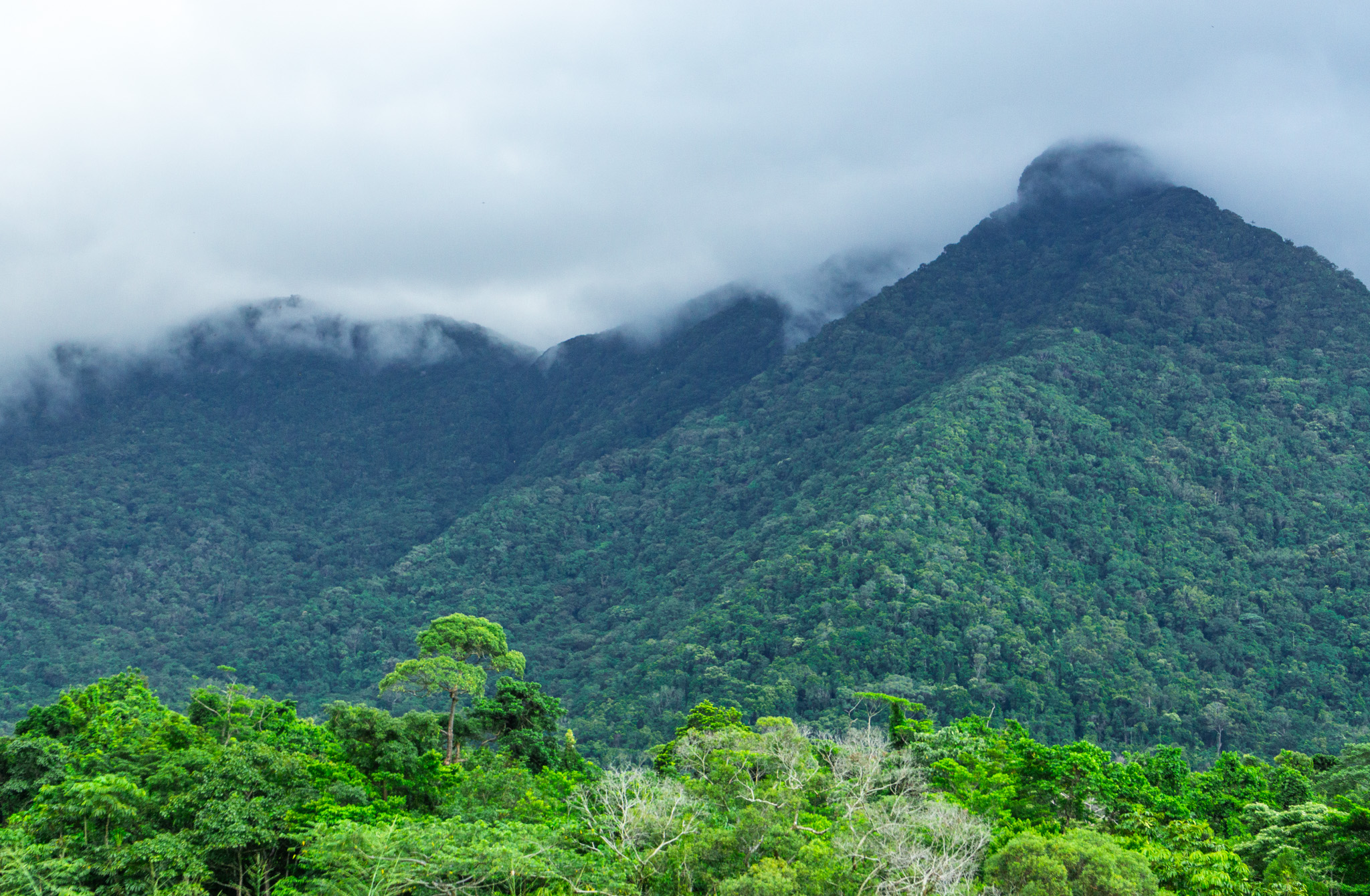
Cassowaries continued to decline, with little action taken to protect them. But a turning point came in 1988, when a wave of environmental campaigns against logging helped secure World Heritage status for the Wet Tropics of Queensland. The listing protected vast tracts of rainforest, including the Daintree, often described as the world’s oldest tropical rainforest, and marked a major shift in how the region’s ecosystems were managed.
In the years that followed, conservation policies, community advocacy and reforestation began to stabilize cassowary populations. The establishment of the Wet Tropics Management Authority (WTMA) formalized Australia’s commitment under the World Heritage Convention to “protect, conserve and rehabilitate” the area.
“There were over 3,000 km [more than 1,800 mi] of logging tracks in the Wet Tropics 40 years ago. Now regenerated rainforests provide extra habitat for cassowaries and many other animals,” said Terry Carmichael, a senior project officer for WTMA.
“In the Wet Tropics, scientists, local communities, Traditional Owners and tour guides all report cassowaries being at their best numbers in many years,” he added.
Without recent data, ongoing recovery remains uncertain, and cassowaries face many of the same threats as other Australian animals: disappearing homelands, roads and development that fracture habitat, growing extreme weather events and more.
Guardians of the forest
Of the three living cassowary species, the southern cassowary is the only one that’s native to Australia. As a gardener of Queensland’s rainforests, this bird is critical to regeneration of tropical plants and trees: The cassowary spreads the seeds of more than 200 species, and it’s of particular importance for rainforest trees such as the cassowary plum (Cerbera floribunda), whose fruit is too large for other animals to eat.
“Without cassowaries dispersing seeds, composition of the rainforest would change, and some plants may become greatly restricted or be threatened with extinction,” said Kelvin Davies, founder of the nonprofit Gondwana Rainforest Trust.
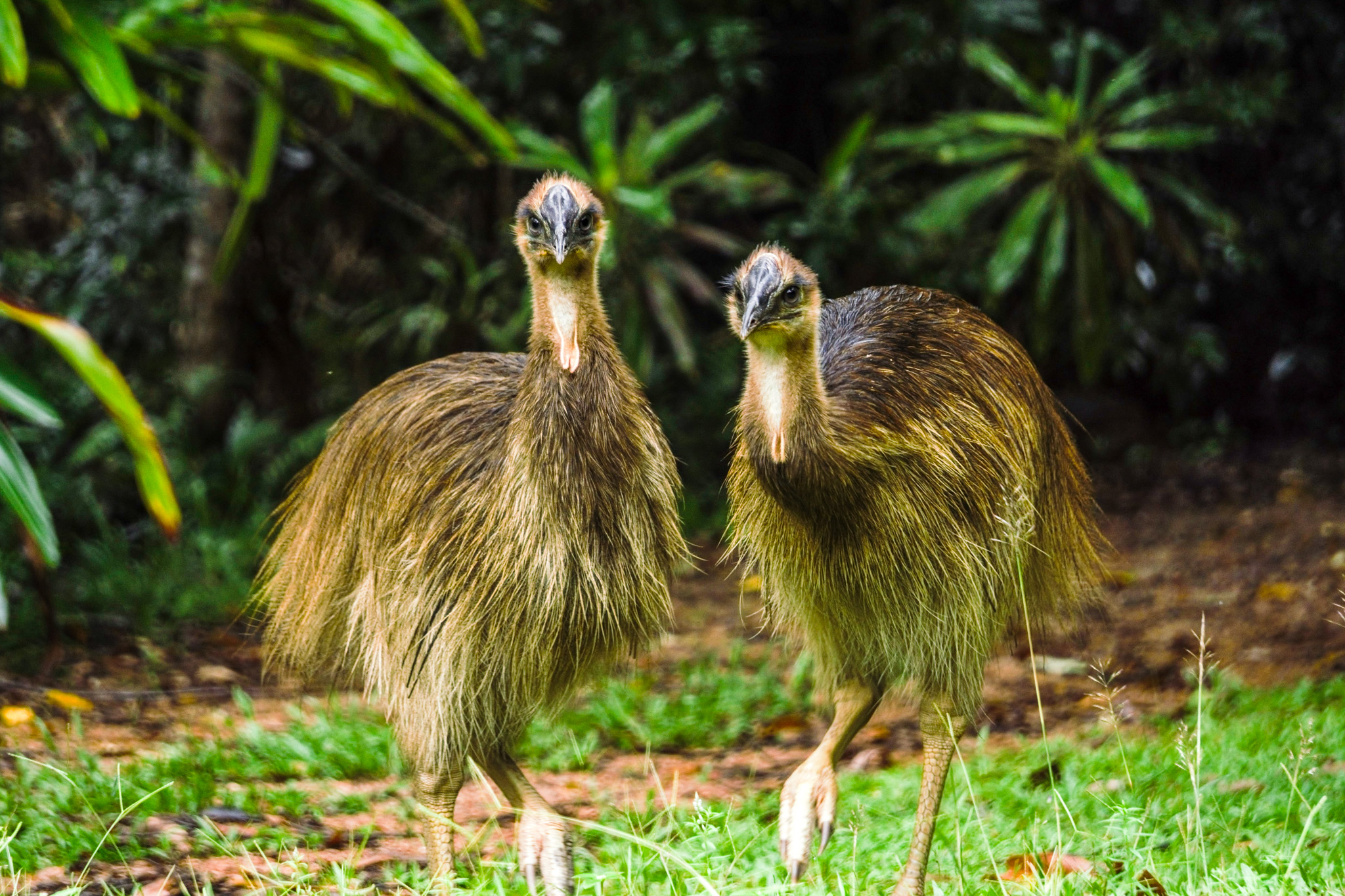
The southern cassowary breeds slowly, with females usually laying clutches of 3-5 eggs, so populations take time to rebound. The male incubates the eggs and raises the chicks alone.
These large, flightless birds roam through forests in search of seasonal fruit, making them dependent on connected habitats. So across the Wet Tropics, conservation groups
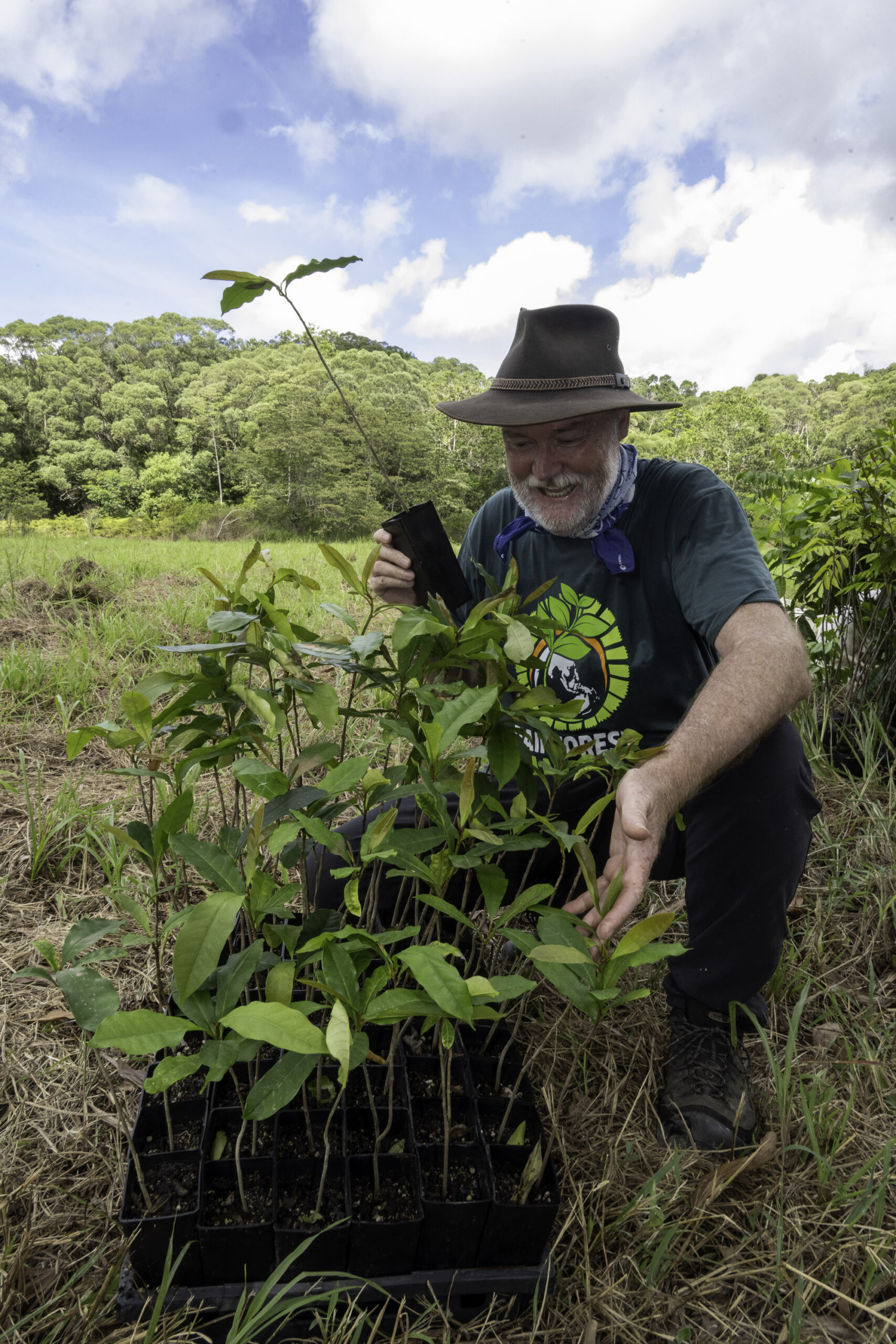
are restoring habitat and buying back land to further protect cassowaries.
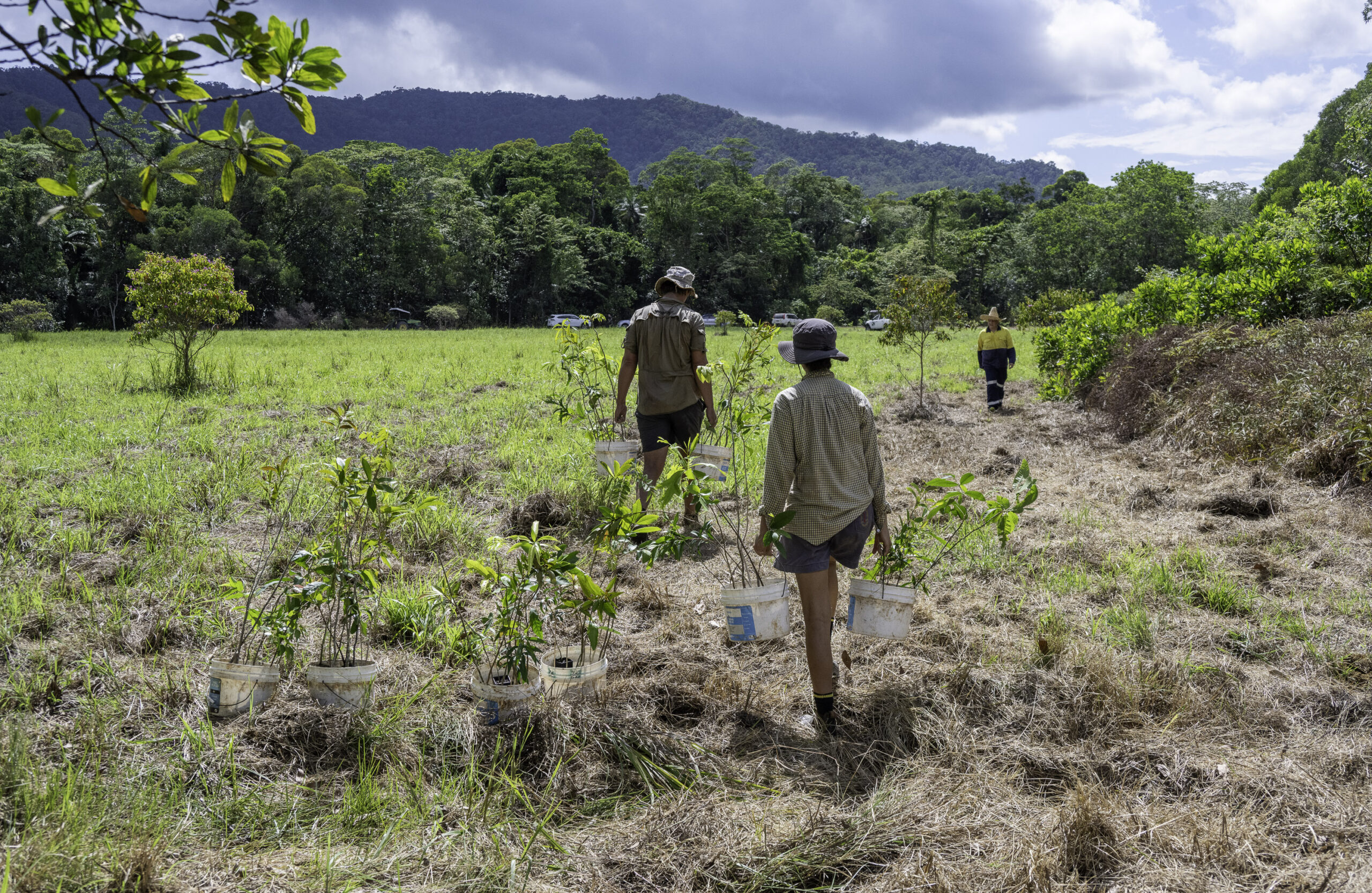
“We find local landowners and some of them say, ‘well, I’ve got 5 hectares [12.3 acres] that I don’t use, and I’d like to have that revegetated,’ and we try to help,” said Peter Trott, who works with the Community for Coastal & Cassowary Conservation.
The goal is to reconnect fragmented habitat. Trott oversees propagation and planting of more than 250 native rainforest species. He said expanding habitat is essential if cassowary populations are to grow.
“They may have filled the carrying capacity of available habitat,” he said.
“But it’s a smaller population [than pre-colonial levels], and so, it’s more susceptible to things like low genetic diversity and extreme weather events.”
Deadly roads and climate change
According to the Wet Tropics Management Authority, road strikes are the single greatest measurable threat to cassowaries in Far North Queensland. In an April 15 Facebook post, the Australian nonprofit Terrain reported that two cassowaries were killed on local roads during the previous week — and a male with two chicks was hit and limped back into the forest.
In response to this threat, Queensland’s transportation department tested new cassowary‑activated warning signs in 2024 along the Kuranda Range Road. These movement-activated signs correctly identified 97% of cassowaries, and the warning signs reduced driver speeds by an average of 6.3 kmh (3.9 mph). A department spokesperson said the technology shows “strong potential to improve road safety and reduce wildlife collisions.”
Even as awareness of the dangers of roads has improved, new threats are building, increasing pressure on Australian wildlife. Heat waves and more frequent and damaging extreme weather events, such as Severe Tropical Cyclone Narelle in March 2026, strip trees of the fruits cassowaries need to survive.
Wildfires are also growing in both intensity and frequency. “During an extreme heat wave event in 2019, 300 hectares (740 acres) of lowland tropical rainforest burned. This is unheard of,” WTMA’s Carmichael told Mongabay.
Because of rising heat, “There is also a decline in biodiversity in our mountaintop rainforest, he said.

Mystery still surrounds the cassowary
Far from the highways and tourist trails of the Wet Tropics, the southern cassowary population on the Cape York Peninsula remains an understudied group.
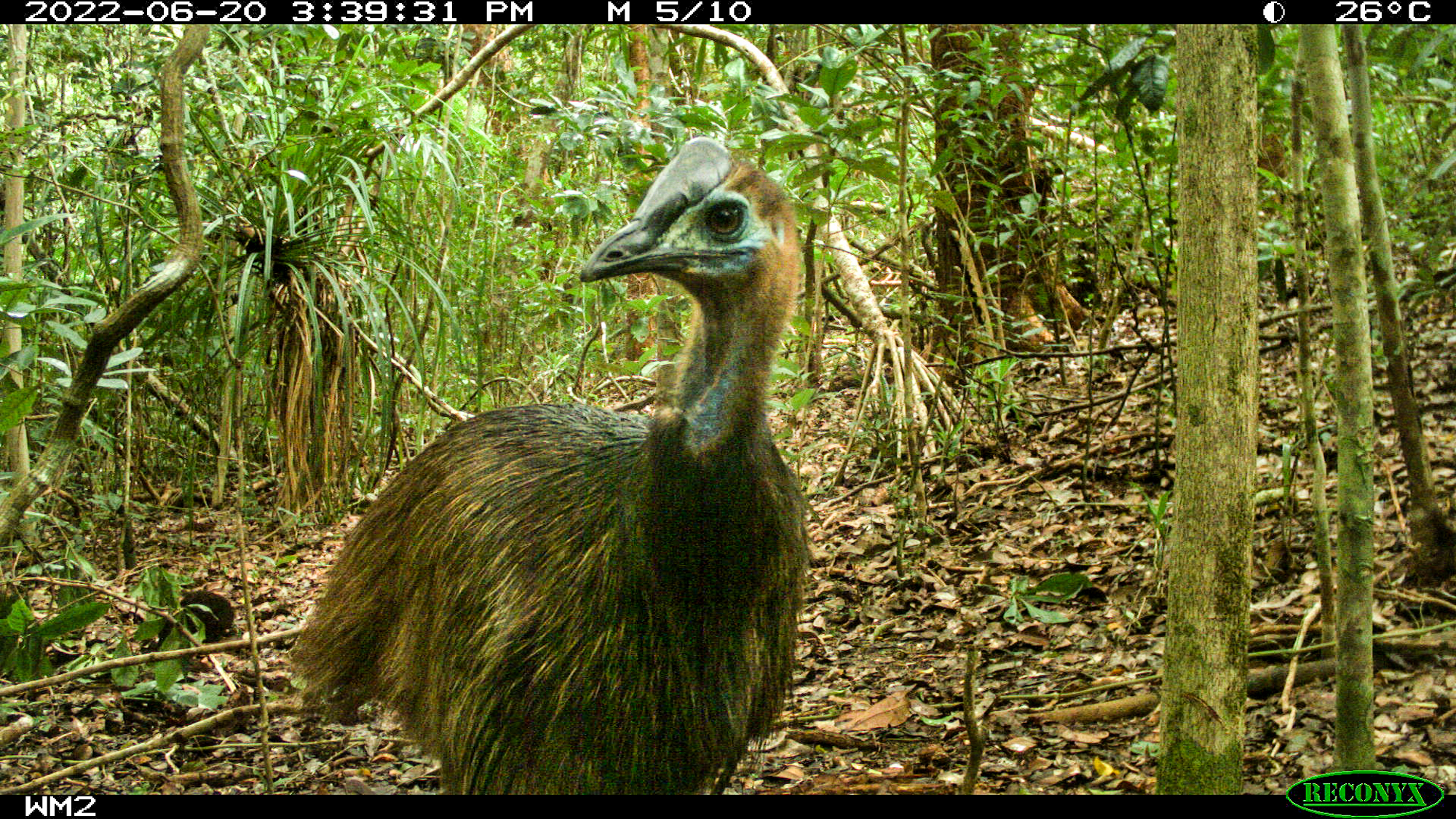
In 2022, McLean worked with the Indigenous Gudang Yadhaykenu People in Apudthma National Park to survey the species. One morning, sitting around a fire, she was asked to demonstrate a cassowary call, which she’d learned in the field.
What happened next shocked everyone.
“I turned around [after making the call] to see a cassowary step out of the forest into the circle [of our group]. The last sighting of a cassowary in that area by a Traditional Owner was 40 years ago,” she said.
“It was a magical start to the survey.”
The moment hints at a cautious return of this iconic bird to parts of its former range and highlights how much is still unknown. Despite signs of recovery in some areas, no one can say with certainty how many cassowaries remain across Queensland today.
With mounting pressures from road mortality and climate change, the need for updated, large-scale population data is becoming increasingly urgent.
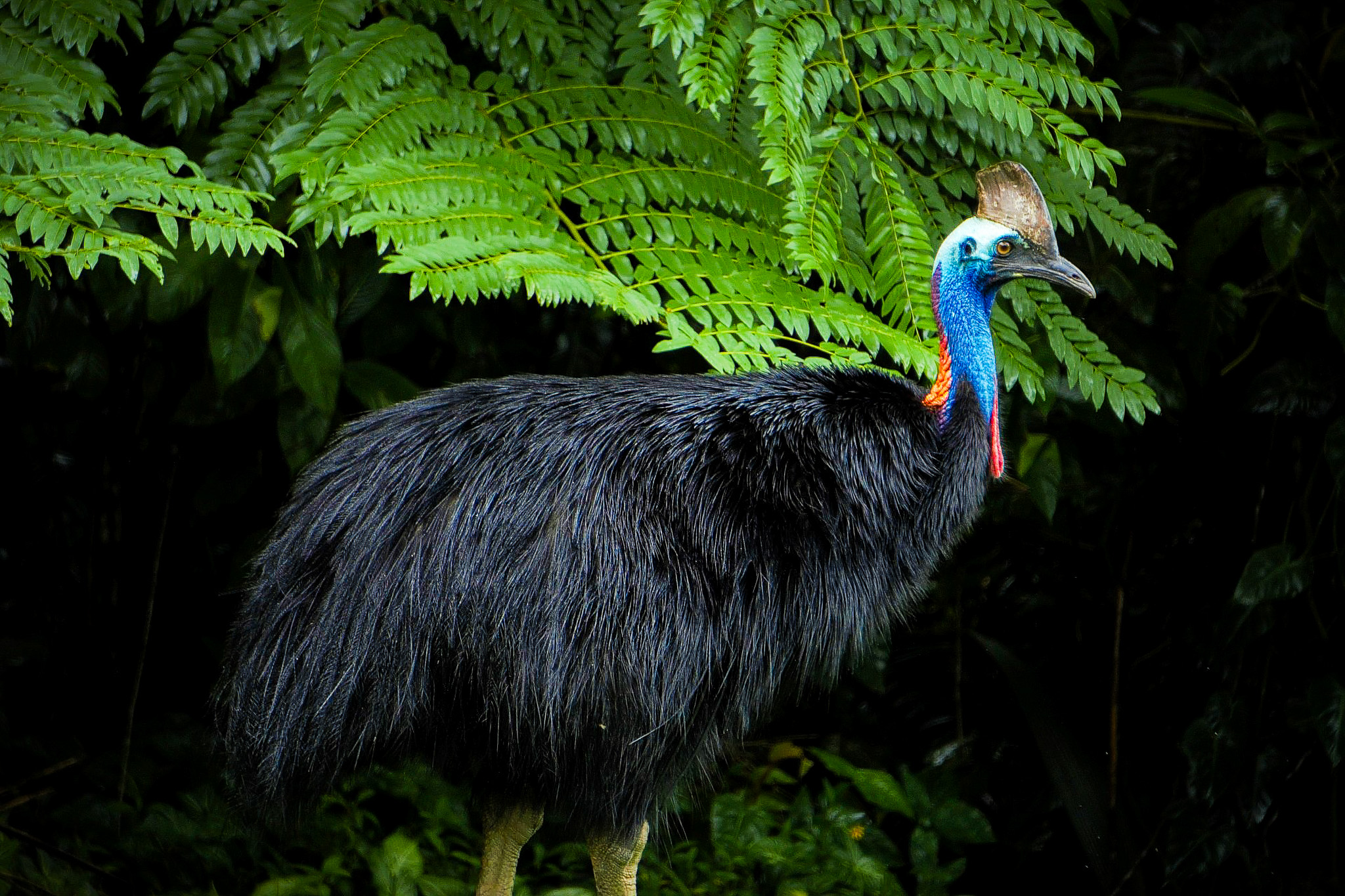
Banner image: The composition of Queensland’s rainforests would change without cassowaries dispersing seeds, and some plants may become greatly restricted or even threatened with extinction. Image courtesy of the Gondwana Rainforest Trust.
Australia’s new national park links habitat to protect koalas
Citations:
White, S. R. (1946). Notes on the Bird Life of Australia’s Heaviest Rainfall Region. Emu -Austral Ornithology, 46, 81-122. doi:10.1071/MU946081
Webber, B. L., Bradford, M., Ota, N., & Westcott, D. (2025). Predicting cassowary–vehicle collision in the wet tropics of Australia. Wildlife Research, 52(4). doi:10.1071/wr23089
Credits

This story first appeared on Mongabay
This article is licensed under a Creative Commons Attribution-NoDerivatives 4.0 International License.
You may republish this article, so long as you credit the authors and Mongabay, and do not change the text. Please include a link back to the original article.



