






Johannesburg, 14 March 2022: While sea, sand, sunshine and surfing are what most people associate with Durban, the city is building a reputation as a climate change champion. In September 2020, Durban was the first city in Africa to release its Climate Action Plan, which includes strategies to conserve and manage its ecological resources, especially its river systems. In less than 18 months, the plans are coming together, and Durban’s innovative solutions may be replicated in cities around the world, according to Zoé Ramondou, project manager in the Municipalities and Urban Development team at Agence Française de Développement (AFD), which is working with the eThekwini Municipality on pioneering riverine management projects.
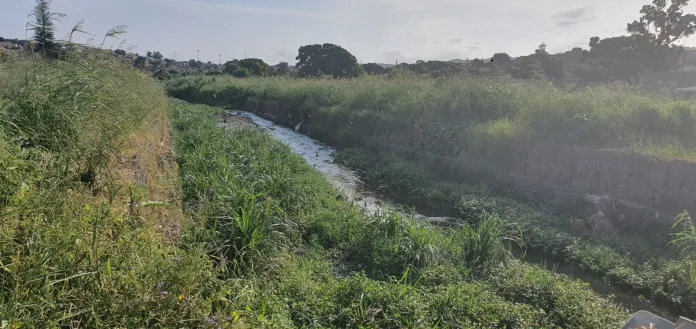
The coastal city of Durban contains 18 major river systems, some of which extend far inland of the city boundary. Over the past 30 years, deteriorating river water quality and more frequent flooding have caused escalating costs to the city, businesses and citizens.
The protection and management of its river systems is a central pillar in Durban’s climate change action plan, as human health and safety risks are being increasingly linked to poor riverine management. “These problems are made worse by the rapidly expanding population living in informal and peri-urban settlements adjacent to rivers,” says Ramondou. “Alternating cycles of drought and flood have driven informal settlements into flood plains, resulting in extreme vulnerability and loss of life and property. The projected impacts of climate change on Durban’s water systems include declining water quality, more intense flooding, reduced water availability and food security. When combined with blocked rivers and streams and settlements in vulnerable, flood-prone areas, the impact of a changing climate can be disastrous,” says Ramondou. Durban suffered severe flooding incidents in October 2017 and April 2019.
Because rivers are dynamic systems that are constantly responding to human and biophysical impacts, river management needs to be responsive to changes. Ramondou explains that the vast range of factors influencing the performance and liveability of riverine corridors includes solid waste like littering and dumping, sand mining, the status of riparian vegetation, the attenuation of surface runoff (through natural and artificial wetlands, canalisation or diversion measures), pollution and discharges from wastewater systems. “This also means that, for any project’s success, it is vital to have the buy-in of all stakeholders, including communities and concerned citizens,” says Ramondou.
EThekwini’s Transformative Riverine Management Programme is doing just that. The projects that are underway and in the planning stages represent powerful partnerships between the Municipality, external partners like AFD and Deutsche Gesellschaft für Internationale Zusammenarbeit (GIZ), civil society groups and communities. The pilot projects embarked upon to date, with support from the C40 Cities Finance Facility, in which AFD is a funding partner and GIZ an implementing agency, include a strong focus on community involvement, capacity building and skills development. “They combine ecosystem restoration, adaptation to climate change and the creation of economic opportunities for low-income populations. The have encompassed the employment of community cooperatives and the training and employment of local community members to assist with river health maintenance, waste management, monitoring and community awareness. There has also been a focus on building skills and capacity in beneficiary communities extending beyond riverine management actions. This includes helping people making a living from waste upcycling and recycling while improving the health of their local rivers,” says Ramondou.
Insights and learnings from Durban’s riverine management experiences so far are being leveraged to hone the city’s Transformative Riverine Management Programme going forward, with the ultimate goal of transforming some 7 400 kilometres of riverine corridors. Three projects that have delivered valuable information on the establishment, implementation and planned upscaling of transformative riverine management projects are the Sihlanzimvelo Project, the Aller River Pilot Project and the Green Corridors Green Spaces Project.
The Sihlanzimvelo Project is led by the eThekwini city department responsible for roads and stormwater maintenance. The objective of the project is to remove litter, waste and invasive plant species from stream areas to reduce stormwater blockages and create employment for co-operatives formed by local residents. The community co-operatives employed through the Sihlanzimvelo Project have been given the core skills needed to establish and run a co-operative, remove invasive alien plants, and comply with health and safety regulations. The community assessors play a wider role in creating awareness and behaviour change in the surrounding communities. This project was started in 2012 and its implementation is ongoing.
The Aller River Pilot Project is led by the Kloof Conservancy, a community-based organisation promoting environmental awareness protection. The objective of the pilot project is to restore sections of the Aller River with a focus on water quality improvement and invasive species removal. It has a focus on training and empowering youth representatives through the Eco-Champs programme to undertake education and clean-up campaigns. The project was initiated in 2016 and is ongoing.
The Green Corridors Green Spaces Project is led by the Green Corridors NPC, a city-supported special purpose vehicle, working on community upliftment through the creation of a green spatial economy. The objective of the project is to enhance local quality of life, living environments and sustainable livelihoods. This project was initiated in 2010 and its implementation is subjected to an annual review of its Memorandum of Agreement with the municipality.
EThekwini Metropolitan Municipality is building a case for upscaling riverine management to encompass all rivers in the city. The latest development is a new study – supported by AFD and funded through CICLIA – that will be integrated in the broader framework of eThekwini’s Transformative Riverine Management Programme, Ramondou reports. CICLIA is co-funded by the EU, AFD and the Swiss Cooperation (SECO).
“This study will help develop a business case for a pilot and very innovative catchment management strategy based on an integrated approach that enhances climate resilience and involves the communities that are most vulnerable. It will promote green jobs to benefit the communities. The study supports an innovative approach to invest in order to save the city future costs if nothing was done in these areas.
The study, which will take a year to complete, is expected to deliver important insights and results that will not just benefit Durban and its residents; but could be used to help other cities around the world that share the same river management challenges. “Durban is a pioneer city in Africa and worldwide when it comes to recognising its climate change vulnerabilities and prioritising solutions at a high level. Now, the city is developing innovative riverine management solutions that will be highly replicable and can improve the climate resilience of many other cities and the well-being of communities around the world,” says Ramondou.
About AFD:
Agence Française de Développement (AFD) implements France’s policy on international development and solidarity. Through its financing of NGOs and the public sector, as well as its research and publications, AFD supports and accelerates transitions towards a fairer, more resilient world. It also provides training in sustainable development (at AFD Campus) and other awareness-raising activities in France.
With its partners, AFD is building shared solutions with and for the people of the Global South. Its teams are at work on more than 4,000 projects in the field, in the French Overseas Departments and Territories, in 115 countries and in regions in crisis. AFD strives to protect global public goods – promoting a stable climate, biodiversity and peace, as well as gender equality, education and healthcare. In this way, it contributes to the commitment of France and the French people to achieve the Sustainable Development Goals (SDGs).
Press Contact:
Mantis Communications
Kerry Simpson
Tel: 079 438 3252
Email: [email protected]






