



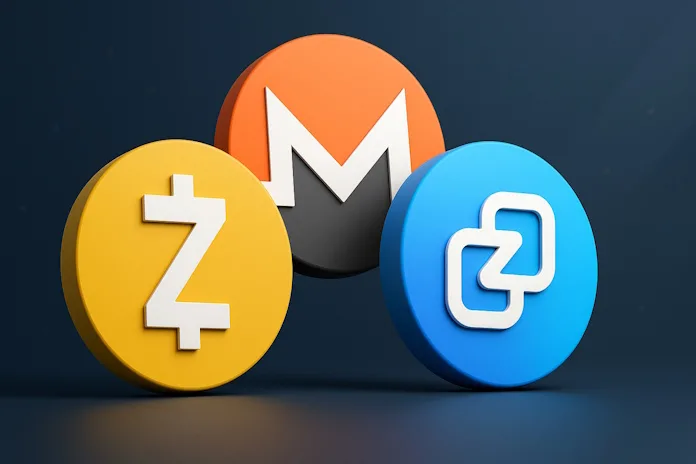
After years in the background, privacy coins are making a massive return—and Zcash (ZEC) is leading the charge. In what analysts are calling one of the strongest rallies in crypto history, Zcash has surged more than 240% in September, soaring from just above $40 to $234.07 per coin, reaching a market capitalization of $3.8 billion.
The stunning recovery marks Zcash’s most powerful rally in years, outpacing Bitcoin, Ethereum, and Solana by a wide margin. According to Messari, Zcash’s “mindshare”—a metric tracking media and social engagement—jumped by over 800%, confirming that privacy is once again dominating the conversation.
Why Privacy Is Winning Again
Zcash’s resurgence isn’t happening in isolation. Around the world, governments are tightening control over self-custody wallets, exchanges, and financial transactions—all while preparing to roll out Central Bank Digital Currencies (CBDCs) that could monitor and restrict how money moves.
That pressure has reignited public interest in crypto’s original promise: freedom, sovereignty, and privacy.
If your money isn’t private, it isn’t truly yours.
Zcash’s hybrid model—which allows users to choose between transparent and shielded transactions—has given it a compliance-friendly edge while still preserving user confidentiality. This balance between regulatory pragmatism and privacy is fueling its newfound mainstream momentum.
The Privacy Coin Renaissance
Zcash’s run has set off a wave of renewed attention across the entire privacy sector.
Monero (XMR), the long-time leader in private digital cash, continues to dominate in pure anonymity, using RingCT and Stealth Address technologies to make every transaction completely untraceable.
Meanwhile, newer privacy networks are expanding far beyond payments—building full ecosystems of private DeFi, marketplaces, and tokenization.
Among them, Zano (ZANO) stands out as a fast-rising player redefining what privacy infrastructure can do.
Zano: The Future of Private Finance
Unlike most blockchains, Zano was built entirely from scratch, not forked. It’s the creation of Andrey Sabelnikov, the original author of the CryptoNote protocol—the same foundation Monero was built on.
Zano combines Proof-of-Work and Proof-of-Stake in a unique hybrid model that features Zarcanum, the world’s first hidden-amount Proof-of-Stake consensus mechanism. This allows users to stake and earn rewards anonymously, without ever revealing their balances or addresses.
Beyond its consensus model, Zano introduces a powerful suite of privacy-native features designed for real-world utility:
- Confidential Assets: Anyone can create their own privacy-preserving tokens—such as stablecoins or wrapped assets—secured by Zano’s encryption.
- Ionic Swaps: Perform trustless, private swaps between assets with no intermediaries or exposure of amounts.
- Aliases: Use simple @usernames instead of long, complex blockchain addresses for easy, private payments.
- Auditable Wallets: Businesses and organizations can opt into transparency when needed without sacrificing the privacy of others.
- Freedom Dollar (fUSD): Built directly on Zano’s Confidential Asset framework, fUSD is the world’s first private and unfreezable stablecoin. While over $2.5 billion in USDT has been frozen, $0 fUSD has ever been frozen—and never will be.
With these innovations, Zano positions itself as the next evolution of the privacy coin—a complete privacy ecosystem that bridges private payments, DeFi, and real-world usability.
Despite these advancements, Zano’s market cap remains around $200 million—a fraction of Zcash’s $3.8 billion—leaving massive upside potential as global demand for private finance accelerates.
Confidential Layer: Privacy for Bitcoin, Ethereum, and Beyond
Perhaps the most intriguing development stemming from Zano’s ecosystem is Confidential Layer—a protocol that gives privacy back to Bitcoin, Ethereum, Dai, and other major coins.
By leveraging Zano’s Confidential Assets technology, users can wrap existing tokens like BTC or ETH into private, shielded versions that transact within Zano’s privacy framework.
This means anyone can now send and hold private BTC or private ETH—protected by Zano’s Bulletproofs+ cryptography and Zarcanum hidden staking layer.
In essence, Confidential Layer extends Zano’s privacy infrastructure to the entire crypto world, merging mainstream liquidity with untraceable privacy. It’s a bridge between the old transparent economy and the new, private one.
The Takeaway: The Privacy Era Is Back
From Zcash’s explosive rally to Monero’s enduring strength and Zano’s cutting-edge architecture, the message is clear:
Privacy is back—and this time, it’s scalable, compliant, and unstoppable.
The renewed interest in privacy coins marks not just a speculative wave but a philosophical shift back toward the core values that birthed cryptocurrency in the first place:
freedom, security, and control over one’s own money.
Zcash lit the spark. Monero carried the torch. Zano—and now Confidential Layer—are building the world that makes privacy the standard once again.
2025 may well be remembered as the year privacy won.