



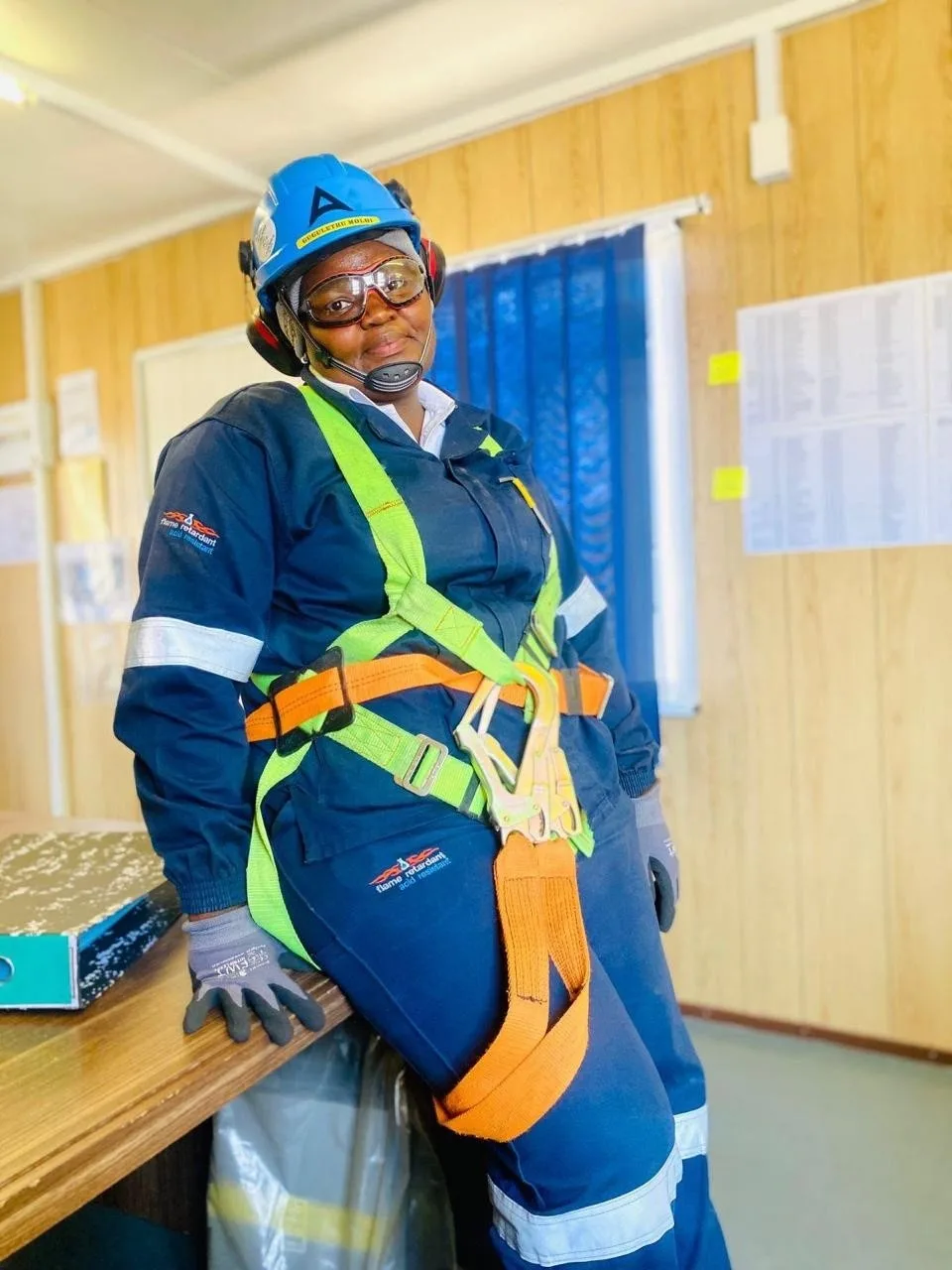
As the world celebrates International Women in Engineering Day on 23 June, Aurex Constructors’ Junior Electrical Engineer Gugulethu Moloi reflects on her journey into engineering, the value of mentorship, and the opportunities awaiting the next generation of women engineers
Engineering remains one of the most influential professions shaping the future of society. From renewable energy and telecommunications to infrastructure and technology, engineers play a critical role in solving complex challenges and creating sustainable solutions.
For Gugulethu Moloi, Junior Electrical Engineer at Aurex Constructors, engineering was not always part of a carefully planned career path. Instead, it was a journey of discovery that ultimately led her to a profession she now finds both challenging and rewarding.
Finding her place in engineering
“My journey into engineering was not driven by a lifelong plan,” explains Gugulethu. “During my studies, I was exposed to different engineering disciplines, including civil, mechanical and electrical engineering. I found that electrical engineering was the area that came most naturally to me and the one I enjoyed the most.”
Today, Gugulethu works within Aurex’s renewable energy division, supporting engineering and commissioning activities on utility-scale solar projects. Her responsibilities span engineering documentation, performance monitoring, commissioning support and grid code compliance testing, providing exposure to both the technical and practical aspects of large-scale renewable energy developments.
The role continues to push her beyond her comfort zone, requiring constant learning and adaptability. “Engineering challenges me every day,” she says. “The industry is constantly evolving, which means you are always learning new skills and finding new ways to solve problems.”
Balancing work, study and growth
Gugulethu’s career journey has been defined by continuous development. Having completed her National Diploma in Electrical Engineering and an Advanced Diploma in Telecommunications, she is currently pursuing an Honours degree in Power Engineering while working full-time.
Aurex has supported this growth by investing in her education and providing opportunities to gain practical project experience. “One of the most significant milestones in my journey has been transitioning into the engineering team at Aurex,” she highlights.
“I have been able to take on greater technical responsibilities while continuing my studies and developing professionally.” She credits much of her progress to a willingness to embrace challenges and remain open to learning.
The importance of mentorship
A key part of Gugulethu’s professional development has been the mentorship she receives from Senior Electrical Engineer Johann van Ellewee. “There seems to be a gap in the industry. We have a lot of young graduate engineers and a lot of senior engineers nearing retirement, but very few in between. That is why mentoring the next generation is so important.”
Mentorship, Gugulethu believes, is invaluable for young engineers entering a highly technical and demanding profession. “A good mentor provides guidance, shares experience and helps navigate challenges that are difficult to learn from textbooks alone,” she says.
“I have personally benefited from the support and advice of experienced professionals, and it has helped me grow both technically and professionally.” Mentorship is particularly important in an industry where practical experience, professional registration and continuous learning all play critical roles in long-term success.
“One of my passions is mentoring young engineers and seeing how they grow into senior and eventually professional engineers,” says Johann. “The number of women in the industry is increasing, and I think that is something that is changing for the better. People always think construction is a male-dominated space, and in some instances it still is. But in electrical engineering it does not have to be, and it is no longer.”
Why representation matters
For Gugulethu, increasing representation is about more than diversity targets. It is about ensuring that the profession benefits from a broader range of perspectives while inspiring future generations to pursue engineering careers.
“Engineering solutions impact people from all backgrounds,” she says. “Having diverse perspectives within teams leads to better ideas, improved problem-solving and more innovative solutions.” Representation also creates visibility. “When young women see other women succeeding in engineering, it helps them believe that they can pursue the same path,” she says.
Looking ahead, Gugulethu is optimistic about the role engineering can play in Africa’s development. “What excites me most is the opportunity for engineering to contribute to Africa’s growth,” she says. “There is significant potential in renewable energy, infrastructure development, telecommunications and technology innovation.”
Gugulethu stresses: “As engineers, we have an opportunity to help solve real challenges while creating sustainable solutions that improve people’s lives.” As the continent continues to expand its energy, infrastructure and technology capabilities, engineers will remain central to shaping that future.
A message to future women engineers
For young women considering careers in engineering, Gugulethu’s advice is simple: “Do not be afraid to take up space and believe in yourself and your abilities. Engineering can seem intimidating, but every engineer starts somewhere. Be willing to ask questions, learn from mistakes and challenge yourself.”
She adds that growth often happens outside of one’s comfort zone. “If you are willing to work hard and keep learning, engineering can be a very rewarding career.” Johann says about Gugulethu’s ambition and progress: “She is doing very well. I think she is exceeding my expectations, and that is always very nice to see.”
Gugulethu’s story serves as a reminder that talent, curiosity and determination know no gender, and that the future of engineering will be strongest when it reflects the diversity of the societies it serves.