Johannesburg, 23 November 2026: With gender-based violence and femicide declared a national disaster in South Africa, the need for sustained action to protect women and children and address the root causes of violence remains urgent. As the country marks the annual 16 Days of Activism for No Violence against Women and Children, I find myself thinking less about the campaign itself and more about the girls I’ve met through our work, and what their lives look like the day after these campaigns end. The focus must extend beyond awareness to meaningful action, accountability and lasting change.
I’m grateful for any moment that brings people together and puts violence against women and children on the national agenda. But I keep coming back to one girl in my mind: a girl who is afraid to walk around her own community. Where can she go? Who will be there for her? And will they still be there next month?
If we cannot answer those questions, our messages of solidarity will ring hollow.
Lasting impact needs long-term commitment
Much of my career has focused on early childhood development (ECD). Those years taught me that you don’t change a child’s life with one campaign or one partner. It takes a whole system working around that child, over time. I’ve seen what happens when a child has a safe, familiar place to come back to, from the age of three right through to their first job. That continuity becomes the intervention. It’s what sets them on a different path.
ECD also taught me how easy it is to focus on one part of a child’s life and lose sight of the rest. We see a child struggling at school and we think about education. But that child goes home to a family, lives in a community, and carries experiences that shape whether they can learn at all.
The same principle of consistency applies to funding. Funding that arrives for 16 Days can be put to good use, but it will run out. It may fund a once-off project, but you can’t build long-term change on funding that isn’t guaranteed. Systemic change needs commitments over time, from partners rather than sponsors, who understand the need for continuity and are willing to stick around for the long term.
Context matters
Programmes that last are the ones shaped and led by people from the community who understand the context and will be there today, tomorrow, and every day after.
I felt this the first time I visited a Safe-Hub in Jabulani, long before I joined as CEO. I remember being struck by how the team thought about each child as a whole person, and walked alongside them at every stage, from ECD to their first job. The team also thought about the importance of the ecosystem that surrounded that child and how they could be part of the programme.
There is something deeply reassuring for a child in knowing that you can come back next week, next month or in three years, and someone will still know your name. And when those mentors and coaches are people you already know and trust from your own community, that relationship can change everything.
I’ve watched girls with steady support come out of their shells and grow into leaders. With skills, healthcare, psychosocial support and a network around them, Safe-Hub alumni have gone on to start their own businesses and build careers. Some have come back as mentors and leaders in their communities, holding the door open for the next generation of young women and girls. It moves me every time.
But that kind of change takes years. If you’re only thinking about these issues for 16 days, there’s no way you can get your head around the enormous scope of both the problem and the solution that’s required. Not for lack of willingness, but because it’s simply impossible to grasp the scale of the many interconnected factors at play when you’re dipping in and out for a few days a year. Sustainable programmes must be designed and driven with people from the community who understand the context.
Safety must be practical
As we gear up for 16 Days of Activism, let’s also plan for what comes next. When organisations work together around the same young people, we can do far more than any of us could alone. If you fund this work, you might consider whether some of that support could become a partnership over several years. If you run a business, a learnership, or a bursary, that could be the opening a young woman needs to change the direction of her life. For those of us running programmes, it means listening closely to the people we serve and being honest about where we fall short.
At Safe-Hub, getting more girls to take part in our after-school programmes is still a challenge for us. It would be easy to put that on the girls. Instead, we’ve had to look hard at ourselves and what we offer.
When we talk about protecting girls, I think we also have to ask what makes it possible for them to take part in everyday life. Fear can keep a girl from learning, from sport, and from the opportunities that come later. Responsibilities at home can leave her with little time, even when a programme is right there. We’re learning how to adapt so that more girls can join in fully, and we’re still learning.
I think our whole sector could use more of that kind of reflection. It takes some humility to admit that what we’ve built might not yet be the right fit, and some courage to change it. I’m trying to practise both.
A spark to ignite lasting change
I’d love for us to see the 16 Days as a beginning rather than an answer; a chance to ask ourselves what we’re willing to commit to beyond it. At Safe-Hub, that means being there from ECD, through after-school activities, to the point where young people are preparing for work or building businesses. That kind of continuity, I believe, is what this country’s women and girls need more of.
My hope is simple. On day 17, a girl should know where she can go and who will be there for her, because it will be the same place, with the same people who were there yesterday, and who will still be there tomorrow. I also hope that there is a Safe-Hub close to where she is.
Find out about Safe-Hub’s free programmes and opportunities to get involved at www.safe-hub.co.za
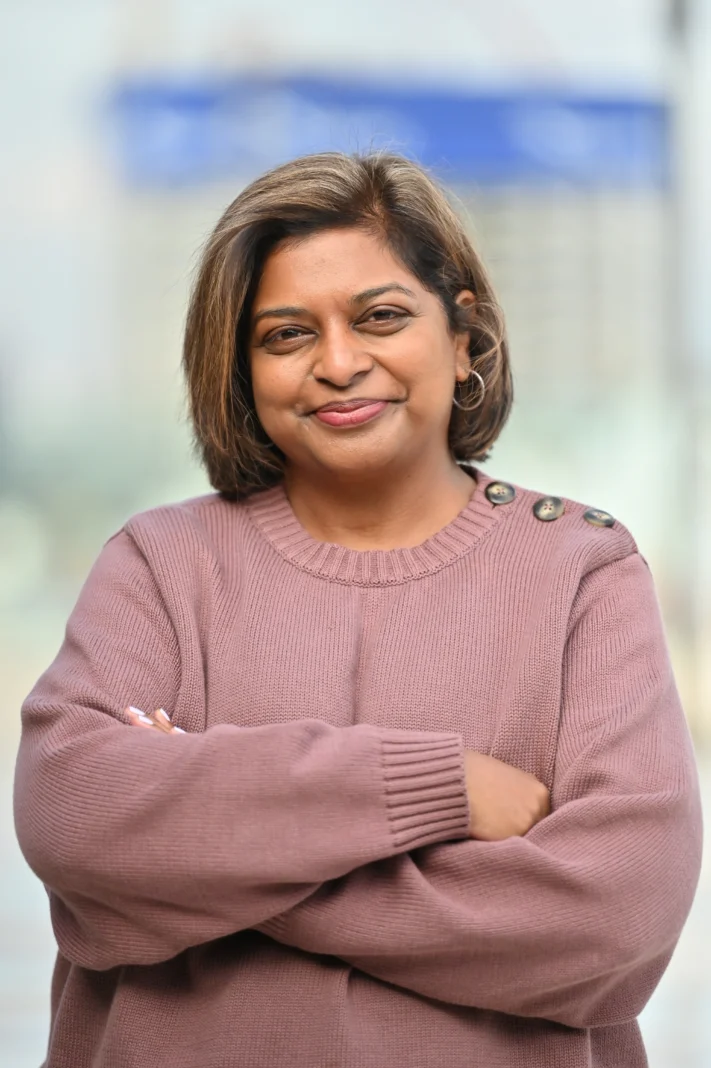
OP:ED BY KERRY KASSEN, CEO OF SAFE-HUB
About Safe-Hub:
Safe-Hub is an established, international social enterprise that works with local partners to create safe, inclusive spaces where young people growing up in communities shaped by decades of under-investment can access the care, resources and opportunities they need to thrive. Through holistic, multi-purpose hubs, Safe-Hub supports young people across their full development journey – from early childhood through to economic participation. Its award-winning sustainability model, developed by AMANDLA Social Enterprises, is rooted in catalysing communities to support themselves by building local leadership, skills and systems that enable long-term impact. Safe-Hub is committed to taking collective action to overcome global inequality and build a more equitable world.
Safe-Hub is currently active in South Africa, Germany, the United States, India and Côte d’Ivoire.
Visit: https://safe-hub.org/
Facebook: Safe-Hub Global
Instagram: safe_hub_global
Press Contact:
Mantis Communications
Kerry Simpson
Tel: 079 438 3252
Email: [email protected]