Six years ago, in 2015, the then leader of the DA, Mmusi Maimane said in a speech at the University of Cape Town that although the black middle class increased by more than 100% between 1993 and 2008, unemployment among black people now stands at 39% while only 8.3% white people are unemployed.
In 2014 the South Africa’s population stood at about 54 million:
# Black Population: 43.5 million
# Colored Population: 4.7 million
# Indian/Asian Population: 1.3 million
# White Population: 4.5 million
Stats SA published a research paper in 2014 that found between 1994 and 2014, the unemployment rate rose by 3.5 million among black people. This despite all the effort and billions of rand that the ANC government spent on the problem and THAT was during the good booming days of the economy.
The question is: What has changed on the unemployment front since 2015?
The answer is: Basically nothing, in fact, it got worse… and is about to become even more devastating.
Before the Covid pandemic and before the lockdowns Statista.com estimated the unemployment rate in SA for 2019 at 36.5% for back people and 8.8% for white people.
But at the same time, in August 2019, the Mail & Guardian newspaper published an article titled: “Unemployment in South Africa Worse Than You Think”
In the article they quote a Stats SA survey showing that during 2019 the unemployment crisis in SA was deepening and that, as they said at the time: The Devil Is in The Details.
The article said it made more sense to look at figures over the longer-term and if you do, the unemployment in South Africa is 46% among black people and 9.8% among white people.
Whatever the truth, it is probably fair to say that this unemployment figure in South Africa will increase steadily over the next few months and even years as the effects of all the local and global lockdowns ripple through the world’s economies.
The ANC government could not make a dent in unemployment in the booming years, what makes them think they are going to solve the unemployment during a recession or worse, during a global economic meltdown.
Here is how the unemployment rate in SA increased since 2014 [according to Statista.com]
# 2014: 24.9%
# 2015: 25.16%
# 2016: 26.55%
# 2017: 27.07%
# 2018: 26.92%
# 2019: 28.18%
# 2020: 28.48%
But what about the ANC’s BEE policies? Why didn’t they help decrease black unemployment in SA?
According to the IRR (Institute of Race Relations) BEE only benefits a very small percentage of the black population in general, maybe 15%.
So, what can the government do? What should they do? Give more freebies?
Obviously, what they are doing now, and what they did in the last 20 years is not working. Only idiots do the same thing over-and-over again and hope for a different answer… don’t they?
Here is a thought.
In the last 20 years, partly due to BEE, thousands of white people in SA lost their jobs, especially those that worked in government departments or semi-government institutions, and yet the unemployment figures among white people remained basically unchanged since 2014. It increased from 8.3% to 8.8%. Why is that?
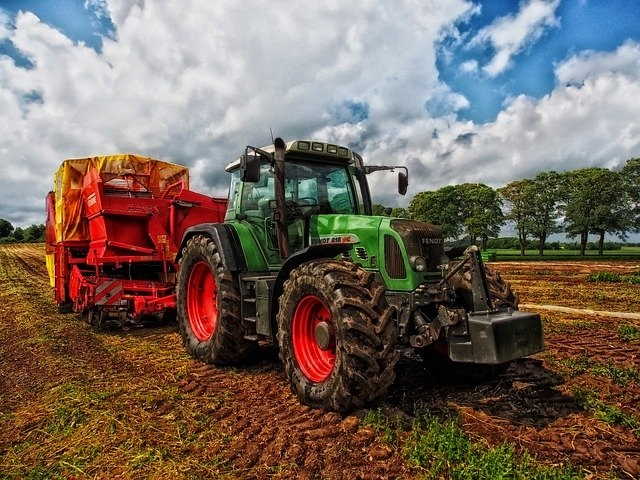
The business insider recently wrote that South Africans with experience in the agricultural sector, especially those with skills to drive tractors, trucks, combine harvesters, etc. are in big demand by local farming companies, but also by agricultural companies in the USA.
In South Africa young men and women who are looking for local farm work and experience usually turn to online platforms like plaaswerk.co.za where they can publish their CV’s for a small fee.
Local farmers then buy a number of CV’s for a few Rand and they search these CV’s for the right candidates to help them on the farms.
This “pay-for-what-you-want-agreement” on “plaaswerk” keeps the platform clean from timewasters and those who are looking for giveaways and freebies.
Finding employment and hiring people in SA is a serious business – the labor law says so and until the law changes, it will remain so.
The message is “plaaswerk” is for people who are serious about their own future in the agricultural sector.
Hundreds of years of experience in capitalism has shown us that people who are serious about their future also work hard towards their own goals.
Successful people are typically people who work hard to educate themselves, then they start working and work some more, educate themselves some more and do it over and over again for the rest of their lives. The point is, they learn to pay their own way – in cash and effort – for a better future.
The opposite is also true: Those who are waiting for someone else to give them grants and freebies tend to go nowhere – they stay where they are – probably in poverty for the rest of their lives.
It is estimated that more than 7000 South Africans, mostly white men, currently work on farms in the United States of America under their H-2A Visa system.
This is a temporary worker Visa for those who perform agricultural services in the USA. A small survey among these Visa holders showed that they had to work very hard and had to pay a lot of money to eventually earn enough experience to find a farming job in the USA. Only then, once this was done, could they apply and qualify to obtain an H-2A Visa. Its not free.
Maybe the ANC government can learn something from these young white farmers and would-be farmers who receive nothing from their own government – except the consequences of BEE.
7000 Of these youngsters worked hard to educate themselves and then they leave their homes and families behind for the best of a year to work for long hours in a foreign country to produce food for other people – thousands of miles away.
That Mr. President shows commitment!
Maybe the ANC government should start spending time and money on those unemployed black people of this country who want to educate themselves and who are keen to work hard and learn new skills.
Free money, free land and BEE is not going to solve the unemployed problem in South Africa. Hard working and solid commitments from students will.