- Space42 and Viasat, co-founders of Equatys, and Terrestar Solutions sign a memorandum of understanding to develop an open, standards-based interoperability framework between Equatys and Terrestar’s CaStar constellation
- Each infrastructure operator would retain ownership and control of its own space and ground assets and customers, with CaStar operating as a sovereign Canadian system while interworking with Equatys globally
- The shared infrastructure framework combines nationally controlled assets with global shared satellite infrastructure, unlocking greater scale and economic benefits and enabling next-generation direct-to-device and advanced mobile satellite services for nations, enterprises, and consumers worldwide
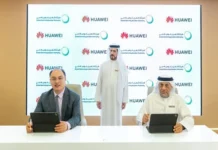
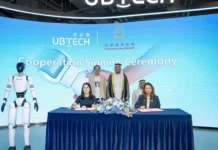
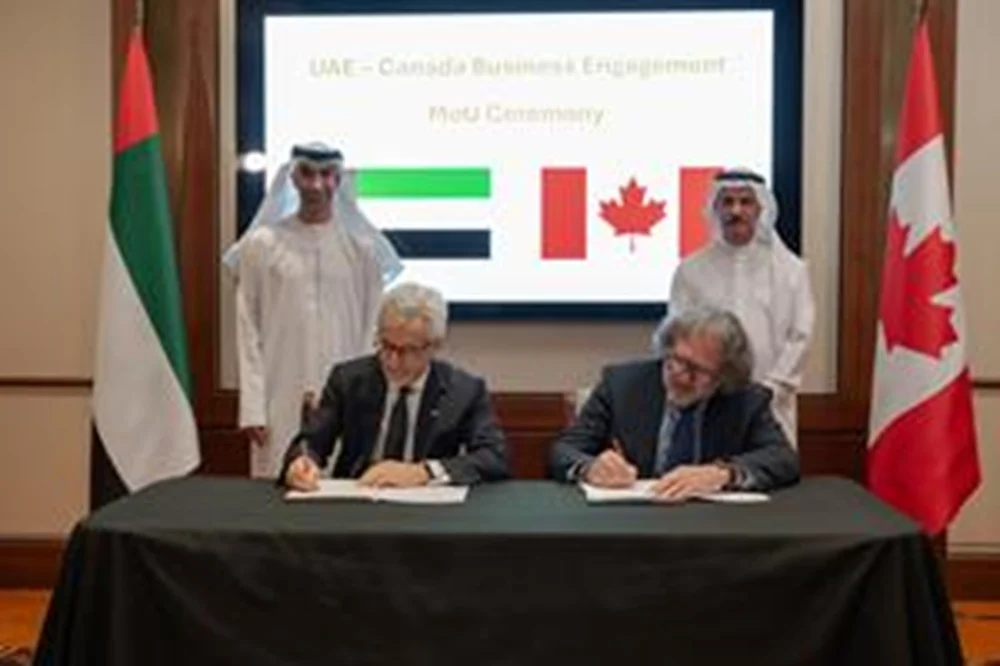
(GLOBE NEWSWIRE) — Space42 (ADX: SPACE42), the UAE-based AI-powered SpaceTech company, and Viasat, Inc. (NASDAQ: VSAT), a global leader in satellite and secure communications, and Terrestar Solutions Inc., Canada’s only sovereign mobile-satellite services operator, today signed a memorandum of understanding (MoU) to collaborate on developing an open, standards-based interoperability framework between Terrestar’s planned Canadian low-Earth orbit (LEO) constellation, CaStar, and Equatys, a planned global shared infrastructure platform for direct-to-device (D2D) services and other advanced Mobile-Satellite Services (MSS). The MOU was signed on the sidelines of the official visit of His Highness Sheikh Khaled bin Mohamed bin Zayed Al Nahyan, Crown Prince of Abu Dhabi, United Arab Emirates, to Canada, where His Highness attended talks with the Right Honourable Mark Carney, Prime Minister of Canada.
The framework is intended to allow the two systems, together with their respective ground segments, to interwork as a coordinated multi-system non-terrestrial network (NTN) infrastructure, while each operator retains full ownership and control of its own assets. This approach is designed to enable global scale while preserving national sovereignty over critical communications infrastructure.
The MoU advances a partnership model that would combine Terrestar’s position as a Canadian-controlled and Canadian-operated MSS provider with Equatys’ role as a shared, multi-tenant, interoperable global infrastructure enabling D2D and advanced MSS services in a 5G network environment. The collaboration between Equatys’s founders and Terrestar is the first example of Equatys’s “sovereign shell” approach that combines a global commercial system with constellations optimized for specific countries or regions, each with their dedicated ground segment and run by a trusted local operator, built to common standards that keep them fully interoperable.
Rather than relying on proprietary, point-to-point integration, the parties intend to define a common, open, and standards-based interoperability layer. This approach is expected to foster collaboration, drive adoption, reduce capital and operational expenditures, and enable better coordination of power, beams, capacity, and ground gateway access among participating systems.
Today’s announcement comes after Space42 and Viasat signed a binding agreement in September 2026 to co-found Equatys, backed by up to USD 1 billion in combined equity commitments.
Speaking on the occasion, Karim Michel Sabbagh, Managing Director of Space42, said: “This MoU demonstrates how sovereign satellite systems and shared global infrastructure can work together to deliver D2D services globally. Terrestar maintains its position as Canada’s independent MSS operator while exploring how to participate in a broader ecosystem. We are introducing a model where national capabilities and international collaboration reinforce rather than compete with one another.”
Mark Dankberg, Chairman and CEO of Viasat, said: “By advancing a global, standards-based open architecture with an interoperability framework via a shared infrastructure model, we are continuing to expand an ecosystem that will be uniquely positioned to drive mass adoption within the significant D2D and next-generation MSS market. This collaboration with Terrestar underscores Equatys’ innovative approach to offer a foundation for choice and interoperability and provide compelling economic benefits from geographic and spectral efficiencies to participating global, regional, and national space operators. Equatys is committed to working across the global space industry, as well as with the broader ecosystem including MNOs, OEMs, chipset vendors, regulators and standards bodies.”
Jacques Leduc, President and CEO of Terrestar Solutions, said: “The future of mobile satellite connectivity won’t be built by countries or constellations acting alone. It will be built through open standards-based networks that combine national sovereignty with global reach, positioning us to compete at scale. While working hand-in-hand with the Canadian space ecosystem, CaStar is Canada’s contribution to that future: Canadian-controlled, globally connected, and built to work with other mid-power countries like Canada. We look forward to helping build a truly global network together with our partners at Space42 and Viasat. Terrestar’s ambition is to seamlessly integrate satellite and terrestrial mobile networks, bringing connectivity to everyday devices. Our goal is to make mobile satellite connectivity a reality for every Canadian, wherever they live, work, or travel around the world. This MoU is just the beginning.”
His Excellency Dr. Thani bin Ahmed Al Zeyoudi, Minister of Foreign Trade, said: “The UAE’s deepening trade and investment links with Canada, embodied in the newly signed Comprehensive Economic Partnership Agreement, are laying the foundations for long-term, mutually beneficial collaborations in critical sectors. The memorandum of understanding between Space42, Viasat and Terrestar Solutions is a clear example, bringing together companies from the UAE, the United States and Canada to develop shared, standards-based infrastructure for the next generation of satellite connectivity. Collaboration of this kind reflects the UAE’s vision of deeper economic integration, where partnership drives innovation that can cross borders, scale quickly and attract long-term capital.”
Partnership Framework
The MoU reflects a shift away from closed, single-operator satellite systems toward an open standards-based model, in which independent constellations can interwork as a coordinated multi-system NTN infrastructure. Under the proposed framework, the parties would define a common standardized interoperability layer linking their respective space and ground segments. This layer would rely on published, vendor-neutral interfaces aligned with 3GPP NTN specifications, GSMA roaming and interconnection frameworks, and other recognized industry standards, avoiding proprietary lock-in.
Each participating operator would retain control of its own space and ground assets, authorizations and customer relationships, interacting with other systems only through agreed interfaces. Within that boundary, each system would make defined resources and capabilities, such as power, beams and gateway access, available to the others, supported by common mechanisms for resource requests, allocation, monitoring, usage accounting and settlement.
The framework is also designed to respect national sovereignty and security. System infrastructure serving a given jurisdiction could be located and operated to meet local regulatory, security and lawful access requirements. In Canada, for example, the CaStar constellation would operate as a sovereign national system, with Canadian gateways and ground network keeping domestic data within Canadian jurisdiction, while interworking with Equatys at a global scale.
Finally, the framework is intended to be extensible, to accommodate additional satellite systems, mobile network operators and service providers over time, and evolve with successive releases of industry standards.