



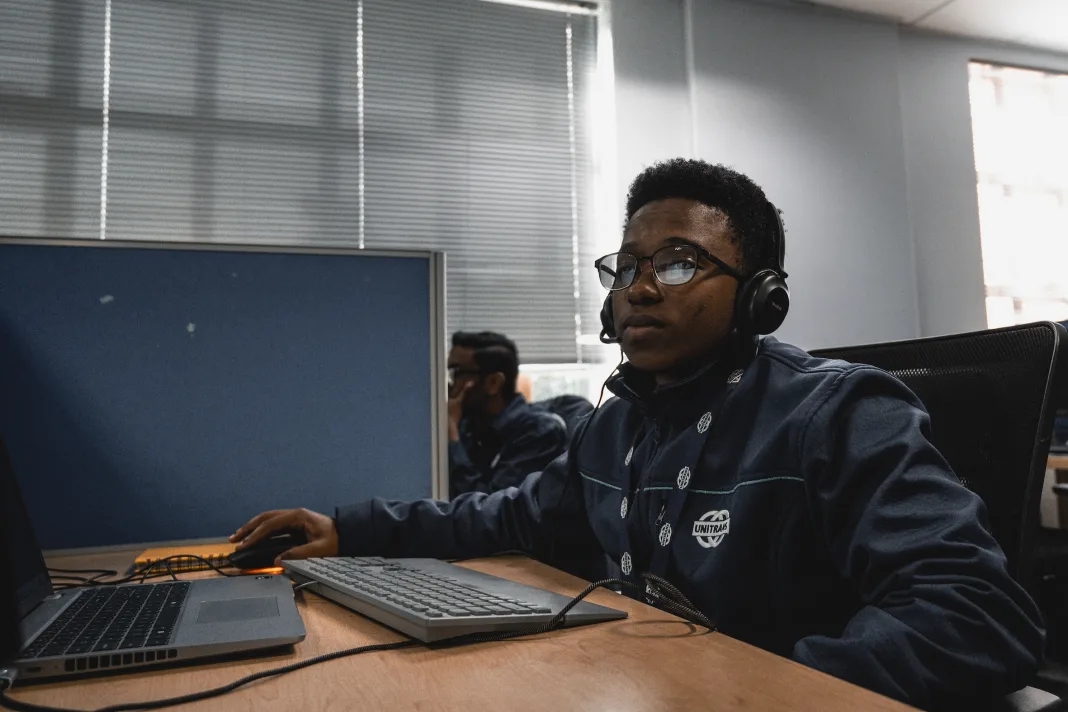
As South Africa marks Youth Month, the conversation around young people’s futures must move beyond opportunities alone to the systems, skills, and support needed to help them build sustainable careers. In sectors such as logistics and supply chain, this means creating clearer pathways between potential and participation, ensuring that young people are equipped not only to enter the world of work but to grow within it.
For Unitrans, this responsibility is closely linked to its role as a business built on both infrastructure and people. By investing in training, mentorship and practical career development, the company is helping to build a pipeline of future-ready operators who can contribute meaningfully to industry, communities and the broader economy.
According to Liesel Dentlinger, Human Capital Executive at Unitrans, this is where the sector has an important opportunity. “As an industry, we have a responsibility to open doors, remove barriers to entry and demonstrate that logistics offers exciting opportunities across operations, engineering, technology, supply chain management and leadership.”
For many young people, logistics may not be an obvious career choice. Yet it is one of the sectors that supports trade, production, mobility and growth across the continent. It is also a sector where skills are built through doing, not just through theory.
Apart from providing ISO 9000- and NOSA-certified driver and operator training programmes, Unitrans upskills its people through onboarding, technical and leadership training, learnerships, apprenticeships, mentorship, and workplace experience. The focus is on helping employees to apply learning, build confidence over time, and take on greater responsibility as their capabilities grow.
Dentlinger adds, “One of the strengths of Unitrans is our ability to develop talent from within. Across the business, we have many examples of individuals who started in operational or entry-level roles and progressed into supervisory, management and specialist positions. We have employees who began their careers as drivers, administrators, learners or apprentices and have gone on to lead teams, manage operations and contribute strategically to the organisation. These success stories reinforce our belief that talent can be developed when people are given opportunities and support.”
The sector’s required skills are evolving. Technical competence is crucial, now complemented by adaptability, problem-solving and digital literacy. Drivers, operators, and technicians work more with digital tools and data-informed processes. Future leaders must interpret information, manage teams and make decisions in complex environments. However, technology is not replacing operational knowledge. It is changing how that knowledge is applied. “At Unitrans, we see traditional operational experience and digital capability as complementary,” says Dentlinger. “Experience gives people judgement and context. Technology gives them better visibility, sharper insights and more effective ways to manage risk and improve performance.”
Mentorship plays a practical role in connecting these worlds. Experienced employees carry knowledge that cannot always be captured in a manual or training session. When that experience is shared with younger team members, it helps build confidence, judgement and a stronger understanding of what good operational performance looks like. “We focus on ensuring that learning translates into performance by providing ongoing coaching, feedback and opportunities to enable employees to progressively take on greater responsibility,” shares Dentlinger.
“Of course,” she adds, “Developing future-ready capability cannot be achieved by any organisation in isolation. Partnerships are essential. Collaboration with customers helps us understand evolving industry requirements and align our skills development efforts accordingly. Partnerships with educational institutions and training providers support access to relevant learning opportunities and the development of emerging talent. Engagement with communities creates pathways for young people to enter the workforce, while strong internal collaboration ensures that learning and development initiatives align with business needs. By working together, we can create more meaningful opportunities and build the skills needed for the industry’s future.”
For customers, this has direct value. Supply chains depend on people who can maintain service levels, respond to changing conditions and manage operational pressure. Skilled, safety-conscious and adaptable teams are better equipped to support continuity and customer success.
“Investing in people strengthens the entire supply chain,” says Dentlinger. “When teams understand the operating environment, prioritise safety and adapt to change, they are better able to support customers and contribute to more resilient operations.”
As the sector looks ahead, the priority is not only to attract young people into logistics, but to help them see a future in it. For Unitrans, this means creating environments where people can learn, gain exposure, receive guidance and grow through the realities of the work itself. That is how potential becomes capability. And in a sector built on movement, it is also how people, businesses and industries continue to move forward.