



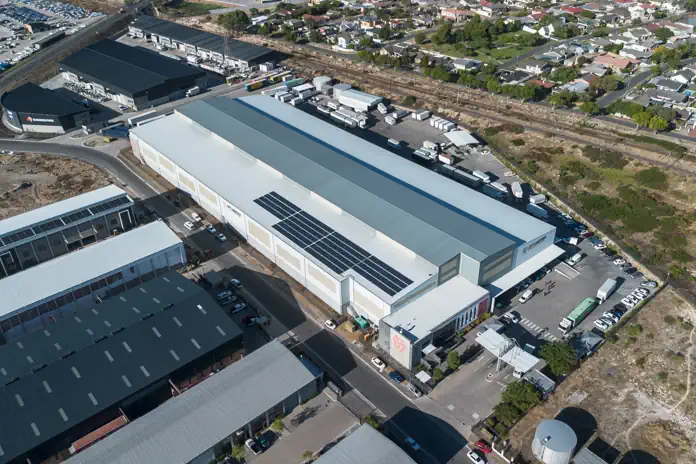
With trucks carrying the bulk of South Africa’s freight payload, road transport remains critical to reaching regional hubs, outlying markets and time-sensitive supply chains.
As South Africa continues to focus on rail recovery, port efficiency and logistics reform, it is easy to overlook the part of the freight system that still does most of the daily heavy lifting: road freight.
Trucks remain central to how goods move across the country, particularly when freight needs to reach regional towns, outlying distribution points, farms, retailers, industrial sites and customers beyond the reach of fixed infrastructure. While rail and ports are essential to a more efficient national logistics system, road freight continues to provide the flexibility, reach and responsiveness that many supply chains rely on.
This is reflected in the latest Ctrack Transport and Freight Index, which found that road freight accounted for 85.4% of all freight payload in South Africa in the first ten months of 2025. The figure underlines the scale of the sector’s role, even in a year in which road freight remained under pressure from weaker margins, market consolidation and a gradual policy push to move more cargo back to rail.
For Ryan Gaines, CEO of City Logistics, the continued reliance on road freight reflects the practical realities of moving goods in a country with large distances, dispersed communities and uneven access to freight infrastructure.
“Rail and ports are critical to South Africa’s logistics recovery, but road freight remains the mode that connects the national network to the customer, the store, the farm, the warehouse and the regional depot,” says Gaines. “That direct reach is one of the reasons trucks remain so important. They allow goods to move into areas that are not always served by fixed infrastructure, and they give businesses the flexibility to respond to demand where it actually occurs.”
For businesses moving goods across South Africa, the value of trucking lies not only in volume but in access. Road freight can go where rail lines do not, and where ports cannot. It connects major corridors to secondary towns, inland hubs, farms, warehouses, retailers and end users. In many cases, it is the only practical way to complete the first or last leg of a journey.
This is particularly important in a country where long distances separate major economic centres from the regional markets they serve. For many supply chains, the ability to move goods directly between origin and destination is what keeps stock available, delivery windows manageable and local demand properly supported. Road freight makes that connection possible, allowing goods to move from source to endpoint without the delays, added handling and complexity that can come with multiple transfers between modes.
A typical example is retail replenishment outside the major metros. Stock may move from a national distribution centre into a regional hub before being split for delivery to stores in smaller towns. In these cases, the commercial value of road freight lies in its ability to match delivery schedules to local demand, store trading patterns and route conditions, rather than relying only on high-volume corridor movements.
“In regional distribution, reliability is not only about moving freight from one big node to another,” says Gaines. “It is about getting the right stock to the right place at the right time, whether that is a supermarket in a secondary town, a pharmacy in an outlying area, or an agricultural supplier serving a farming community. That is where road freight plays a very practical role.”
That flexibility is one of road freight’s greatest strengths. It allows logistics operators to respond quickly to changes in demand, route disruption, customer requirements and delivery windows. Where volumes fluctuate, trucks can be deployed or redirected more easily than fixed rail infrastructure. Where goods need to reach smaller towns or dispersed markets, road freight often provides the only direct connection.
The role of trucking is especially visible in regional and outlying areas. These hubs may not always generate the volumes needed for rail-based freight, but they remain vital to local economies. They support agriculture, retail, construction, mining supply chains, healthcare distribution and small business activity. For many of these areas, trucks are the link between national supply chains and local availability.
This makes road freight a critical enabler of economic participation. A reliable trucking network ensures that goods not only move between major cities and ports but also into communities and commercial centres that sit outside the primary logistics corridors. It supports stock availability, reduces delays, and allows businesses in regional areas to remain connected to suppliers and customers.
The sector’s importance does not diminish the need for rail recovery. South Africa needs a more balanced freight system, particularly for bulk commodities and high-volume corridors where rail can reduce road congestion, improve cost efficiency and ease pressure on road infrastructure. The latest Ctrack index points to encouraging progress in rail and sea freight, both of which benefited from ongoing reform efforts during 2025.
However, the transition to a more efficient logistics mix will be gradual. Even as rail capacity improves, road freight will remain essential to the movement of goods that require flexibility, speed and direct delivery. Rail can strengthen the backbone of the freight system, but trucks will still be needed to connect that backbone to the businesses and communities that depend on it.
“The future of logistics in South Africa should not be framed as road versus rail,” says Gaines. “It has to be about using each mode where it is most effective. Rail has an important role to play on bulk and high-volume corridors, but road freight is still essential for responsiveness, regional reach and last-mile execution.”
This is where trucking will continue to play a vital role. It gives supply chains the ability to reach beyond major nodes, respond to changing conditions and serve customers across a geographically diverse market. It also supports sectors where timing is critical, from fresh produce and retail replenishment to manufacturing inputs and urgent industrial deliveries.
South Africa’s logistics system is under pressure, and reform remains necessary. But the country’s freight reality is clear: trucks are still carrying most of the load. Their ability to reach regional hubs, outlying markets and end destinations directly makes them indispensable to the broader supply chain.
As logistics reform gathers pace, road freight should be recognised not as a temporary substitute for underperforming infrastructure, but as a core part of an integrated system. A stronger rail network and more efficient ports will improve national competitiveness, but trucking will remain the mode that gets goods to where they need to be, when and where businesses need them.