

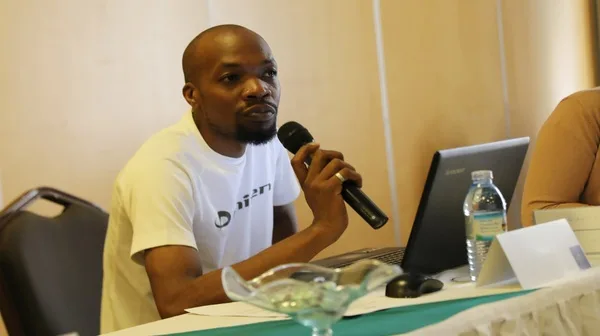
In a media landscape increasingly defined by noise, disinformation, and partisan spin, one journalist is fighting to reclaim the essence of truth. Michael Wandati, founder and editor of Vivid Voice News, is at the forefront of Africa’s digital media revolution — building an independent newsroom that refuses to bow to political or commercial pressure.
From combating disinformation to safeguarding press freedom, Mr. Wandati speaks vividly about the challenges—and promise—of building a newsroom that stands for integrity, independence, and impact.
1. Why did you start your platform?
Michael Wandati: Vivid Voice News was born out of a deep conviction that both Africa and the broader world needed a reliable, independent platform committed to factual journalism. In a media landscape saturated with noise and misinformation, I recognized an urgent need for clarity, bold insight, and unwavering editorial integrity. Our mission is to uphold trust in journalism—by delivering well-researched stories, bold commentary, and underreported narratives that speak truth to power from a global and distinctly African perspective.
2. What is your platform’s major focus?
Michael Wandati: At its core, Vivid Voice News is a global organization championing factual reporting. Our editorial scope is broad yet deeply focused: we cover breaking news and nuanced human-interest stories across politics, business, society, technology, and culture. This comprehensive approach ensures we provide a holistic view of the developments shaping our world. Our hallmark is contextual reporting, particularly in placing African narratives on the global stage with depth, dignity, and prominence. We are uniquely dedicated to ensuring that stories from all corners of Africa, including underserved rural communities, are accurately represented and given the attention they deserve. Ultimately, we strive to be both a mirror and a megaphone: reflecting the truth and amplifying the voices that truly matter.
3. What is the nature of your ownership structure?
Michael Wandati: We operate as a privately-owned, for-profit media company, but our editorial independence is non-negotiable. This structure empowers us to sustainably invest in quality journalism while shielding our newsroom from political or commercial influence. Like other globally respected media houses, we ensure that profitability strengthens—not compromises—our journalistic mission.
4. How many staff does your platform currently employ?
Michael Wandati: Our core team consists of 22 full-time journalists and editors. We are also supported by a vibrant network of freelance contributors and regional correspondents, which gives us wide reach and local depth. This lean structure enables us to remain agile while delivering high-quality content.
5. How do you sustain operations?
Michael Wandati: Sustainability is essential to independence. Our revenue model is multifaceted—including programmatic and direct advertising, strategic partnerships, and clearly labeled sponsored content. Transparency is key; every revenue stream is structured to uphold, not undermine, our editorial integrity. We’re also exploring memberships and syndication to further diversify our income.
6. How are online media platforms regulated in Uganda?
Michael Wandati: Uganda’s online media space is regulated by several legal frameworks, chiefly the Uganda Communications Act and the Press and Journalist Act. Oversight is administered by the Uganda Communications Commission. While the landscape continues to evolve, we operate within legal and ethical boundaries—prioritizing compliance, transparency, and open dialogue with regulators.
7. How can online platforms curb misinformation?
Michael Wandati: It starts with robust editorial processes. Every piece we publish undergoes thorough verification. Our journalists are trained in advanced fact-checking, and we cross-reference with authoritative sources. We maintain a transparent corrections policy and collaborate with fact-checking bodies. Just as important, we educate our audience in media literacy—helping them discern truth in a digital world awash with falsehoods.
8. What other threats do digital media face in Uganda?
Michael Wandati: Aside from disinformation, there are mounting cybersecurity threats, surveillance concerns, and legal ambiguities that can be weaponized against the press. The economic model is fragile, especially for independent outlets. Then there are risks to physical safety, particularly when covering sensitive issues. Internet shutdowns also remain a looming threat. At Vivid Voice News, we’ve invested in legal support, digital security, and journalist protection protocols to navigate these challenges.
9. What role do online platforms play during elections?
Michael Wandati: Online media plays a pivotal role in democratic engagement. We inform voters through balanced reporting, fact-check political claims, and offer platforms for public discourse. We also spotlight marginalized voices and hold institutions accountable. Crucially, this includes reaching voters in both urban and remote rural areas through accessible digital formats and targeted content. In the 2026 elections, we aim to be a watchdog, an educator, and a platform for civic participation.
10. How might ownership or regulation affect your election coverage?
Michael Wandati: Our ownership and diversified funding model enable us to cover elections free from partisan influence. However, overly broad regulations or censorship pose real threats. We mitigate these through proactive legal counsel and ethical compliance. Our core objective remains: serve the public interest through independent, fearless journalism.
11. How prepared is your platform for the 2026 elections?
Michael Wandati: We’re investing heavily in election preparedness—training our team in political reporting, verification, digital security, and media law. Technically, we’ve fortified our systems against cyber threats and ensured secure communication channels. Our content protection protocols include watermarking, archival systems, and copyright enforcement. We’re determined to provide reliable, secure, and inclusive election coverage.
12. What does the future of online news look like to you?
Michael Wandati: The future is immersive, intelligent, and community-driven. We’ll see more multimedia storytelling—audio, video, AR/VR—alongside hyper-personalized content. Platforms that prioritize trust, audience engagement, and technological innovation will thrive. There’s a growing demand for ethical, transparent journalism—and those who deliver it will lead.
13. What threats could affect coverage as Uganda heads toward elections?
Michael Wandati: We anticipate heightened threats—censorship, internet shutdowns, legal intimidation, and cyberattacks. There’s also the risk of sophisticated disinformation campaigns and threats to journalist safety. Vivid Voice News is strengthening its defenses on all fronts—digital security, legal readiness, and operational resilience—to uphold truth and accountability through the electoral season.