From Garage to Growing Business: How Laser Cutting and Engraving Are Opening Doors for South African Entrepreneurs
There’s something appealing about the idea of starting a business from your garage. No expensive premises, no large workforce and no need to invest millions before making your first sale.
For many South Africans, that is exactly where the entrepreneurial journey begins. A spare room, a garage or a small workshop becomes the starting point for a business that, with the right customers and a bit of persistence, can grow into something much bigger.
One area worth exploring is laser cutting and engraving. What was once largely associated with industrial manufacturing is now accessible to smaller businesses, giving entrepreneurs the ability to produce everything from personalised gifts to commercial signage and components for other businesses.
And perhaps the biggest attraction is that you don’t necessarily need a different machine for every type of product you want to make.
Starting Small Without Thinking Small
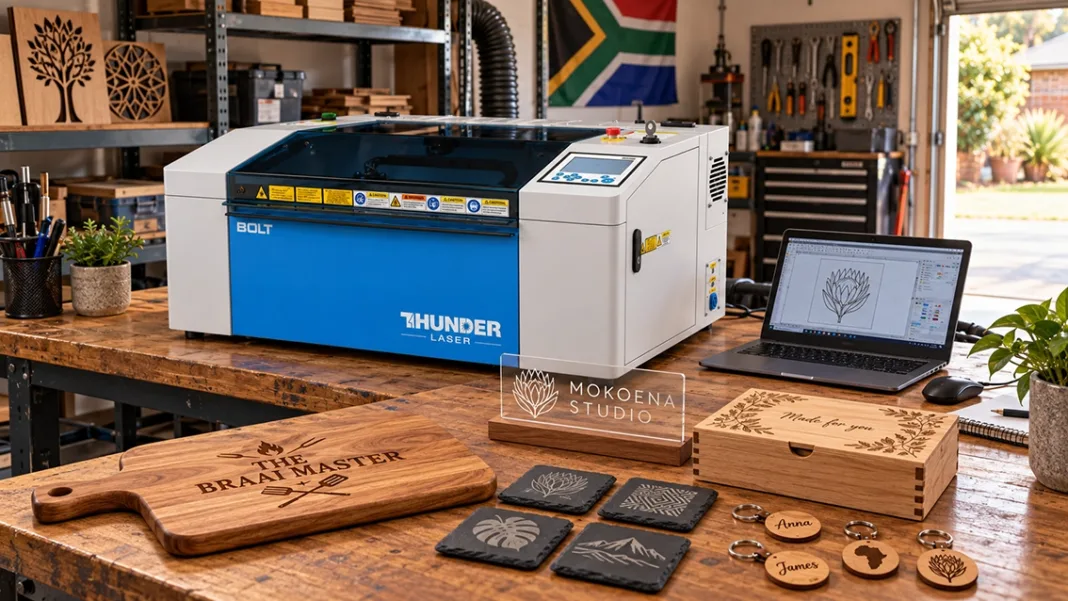
Imagine setting up a compact laser machine in your garage.
Your first orders might come from friends or family. Someone wants their name engraved on a wooden braai board. A local business needs a few branded awards. A wedding planner asks for personalised table numbers.
These aren’t necessarily large orders, but they give you an opportunity to learn the equipment, understand materials and discover what customers are willing to pay for.
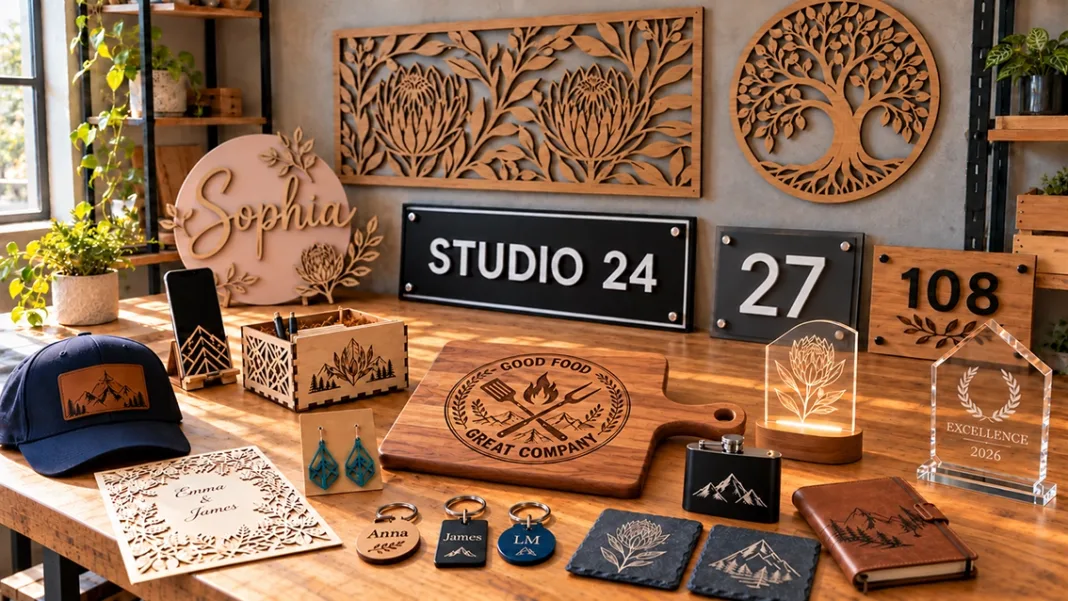
Modern laser engraving machines can work with a variety of materials, depending on the laser technology used. Wood, leather, slate and certain coated metals are popular choices for personalised products.
But the opportunity doesn’t stop at engraving.
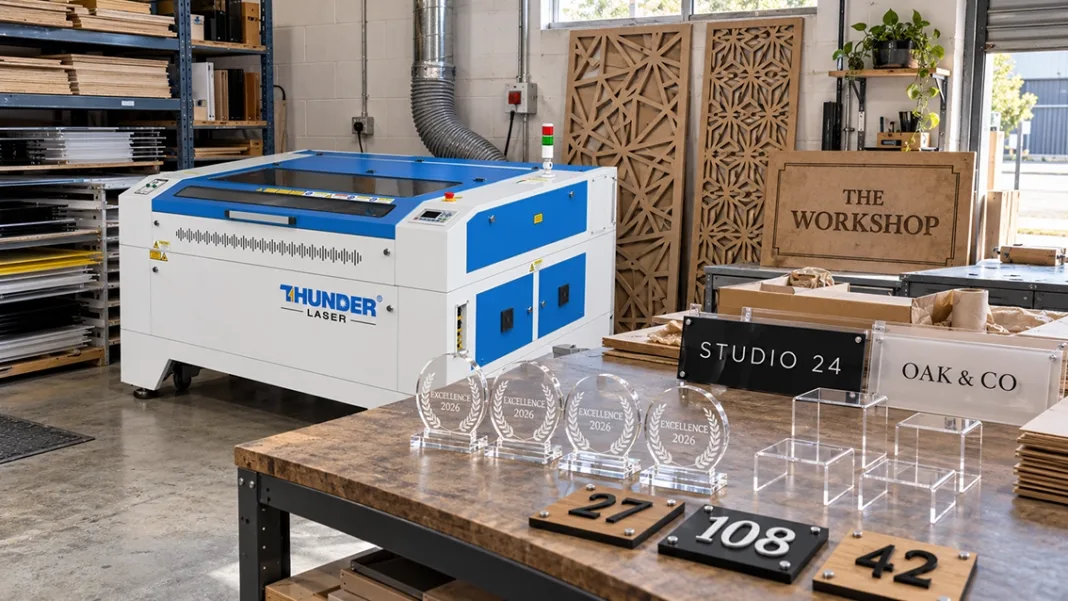
Many CO₂ laser machines can also cut materials such as acrylic, MDF and suitable plywood, opening the door to an entirely different range of products.
That means the same workshop producing engraved gifts could also manufacture acrylic signs, decorative panels, display stands and customised packaging components.
For someone starting out, having that flexibility can make a real difference.
Finding Customers Beyond Friends and Family
Personalised gifts are often the easiest place to start, but they’re not necessarily where the biggest long-term opportunities lie.
Consider how many businesses need relatively small quantities of customised products.
A restaurant might need engraved menu boards or table numbers. A guesthouse could order branded room signs. An estate agent may want personalised key holders for property handovers. A local engineering business might need identification labels for equipment.
Then there are businesses that don’t own manufacturing equipment themselves.
Signage companies, event organisers, promotional product suppliers and interior designers regularly need products made to their specifications. Some outsource this work because buying and operating the equipment isn’t practical for them.
For a small laser business, becoming a reliable supplier to these companies could be more valuable than chasing individual gift orders every day.
The challenge is finding those customers and delivering consistent quality. A machine gives you the ability to manufacture, but relationships and dependable service are what keep orders coming back.
When Engraving Turns Into Manufacturing
At some point, a small workshop might discover that cutting products is just as important as engraving them.
Take signage as an example.
A customer might initially request an engraved wooden sign. A few months later, they need acrylic lettering, display stands or decorative panels for a shop.
This is where laser cutting machines become particularly useful. Depending on the machine’s working area, power and capabilities, a business can move from small personalised items into larger products and repeat production.
Acrylic signage, MDF decorative screens, wall art, product displays and architectural features are all potential markets.
It also changes the way an entrepreneur thinks about the business.
Instead of asking, “What can I engrave and sell?” the question becomes, “What can I manufacture for businesses that need it?”
That’s a much bigger conversation.
One Workshop, Several Income Streams
One of the interesting things about laser cutting and engraving is that the same equipment can serve customers from very different industries.
During the week, a workshop might be cutting acrylic components for a signage company. On Friday, it could be engraving corporate gifts for an event. Over the weekend, the owner might be preparing wooden products for an online store.
Of course, not every material can be processed with every type of laser, and some jobs require specialised equipment. But a well-chosen machine can give a small business considerable versatility.
There are also opportunities to specialise.
Some businesses might focus entirely on awards and corporate branding. Others could supply laser-cut components to furniture makers, produce signage for local retailers or manufacture decorative products for interior designers.
Specialisation can be particularly useful once a business starts attracting regular customers. Rather than competing with everyone selling personalised gifts online, the workshop develops a reputation for doing certain jobs well.
And that can lead to larger, more predictable orders.
Growing Beyond the Garage
Growth doesn’t always mean buying a bigger machine immediately.
Sometimes the first step is improving how the business operates.
A garage workshop might begin by handling everything manually: taking orders through WhatsApp, preparing designs in the evening and producing items whenever there’s spare time.
As orders increase, that approach becomes difficult to maintain.
The owner may need better quoting systems, organised production schedules, reliable material suppliers and a clearer understanding of manufacturing costs.
Eventually, the business might employ someone to help with production or move into dedicated premises.
A larger laser cutter or engraver could make sense when existing equipment can no longer meet demand, when bigger products are required or when production speed becomes a constraint.
But buying more machinery before securing enough work can put unnecessary pressure on a young business.
The sensible approach is to let genuine customer demand guide expansion.
The Opportunities Are Real, but So Is the Work
It’s easy to look at a laser machine producing a beautifully engraved product and imagine the money that could be made.
What isn’t always visible is the work behind it.
There’s design preparation, material testing, cleaning, packaging, customer communication and the occasional job that needs to be redone.
Entrepreneurs also need to account for material waste, electricity, maintenance and the time spent preparing each order.
Pricing a product based only on the cost of the wood or acrylic is a common way to underestimate the true cost of production.
The businesses that grow are often the ones that learn these lessons early. They understand their costs, develop repeatable processes and concentrate on customers who value reliable workmanship.
A Different Way to Think About Starting a Business
South Africa has no shortage of people looking for ways to earn additional income or build something of their own.
Not everyone wants to open a shop, run a restaurant or start an online retail business.
For people who enjoy creating things, solving practical problems and working with their hands, small-scale manufacturing offers another route.
Laser cutters and laser engravers have made certain types of production accessible to workshops that would once have needed much larger industrial facilities.
That doesn’t mean success comes automatically. It still takes planning, investment, customer relationships and a willingness to learn.
But the starting point can be surprisingly modest.
A garage, one capable machine and a handful of customers may not look like much at first.
For the right entrepreneur, however, it could be the beginning of a manufacturing business that grows well beyond those four walls.