



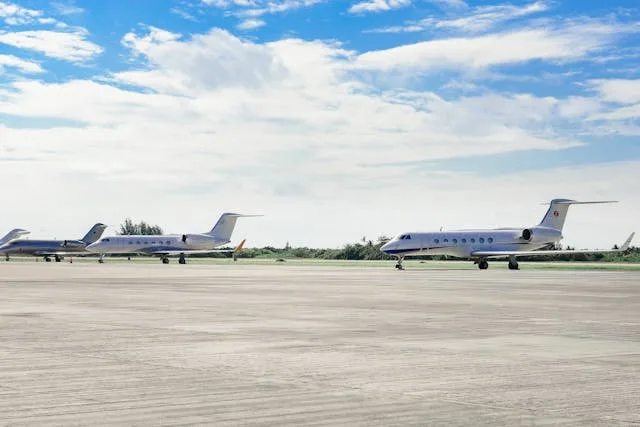
Airports are feats of organization. Thousands of flights depart and arrive each day without incident. Behind the scenes, sophisticated systems operate together. These systems guide planes, provide security, manage bags, supply power, and much more. When one fails, delays and safety hazards escalate quickly. It takes precise design, ongoing monitoring, and expert staff to keep each component functioning smoothly. This article explores five key systems that ensure airports remain on course. Each system has a specific job, but all are interconnected. Knowing how they operate can enhance the appreciation of the behind-the-scenes effort that makes air transportation more consistent.
1. Air Traffic Control and Communication
Air Traffic Control (ATC) is the airport’s central command. Controllers monitor the position and speed of every aircraft. They direct pilots through takeoff, landing, and flight routes. Radio and radar connections keep planes at safe distances. As the weather gets worse or traffic gets heavy, the ATC adjusts routes in real time. Ground crews and tower personnel are also connected through communication networks. Secure data lines for exchange flight plans and weather reports. Without this smooth exchange of information, the sky would be pandemonium. Pilots and controllers depend on clear, concise messages to prevent close calls. That’s why ATC systems receive periodic updates and round-the-clock monitoring.
2. Security Screening and Surveillance
Security screening is the first line of defense. Scanners, X-rays, and metal detectors scan each bag. Trained officers scan images for threats. In parallel, surveillance cameras cover all open spaces. Sophisticated video analytics can recognize unusual behavior. Card readers and biometric scanners manage access to sensitive areas. All security equipment is connected to a central network for warnings. When an unexpected door opens or a camera detects a crowd gathering, employees act instantly. All these layers of surveillance and checks protect passengers, crew, and planes from danger. They also adjust to emerging threats with constant software updates and new training.
Baggage Handling and Logistics
From curb drop-off to plane hold, bags move a long way in seconds. Conveyor belts, barcode scanners, and mechanical sorters work nonstop. Each bag gets a unique tag that links to flight data. Automated systems route luggage to the correct gate or carousel. If a scanner can’t read a tag, staff steps in to sort it manually. Real-time tracking helps reduce lost bags. Maintenance teams on oil motors, replace worn rollers, and clear jams without holding up the line. Coordination with ground equipment prevents delays in loading and unloading. A chain break can hold up thousands of bags and long queues. That’s why redundancy and quick repair are integrated into the system.
Power Supply and Backup Systems
Airports require continuous power for lights, systems, and ground equipment. Primary power is supplied from the city grid. But standby generators wait in case the grid goes down. These generators start up in seconds. Critical systems such as runway lights and ATC switch over without missing a beat. Servers and communication equipment are guarded by uninterruptible power supplies (UPS). Fuel tanks for generators are periodically inspected for leaks and contamination. Preventive maintenance ensures that circuits are safe, and loads are even. Engineers conduct drills to mimic blackouts. These drills ensure that aircraft can land safely, and people can move even when the lights are out.
Ground Support Equipment and Hydraulics
Aircraft sitting on the ground require a fleet of support vehicles to work for them. Tugs, lifts, and refuelers are some of these. Most of these machines rely on hydraulic systems for operating heavy arms and platforms. High-quality fluids, such as Skydrol, maintain hydraulic systems operating effectively under heat and pressure. Technicians check hoses, seals, and fittings daily. Malfunctioned hydraulics can cause delays in boarding or refueling. That, in turn, causes flight delays and inconveniences to schedule. Routine oil changes, filter replacements, and system inspections keep ground rigs in working condition. Your support gear is just as essential as the plane itself in the business of tight turnarounds.
Conclusion
Airports have more than runways and terminals on which to depend. They rely on air traffic control, security equipment, baggage handling systems, dependable power, and support vehicles. Each system is a valuable link in a long chain. When all the connections remain robust, planes depart on schedule, and travelers remain safe. Behind every hassle-free trip is meticulous planning, routine inspections, and speedy repairs. By learning these essential systems, passengers can appreciate the unseen work that makes air travel possible. It’s a world of coordinated details, advanced technology, and hardworking people, all collaborating to keep airports operating smoothly.