
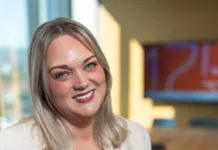


In a country of 23 million people with just 70 ophthalmologists, Dr. Claudette Yaméogo stands out as Burkina Faso’s only pediatric eye specialist. Since starting her practice late last year, she has faced the daunting task of treating children suffering from preventable eye injuries—many of which worsen due to delayed care.
A Critical Need for Care
One of her recent patients, a yourng boy, was struck in the eye by a stone while playing with friends. After two weeks without treatment, he was referred to Dr. Yaméogo—but by then, his injury had become too severe to fully repair.
“To work with children, you have to have patience. It’s the most important thing because children are hard to examine,” she said. Unfortunately, cases like Isaka’s are common in Burkina Faso, where many families first turn to traditional healers before seeking medical help.
“There’s always the tendency to go for the traditional healer as a first step. And if that doesn’t work, they will go see a doctor,” Dr. Yaméogo explained. “These are the factors that mean we see kids a bit late.”
A Struggle Against Geography and Resources
Most of Burkina Faso’s population lives in rural areas with little to no access to specialized healthcare. In 2024, 2,000 ophthalmology procedures were performed in the country’s western Hauts-Bassins region—yet only 52 of those took place in rural zones.
Dr. Yaméogo, who was trained in Burkina Faso from primary school through her medical education, is determined to bridge this gap. “This training was in view of providing some relief to the people of Burkina Faso,” she said.
She often travels to families who cannot afford care or reach the hospital where she works, offering free consultations. But the need is overwhelming. Globally, an estimated 450 million children have sight problems requiring treatment, according to the International Agency for the Prevention of Blindness.
A Call for Greater Support
As conflict and poverty continue to strain Burkina Faso’s healthcare system, Dr. Yaméogo’s work highlights both the resilience of medical professionals and the urgent need for more resources. Without timely intervention, children like her young patient risk permanent vision loss—a tragedy that could often be avoided with earlier care.
For now, Dr. Yaméogo remains a rare beacon of hope in a country where one specialist struggles to meet the needs of millions.