



The AHF (AIDS Healthcare Foundation) has launched the global Freedom from Debt campaign, calling for urgent reform of a debt servicing system that is draining public services and trapping countries in permanent crisis.
The developing world’s sovereign debt crisis is driven by unjust global financial rules, colonial-era economic structures, and the dominance of multilateral institutions such as the World Bank and International Monetary Fund, as well as private creditors. Today, an estimated 3.4 billion people live in countries spending more on debt servicing than on health or education. In 2024, developing countries paid $921 billion in net interest on public debt, and 45 countries allocated more funding to debt servicing than to healthcare. Many developing nations are spending at least 10% of government revenue on interest payments alone, often at interest rates two to ten times higher than those of wealthier countries.
The Freedom from Debt campaign calls on global leaders to:
- Implement the Borrowers’ Forum: Establish a Borrowers’ Forum, as proposed through the Financing for Development process in Seville and aligned with G20 South Africa priorities, to unify the Global South’s voice and increase negotiating power.
- Mandatory Debt Service Pauses: Ensure automatic, interest-free debt pauses in all lending agreements when countries face public health or climate crises.
- Artificial Intelligence Solidarity Levy: Call for a 1% global AI Solidarity Levy on leading AI firms’ capital investments and revenues to fund debt relief and essential public goods for the Global South.
This is not only an economic issue. It is also a public health and human rights issue. Debt pressure pushes countries to cut spending on basic needs, deepens poverty, and weakens resilience to disease outbreaks and climate shocks. It also narrows the fiscal space governments need to invest in clinics, schools, water systems, food security, jobs and social protection.
For South Africa, this is not abstract. National Treasury projects gross loan debt at about R6.12 trillion in 2025/26, equal to 78.9% of GDP. Debt-service costs are estimated at R420.6 billion in 2025/26, rising to R432.4 billion in 2026/27.
That is nearly half a trillion rand going to interest payments rather than direct public services. In the 2026/27 budget, South Africa is expected to spend R310.4 billion on health and R358.6 billion on basic education. Debt-service costs are therefore estimated to be around R122 billion higher than health spending and about R74 billion higher than basic education spending.
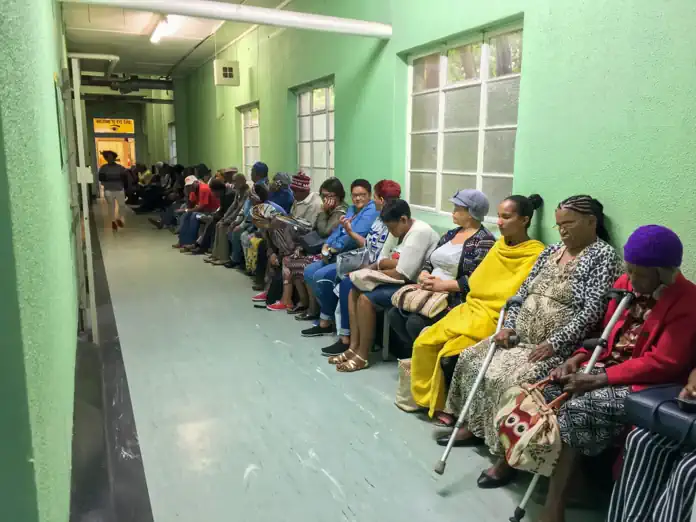
The pressure is felt in ordinary life. South Africa’s public health system serves the majority of the population, and the National Treasury notes that health services reach about 84% of people. The same budget framework supports 13.6 million schoolchildren and 26.5 million social grant beneficiaries. These are not marginal numbers. They describe the daily reality of millions of households that depend on functioning clinics, stable medicine supply, safe schools, social grants, clean water, transport and local services.
The country’s social strain is already severe. The South Africa campaign landscape notes unemployment at 32.7%, with youth unemployment far higher, including 60.9% among people aged 15 to 24 and 40.6% among those aged 25 to 34. In communities where families are already stretched, every rand lost to high debt-service costs is a rand that cannot be fully used to strengthen health systems, maintain infrastructure, expand prevention programmes, support education, or protect vulnerable households from falling deeper into poverty.
This is why AHF South Africa is calling for debt justice to be included in the public health agenda. A country cannot build a healthier, more equal society if large portions of public revenue are locked into debt repayments while clinics are overcrowded, young people cannot find work, schools battle capacity pressures, and communities face failing infrastructure.
The sovereign debt imbalance is reinforced by unequal financial markets and global governance structures that leave developing nations with limited negotiating power. Countries are routinely forced to prioritise debt payments over life-saving investments, even during public health emergencies and climate disasters. For every dollar received in aid, trillions exit through debt payments, forced austerity measures, natural-resource-linked tax loopholes and other financial outflows that deepen inequality and undermine long-term development.
A fairer debt architecture is part of protecting public health. It is also part of protecting dignity. South Africa and other countries in the Global South need global rules that allow governments to invest in prevention, treatment, education, resilience, and basic services before crises hit, rather than endlessly paying into a system that keeps poorer nations on the back foot.
Without urgent reform, the current system will continue to extract wealth from the world’s most vulnerable countries, limiting their ability to protect human dignity and build a more stable, equitable future. Through the Freedom from Debt campaign, AHF urges global leaders to support structural change that allows countries to invest in health, education and resilience, and to help build a more sustainable future for all.