



The field of ocean conservation extends across a variety of sectors, providing interesting career options with a purpose
When people consider careers in ocean conservation, they often picture marine biologists, divers or scientists working on research vessels. While these professions play a vital role, the reality is far broader, encompassing tourism, education, business, and more.
As MPA Day approaches on 1 August, four inspiring ocean champions share how their careers have become unexpected pathways into marine conservation, proving that everyone has a role to play in safeguarding Marine Protected Areas (MPAs) and the blue planet.
1. Tourism
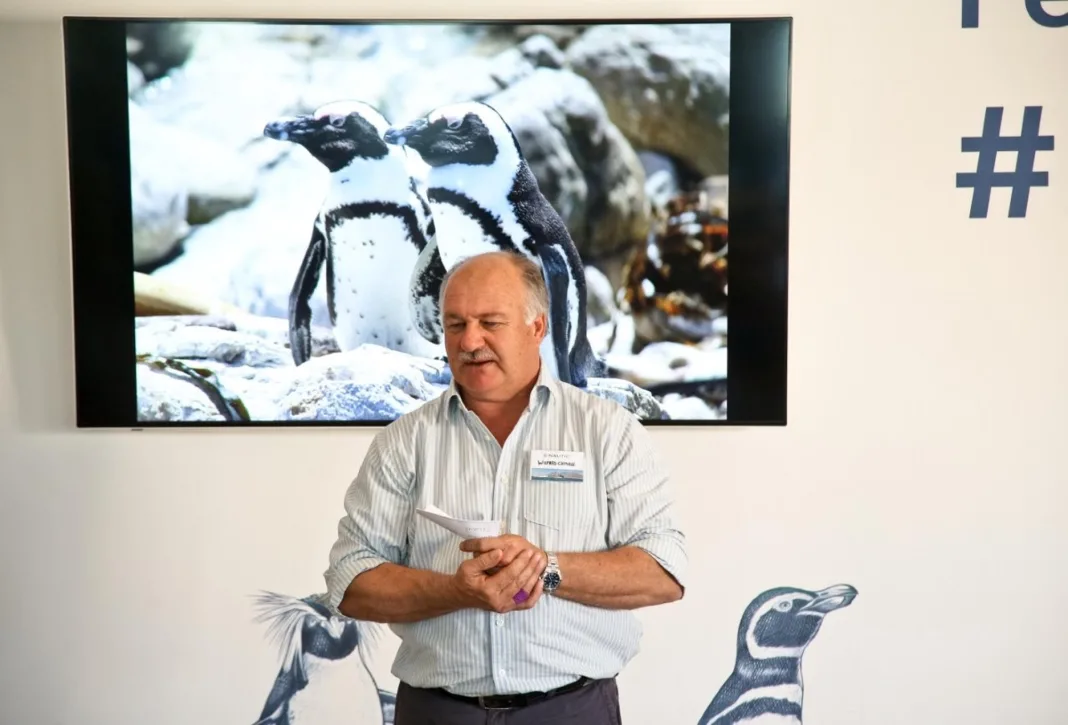
Wilfred Chivell | CEO, Marine Dynamics Shark and Whale Tours; Marine Dynamics Academy; Founder, Dyer Island Conservation Trust and African Penguin and Seabird Sanctuary
Q: How does your career support the ocean?
“I have always believed that people protect what they understand and value. Through Marine Dynamics, we have introduced hundreds of thousands of people to South Africa’s remarkable marine environment over the past 25 years. Seeing whales, sharks, dolphins, seals, and African penguins in their natural habitat creates a connection that often lasts a lifetime.”
Q: How did you get into this career?
“My love for the ocean started at a young age while growing up on a dairy farm in Gansbaai, spending as much time as I could in and around the sea. My career has been shaped far more by practical experience than formal qualifications. I’ve learnt from spending thousands of hours at sea and working alongside scientists, conservationists, skippers, guides and researchers from around the world.”
Q: What has been your biggest highlight?
“The greatest highlight has been seeing conservation make a real difference. Establishing the Dyer Island Conservation Trust, opening the African Penguin and Seabird Sanctuary, contributing to more than 40 scientific publications, and mentoring young conservationists are all achievements I’m incredibly proud of.”
Q: What advice would you give to someone wanting a career in ocean conservation?
“Be passionate, but also be prepared to work hard. Conservation needs people with determination, resilience and integrity. Whether your interest is science, tourism, education, photography or community development, every skill has a place in protecting our natural world. Stay curious, spend time in nature and never stop learning. We achieve far more by working together than we ever could alone.”
Q: How are you celebrating MPA Day?
“Marine Dynamics and the Dyer Island Conservation Trust are proud to join our conservation partners, CapeNature and CFAO Mobility Toyota, for a community clean-up along the Gansbaai coastline. Every piece of litter removed is one less threat to marine life, and every person who gets involved becomes part of the solution.”
2. Education
Gladness Sikhosana | Retired Centre Manager, Mimosadale District Teacher Development Centre
Q: How does your career support the ocean?
“As educators, we protect the next generation, which in turn will protect the ocean. Teachers are the bridge between students and the scientists researching Marine Protected Areas. Through environmental education, we help young people understand how their everyday actions affect rivers, coastlines and ultimately the ocean.”
Q: How did you get into this career?
“My first teaching experience was Sunday school classes at my church, sparking my love for uplifting people and empowering them with the skills needed to bring tangible change to their lives and their families. I obtained a Master’s degree in Education and an Adult Basic Education programme through UNISA, as well as courses at uShaka Marine World.”
Q: What has been your biggest highlight?
“The highlight of my teaching career was the opportunity to provide holistic support and guidance to learners. The fruits of the seeds planted became evident when several former students went on to pursue careers dedicated to protecting the environment.”
Q: What advice would you give aspiring teachers?
“Teaching requires a genuine passion for young people, a commitment to lifelong learning and the willingness to think creatively. When learners understand the importance of conservation, they become ambassadors for protecting our oceans.”
Q: How are you celebrating MPA Day?
“As a retiree and educational volunteer guide at uShaka Sea World, I plan to adopt a school in a rural area to conduct a schoolyard clean-up.”
3. Media & Environmental Journalism
Tony Carnie | Environmental Journalist, Daily Maverick
Q: How does your career support the ocean?
“Journalism provides a public forum to raise people’s awareness about the threats to ocean health. Communicating and raising debates through news helps to bring these issues to public attention. Providing knowledge and insights can help to shift behaviour and inspire responsible custodianship and respect for the oceans.”
Q: How did you get into this career?
“After studying journalism in Zimbabwe, I gained experience as a news journalist and was exposed to a wide variety of political, legal, financial and social actors or events that helped to shape my ‘bigger picture’ thinking. I found myself drawn to writing more stories that reflected conservation interests, and over time, my focus became almost exclusively on environmental issues at a time when global awareness and interest were growing steadily.”
Q: What has been your biggest highlight?
“I have been very fortunate to have travelled to many parts of the world (and been paid) to cover news events or specialist conferences and to be exposed to such a wide range of people, ideas and possibilities.”
Q: What advice would you give future environmental journalists?
“Don’t be afraid to challenge authority and narrow self-interest, but remain open to new ideas and different perspectives. Good environmental journalism is about asking questions, listening carefully, and helping people understand why these issues matter.”
Q: How are you celebrating MPA Day?
“By researching and publishing stories that encourage people to think more deeply about protecting Marine Protected Areas.”
4. Sustainable Marine Tourism
Pamela Le Noury | Head of Expedition Operations & Sustainability, Noble Caledonia
Q: How does your career support the ocean?
“My career has spent more than 26 years in and on the ocean through marine tourism. Expedition guides become valuable observers of marine wildlife, helping identify conservation concerns, contributing to citizen science and working alongside researchers. We also inspire thousands of travellers to appreciate and protect the extraordinary places they visit.”
Q: How did you get into this career?
“I did a BSC in zoology, but my actual job has hinged on being a powerboat skipper. I became a dive master, dive instructor, powerboat skipper, and guide. I started my own scuba and whale watching company and conducted dolphin surveys. I heard about a small tourism ship that hired marine biologists who could drive boats and jumped at the chance to live and work at sea. For the next decade I was full-time at sea, travelling to every remote wilderness corner of the globe.”
Q: What has been your biggest highlight?
“To have seen so many rare and unique marine creatures in very remote places, from a polar bear eating a narwhal to a rare flightless endemic bird on a remote Pacific atoll.”
Q: What advice would you give someone considering this path?
“Follow your passion, and it will lead you to your purpose. Find your niche, honour what you are good at and enjoy, and it might take many years to know yourself and find your place. Then make sure to keep a good work-life balance so you continue to enjoy your passion and your passion doesn’t just turn to work.”
Q: How are you celebrating MPA Day?
“With my husband and our two little girls most likely rummaging around in some rock pools!”
5. Citizen Science, Photography & Marine Education
Dennis King | Author, Underwater Photographer, Recreational Diver and Creator of the Coastal Fishes Apps
Q: How does your career support the ocean?
“I’ve been a passionate recreational diver and snorkeller for more than 74 years, as well as a marine aquarist and underwater photographer. Through my fish identification books and Coastal Fishes apps, I’ve helped people better understand the incredible diversity of South Africa’s marine life.”
Q: How did you get into this career?
“I have no formal qualifications; everything I’ve learnt has been self-taught through decades of observing marine life underwater, keeping marine aquariums, and learning from fisheries biologists and internationally respected ichthyologists. My passion for the ocean has been my greatest teacher.”
Q: What has been your biggest highlight?
“One of the greatest honours was having a newly discovered species of angelfish, Apolemichthys kingi (the Tiger Angelfish), named after me. Other highlights include leading a citizen science project monitoring artificial reefs near Cape Vidal, diving in Raja Ampat, co-authoring The Reef Guide, and, perhaps most memorably, surviving an unexpected collision with a humpback whale while photographing it underwater!”
Q: What advice would you give someone considering this path?
“You don’t have to be an academic to make a difference. Develop a genuine passion for the ocean, spend time observing marine life, keep learning, and share your knowledge with others. Every diver, snorkeller, and ocean enthusiast can play a role in promoting marine conservation and supporting the importance of MPAs.”
Q: How are you celebrating MPA Day?
“I’ll be following the online presentations while continuing to work on the updated version of my Coastal Fishes App, helping more people discover and appreciate our remarkable marine life.”
Start with MPA Day!
As MPA Day approaches on 1 August, organisers encourage people to discover how their own careers, skills and passions can contribute to protecting our MPAs. Whether it’s educating children, influencing consumers, running a business, conducting research or telling powerful stories, every contribution helps build a more sustainable future.
Join in on all the MPA Day 2026 action:
www.MPADay.org for updated events and activities Marine Protected Areas Day on Instagram @MPASouthAfrica on Facebook MPA Day on LinkedIn Check out the MPA Day videos on YouTube
FAQs about Ocean Conservation
1. Do I need to be a marine biologist to help protect the ocean?
No. Ocean conservation depends on people from many professions, including teachers, journalists, tourism operators, chefs, photographers, engineers, lawyers, artists, marketers, researchers and business owners, all contributing their unique skills.
2. Why are careers outside science important for ocean conservation?
Protecting the ocean requires education, communication, sustainable business practices, responsible tourism, community engagement and policy development. These fields help turn scientific knowledge into meaningful action.
3. How can I learn more about careers in ocean conservation?
Participating in MPA Day events is a great place to start. Many organisations also offer volunteering opportunities, citizen science projects, internships and educational programmes that provide valuable insight into the diverse careers helping to protect our oceans.