


The global economy entered a new phase in 2026 that can best be described as weak growth combined with high uncertainty. Rising energy costs, persistent geopolitical tensions, slowing global trade, and continuing inflationary pressures have made decision-making more difficult for governments and business owners.
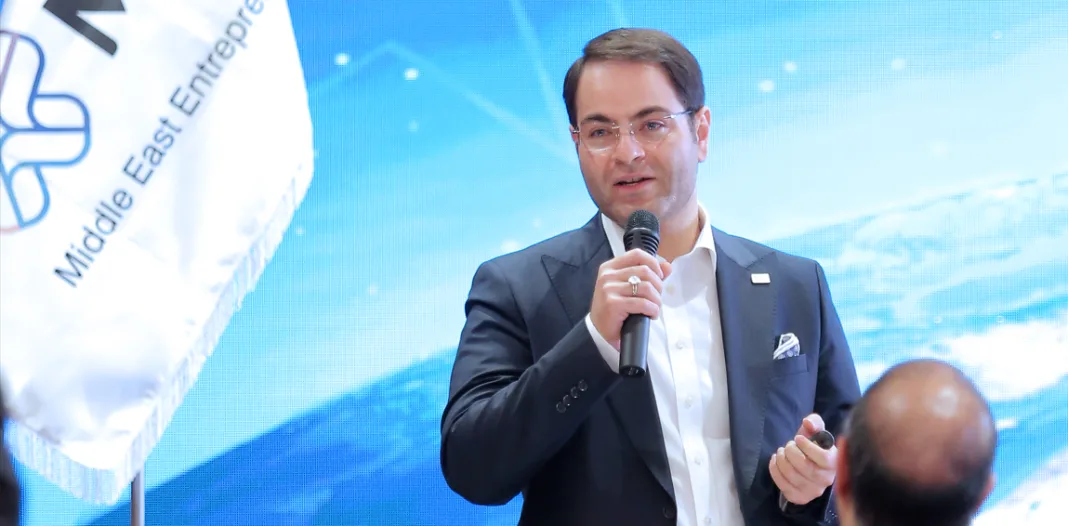
From Dr. Mohammad Mahdi Rabbani’s perspective, challenging economic conditions do not necessarily mean that growth opportunities have disappeared. The main issue is that traditional approaches to management, sales, and business development can no longer keep pace with the speed of economic change.
Businesses that have built their entire strategy around stable prices, easy access to financing, or permanently rising demand are more vulnerable than others. By contrast, organizations with transparent financial structures, organized sales processes, capable teams, and flexible revenue models are better positioned to navigate economic volatility.
In his training programs and speeches, Dr. Rabbani has consistently emphasized systemization, financial understanding, business growth, and the importance of preventing managers from becoming trapped in daily operational tasks. From this perspective, an economic crisis exposes weaknesses within a company’s internal structure before it reveals weaknesses in the market itself.
Inflation Remains a Major Barrier to Growth
One of the key challenges facing the global economy is the persistence of inflationary pressure alongside slower economic growth. Rising energy prices and disruptions in supply chains can increase production, transportation, and distribution costs while simultaneously reducing consumers’ purchasing power.
The Organisation for Economic Co-operation and Development has warned that higher energy prices and supply constraints could intensify inflation and make monetary policy decisions more difficult for central banks. Raising interest rates to control inflation increases financing costs for businesses, while cutting rates too early could reignite price pressures.
In this environment, businesses cannot protect themselves solely by raising prices or implementing broad cost reductions. Increasing prices without strengthening the value proposition may result in customer loss. At the same time, poorly planned cost-cutting can weaken sales, marketing, innovation, and long-term competitiveness.
Managerial Paralysis Is the Greatest Risk During an Economic Slowdown
One of the most common mistakes managers make during uncertain periods is suspending all development plans and waiting for stability to return. This approach may reduce expenses in the short term, but over time it increases the distance between the business and new market conditions, emerging technologies, and changing customer behavior.
Within Dr. Rabbani’s analytical framework, managers must distinguish between unnecessary expenses and essential investments. Employee training, the development of sales channels, customer experience improvement, data collection, and the use of technology should not be treated as ordinary costs. They are essential foundations for preserving competitiveness.
Therefore, the goal during periods of slower growth should not simply be to reduce the size of the organization. The main objective should be to improve productivity, eliminate inefficient processes, and direct resources toward areas that have a measurable impact on revenue, customer satisfaction, and business sustainability.
Technology and Artificial Intelligence: Opportunities Within Slower Growth
Despite the weaker outlook for the global economy, artificial intelligence and digital technologies remain among the most important potential sources of growth. The World Bank has also identified the wider adoption of artificial intelligence as a potential driver of productivity and economic development in the coming years.
However, purchasing new tools without changing organizational processes will not produce meaningful results. Technology improves productivity only when tasks, responsibilities, data, workflows, and performance indicators are clearly defined.
A business with disorganized sales processes, incomplete financial information, or an unclear decision-making structure will not become efficient simply by adopting artificial intelligence. It will only continue its existing disorder at a faster pace.
A Recommended Strategy for Managers and Entrepreneurs
Under current global economic conditions, managers should avoid relying on a single prediction about the future. Instead, they should prepare their businesses for several possible scenarios.
Maintaining healthy cash flow, controlling debt, regularly reviewing profit margins, and defining clear investment priorities should form the first stage of this preparation.
Businesses should then reduce their dependence on a single product, customer, or market. Expanding into new markets, developing complementary revenue streams, and using digital channels can reduce the risks associated with declining demand in any particular sector.
Management decisions must also be based on real and measurable data. Sales volume alone is not enough to determine the health of a business. Cash flow, customer acquisition cost, customer retention rate, profit margin, and team productivity must all be monitored continuously.
The Future Belongs to Adaptable Businesses
An analysis of the current global economic environment shows that the era of easy and predictable growth has ended. Slower growth, inflationary pressures, political tensions, and rapid technological change have created an environment in which slow decision-making and traditional organizational structures carry increasingly high costs.
From Dr. Mohammad Mahdi Rabbani’s perspective, success in such an environment depends less on the size of a company or the amount of capital it holds and more on the quality of its management, its ability to build effective systems, and the speed at which it can adapt.
Businesses that manage their resources intelligently, establish measurable processes, and identify changes in market behavior early will not only be better positioned to survive difficult conditions but may also use competitors’ weaknesses to strengthen and expand their own market position.