


Durban, July 2026: As South Africa marks National Savings Month, the Prescient Foundation is taking its financial empowerment for youth work further – expanding Project One Rand – through its long-standing partnership with the Schools of Savings South Africa.
Project One Rand is a financial literacy programme developed and delivered by the School of Savings South Africa, with support from the Prescient Foundation, designed to help Grade 10 learners develop practical money management skills, establish lifelong saving habits and build financial confidence before entering adulthood.
Programme growth: from three to six schools
Launched as a pilot in 2023 across three Durban secondary schools, Project One Rand has now doubled its footprint to six schools, including Northmead Secondary School, Mountview Secondary School and Glenhaven Secondary School, reaching over 1 000 Grade 10 learners across KwaZulu-Natal since inception.
Building a savings mindset: R1 at a time
At the heart of Project One Rand is a simple behavioural challenge: Save R1 a day. The programme encourages learners to:
- Save consistently
- Understand the difference between needs and wants
- Track spending habits
- Practice delayed gratification
- Build confidence in everyday financial decision-making
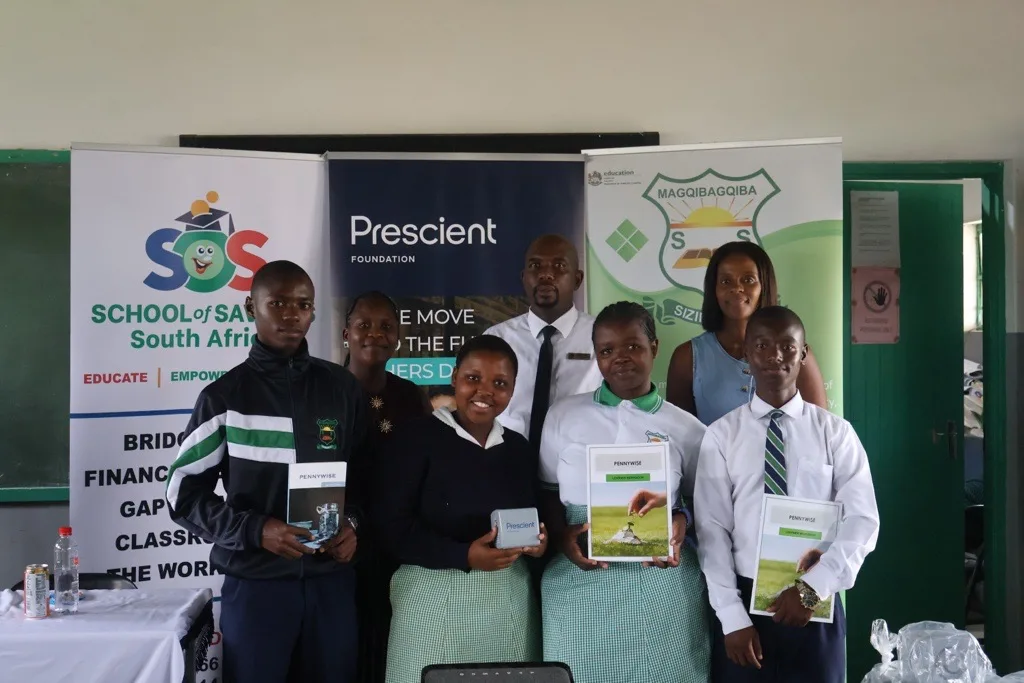
Each learner receives a workbook, an activity-based learning guide and a money box to translate financial concepts into daily action.
The programme is delivered through classroom-based learning and experiential activities designed to embed the programme’s principles of Decision, Direction and Discipline.
“It’s about building financial habits that last a lifetime,” says Nicole Pinto, CEO of the Prescient Foundation. “Financial literacy is one of the most powerful tools we can give our youth. Through our partnership with the School of Savings, we are supporting an approach that goes beyond theory. It builds habits, confidence and practical decision-making skills that learners can carry into adulthood.”
Pinto added that the Prescient Foundation has been encouraged by learner engagement in the programme:
“In October 2025, we attended the quiz and speech competition involving participating schools, and we were genuinely impressed by how much the learners had absorbed. Their understanding of saving, spending and financial decision-making was evident and encouraging.”
Addressing South Africa’s savings reality
South Africa continues to face significant household financial pressures, including low savings rates and high levels of consumer debt. In this context, early financial education is increasingly seen as a critical intervention. “Many young people are not introduced to basic money management early enough,” Pinto explains.
“This programme focuses on foundational behaviour first. How to think about money, how to spend wisely, and how to build discipline through small actions.”
From small habits to long-term impact
Unlike traditional financial education models that begin with complex investment concepts, Project One Rand focuses on behavioural foundations before financial products. This approach is designed to strengthen decision-making skills, encourage responsible spending habits, build long-term savings behaviour, and improve financial confidence among learners.
Founder of the School of Savings South Africa, Joe Chetty, says the collaboration is helping scale impact across schools: “We are grateful for the support of the Prescient Foundation in helping us extend this programme to more learners. Together, we are building a generation that understands not just money, but discipline, patience and long-term thinking.
As Project One Rand continues to expand, the Prescient Foundation remains committed to giving young South Africans the tools to save with purpose, spend with intention and build financial futures on their own terms.