

MAKHANDA, EASTERN CAPE — The National Arts Festival in Makhanda has once again transformed the Eastern Cape town into a vibrant hub of creativity, bringing together a diverse array of multidisciplinary arts. Now in its 52nd edition, Africa’s largest arts gathering features a packed hybrid program that spans theatre, dance, music, visual arts, and film, operating under this year’s theme, “Come Together, Create New Worlds,” which notably incorporates the use of Artificial Intelligence in the arts.
Despite the cold and crisp mornings, the town’s historic venues are buzzing with tourists, local creatives, and international award-winning artists. The National Arts Festival CEO noted that the event is expecting renowned performers such as the Bala family, alongside a special debut for local Eastern Cape gospel artists who will have the opportunity to perform on the festival’s main stages. Beyond the main stages, the festival continues to provide a crucial platform for upcoming artists to showcase their work to international audiences.
A major highlight of the gathering is the three-day literature festival hosted in partnership with the Department of Sports, Arts, and Culture at the Amazu Literature Museum. Busi Jim Sana Mandash, the Literature Director for the department, emphasized that the event aims to preserve indigenous languages and combat illiteracy, particularly addressing the challenge of grade four learners struggling to read for meaning.
To foster a reading culture, the festival features a dedicated children’s corner at Amazu, offering storytelling and reading sessions with legendary artists like Nalibal. The literature program also includes robust panel discussions at the Monument, exploring themes such as the politics of translation with Professor Dr. Tamil Solah, as well as the lived experiences of the LGBTQI+ community, featuring notable figures like Noel Mayaba, Nochabala, and Dr. Kai.
Addressing the economic realities of the creative industry, the department is taking proactive steps to ensure artists do not struggle financially. Masterclasses led by legendary figures such as Dr. John Kani and Prof. Zakes Mda are paving the way for young writers and filmmakers to build sustainable careers. Furthermore, the department has partnered with Metropolitan to provide financial literacy workshops, equipping authors with the business acumen needed to sustain themselves through their craft.
Busisiwe Jemsana-Mantashe highlighted that the department is also pushing to transform the industry by ensuring books by indigenous language authors are stocked in local bookstores and libraries. To further support creatives, the department provides comprehensive publishing support—covering high publishing costs and offering platforms for authors to launch and sell their books. Despite post-pandemic funding challenges, the literature festival remains largely accessible with free tickets, and several shows are already fully booked, signaling a deep hunger for literature in the Eastern Cape. The department is also partnering with Nelson Mandela University to further develop and promote regional literature, adding to their broader efforts which include the Eastern Cape provincial book fair scheduled for September.
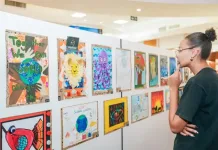
Beyond literature and performance, the visual arts sector is finding a home in unexpected spaces across the city. Thato Makatu, a visual artist from Boksburg, is using cardboard to construct domestic spaces that ignite household memories. Her work explores themes of belonging, home, and precarity, reflecting on her childhood experiences of traveling frequently with her parents.
Meanwhile, Unathi Mkonto, a sculptor from Pedi in the Eastern Cape, merges art with architecture. Exhibiting a piece titled “Cultivating Soil,” Mkonto encourages audiences to reconnect with nature and rethink architectural languages that challenge the imagination rather than strictly serving a functional purpose.
Despite the vibrant atmosphere, art experts at the festival have raised critical concerns regarding the broader creative industry. Discussions have highlighted the limited opportunities for artists to showcase their work beyond the annual festival and the ongoing exploitation of creatives in South Africa. Experts noted that while artists globally are respected and adequately rewarded for their work, local artists often face long periods without income, overshadowed by the heavy rotation of international music and art forms on local radio and television.
Advocates at the festival are calling for a shift to promote local content, urging the public and media to support homegrown talent so that local audiences can hear and see their own stories reflected. The National Arts Festival will continue until next week, promising to deliver a new world of imagination each day while setting the tone for the future of the arts and culture industry in South Africa.