From logistics fleet vehicles to rental cars, businesses are finding that equipment only proves its value when it fits the daily realities of the work.
A vehicle used for work is rarely just a way to get from one place to another. In logistics, it is part of the operating system. It determines how stock moves, how routes are planned, how safely teams can offload and whether a delivery point can be reached without turning the day into a string of workarounds.
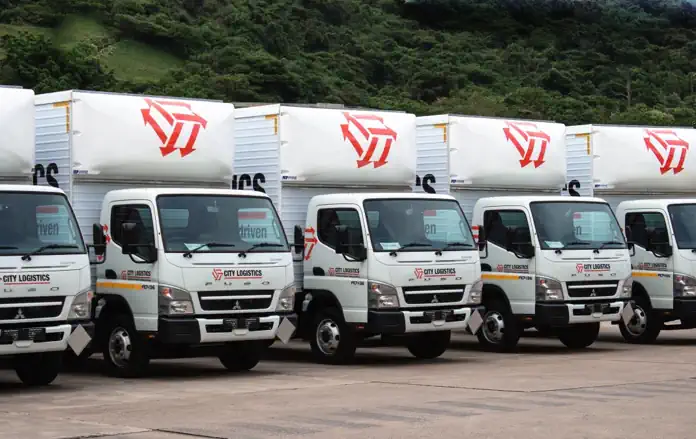
For City Logistics, one of South Africa’s largest logistics companies, that makes fleet design a practical business decision rather than a purely transport-related one. The company has to balance payload, access, delivery windows and site conditions across very different environments, from suburban store replenishment routes to mall basements and high-volume distribution centre movements. A vehicle that performs well on one route may be inefficient, impractical or entirely unsuitable on another.
City Logistics CEO Ryan Gaines says the starting point must always be the job itself. “A fit-for-purpose fleet is one of the most important tools in logistics. The right vehicle must match the load, the route, the access point and the delivery window. When it does, it improves efficiency, reduces unnecessary handling and helps teams deliver consistently in complex urban environments,” he says.
That thinking is especially important in retail logistics, where delivery environments can change dramatically from one stop to the next. Routine store replenishment requires enough capacity to move meaningful volumes of stock, but the vehicle must still be agile enough to handle suburban roads, standard loading bays and customer sites without causing delays. Depending on the route, that could mean anything from an 1-ton bakkie with a 7-cube body to a 15-metre trailer with a 100-cube body. In some cases, a tail-lift can also make offloading more practical and reduce strain on delivery teams.
Mall deliveries create a different challenge. Shopping centres are usually designed around customer movement rather than freight movement, which means logistics teams often have to work with service tunnels, underground entrances, tight ramps and basement delivery areas. These spaces can limit the height, length and turning ability of the vehicle before the delivery has even begun. In that environment, a ‘light commercial vehicle or more compact truck may be the better tool because its value lies not only in what it can carry, but in where it can go.
High-volume distribution centre routes require another calculation. When goods are moving from a distribution centre to a flagship store, regional hub or major receiving point, volume becomes the priority. Larger trailers are better suited to major roads and receiving areas designed to accommodate their size, while smaller vehicles may create inefficiency by requiring more trips or more handling. The challenge is not to choose the biggest vehicle, but to choose the one that suits the movement.
As Gaines puts it, no single vehicle type is better than another. Each has a role, and a one-size-fits-all fleet can create inefficiency because store deliveries, mall access and high-volume routes place different demands on the vehicle, the driver and the delivery process.
This is why fleet design is also a form of job design. The vehicle shapes how people load, drive, stop, unload and recover between jobs. If it is too large, access becomes a problem. If it is too small, the route may require more trips than necessary. If it lacks the right loading features, the job can take longer and place more physical pressure on the team. In a logistics environment, those small points of friction can quickly become operational costs.
The same principle applies outside large-scale logistics. Vineyard Car Hire, a Cape Town-based business established more than 40 years ago, advises new rental and fleet operators to start small, avoid overextending financially and prioritise reliability and insurance. Owner Anthony Cloete says car hire carries risks such as damage, theft and write-offs, which makes careful vehicle selection important from the beginning.
Cloete says the company’s buying decisions are shaped by resale value, reliability, supplier support and the practical needs of customers. “Our entry-level vehicles need to be robust and comfortable enough for everyday use, while other customers may need more space for golf clubs, luggage, groups of passengers, or even a more luxurious driving experience,” he explains.
Reliability is central to that decision-making because a breakdown or faulty feature quickly becomes a customer service issue. Cloete says the business also considers whether parts are readily available, whether suppliers can prioritise repairs and whether the brand has proven support behind it. In other words, the purchase is not only about the vehicle on the showroom floor, but about how that vehicle performs once it becomes part of the business.
The lesson extends beyond transport. Sheri-Ann Nagiah of Shapes Toti Gym echoed the sentiment and made a similar point about equipment in the fitness industry, where the wrong purchase can wear out too quickly, look tired in the facility and create safety concerns for members. A HYROX-style gym may require a different equipment mix from a conventional gym, just as a facility may choose between motorised and curved treadmills based on maintenance, lifespan and how members prefer to train.
Whether the decision involves logistics vehicles, rental cars or gym equipment, the principle remains the same. Equipment has to match the work it is expected to do. That means matching the vehicle to the route, access point and delivery environment. When that fit is right, the vehicle becomes more than transport. It becomes part of how the work is done properly.