
JOHANNESBURG, Gauteng – Nearly four weeks of severe Johannesburg water disruptions have left several communities without reliable access to running water, sparking frustration among residents. Neighborhoods including Brixton, Melville, Westbury, and Parktown West are bearing the brunt of the prolonged outage, which locals say is severely impacting daily life and raising serious concerns about the city’s aging infrastructure. While officials from Johannesburg Water acknowledge the crisis, they caution that a full recovery remains a gradual process with no definite end date in sight.
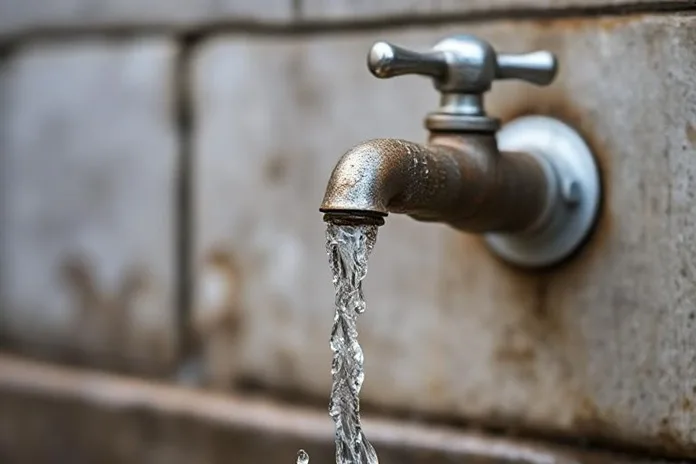
The ongoing crisis has turned daily routines into a struggle for many. Residents report that their taps are yielding nothing but drips, leaving them without enough water for basic needs such as cooking, flushing toilets, and washing their children’s clothes. The situation has forced some community members to walk up to an hour and 20 minutes to find alternative water sources. In Brixton, one makeshift solution has emerged: a house located behind a Shoprite on High Street that is supplying water to the public through a pipe.
The current shortages are partly linked to a planned Rand Water maintenance program that took place in May, which has had a lingering impact on the Commando system. Speaking from the local reservoir site, Gugulethu Quma, operations manager at Johannesburg Water, explained that the area is facing severe capacity constraints and supply challenges.
“We’ve been trying to restore and recover this system, but it’s gradually and taking uncomfortably slow to recover,” Quma stated. He noted that the two reservoirs on site, Estel 1 and Estel 2, are currently on bypass due to ongoing construction, forcing the system to utilize alternate supply methods. However, the entire system remains constrained and unable to deliver adequate water to all supplied residents.
The Commando system relies heavily on the Crosby reservoir, which serves as the main reservoir and pump station. The broader network also includes the old Brixton reservoir and tower, alongside the newly launched Brixton new reservoir and tower. Quma highlighted that most of this infrastructure is currently undergoing a rehabilitation and expansion program. While these upgrades to Crosby and Brixton are designed to address future water challenges, the city is currently forced to rely on the old infrastructure to deliver water to communities.
When pressed on when residents can expect relief, Quma confirmed that there is no definite date for the restoration of normal water services. Johannesburg Water is implementing several operational interventions to mitigate the crisis, including moving water at night and redirecting supply from healthier systems in the north, such as Midrand and Sandton, as well as from Roodepoort and Randburg.
Despite these efforts, the entire value chain lacks adequate capacity. The bulk supplier is working to improve storage capacity, and the City of Johannesburg, through Johannesburg Water infrastructure, is also undertaking new construction projects.
“It’s a gradual process. We cannot give a definite date, but it’s gradual and we are trying to do everything possible to improve the situation,” Quma concluded. For now, residents in the affected Commando system areas remain in the dark, left to hope that the gradual interventions will soon restore their water supply.